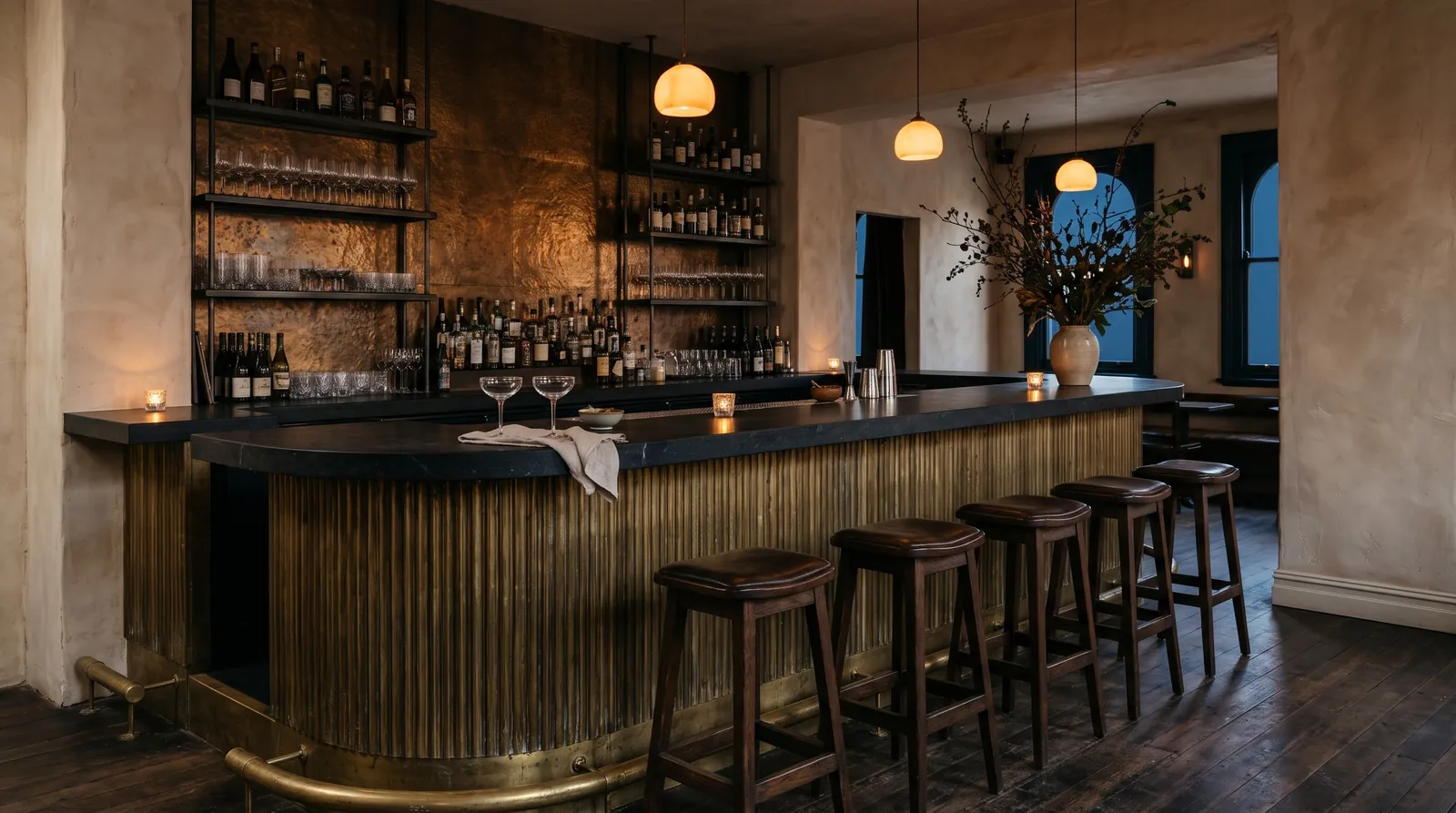
Metal bar fronts for hotels and restaurants: fluted, blackened, patinated
A metal bar front is the metal cladding on the guest side of a bar, usually fluted brass, blackened steel or patinated bronze.
The bar front is the part of the room guests see from the door and touch with shoes, bags and glasses all night. Metal handles that well if the type, the edges and the joints are right, and the cleaning routine is agreed before opening.
Three metal bar front types
| Type | Suits | Watch for |
|---|---|---|
| Fluted brass | A bar meant to be seen, such as a hotel lobby bar | Brass ages, so agree how much change the client wants to see |
| Blackened steel with a brass rail | Cocktail bars and dark rooms | Water: keep ice buckets and wet cloths off the steel |
| Patinated bronze | Restaurants and hotels with an aged, settled look | Matching, because panels are patinated by hand |
Fluted brass bar fronts
Vertical channels in brass, usually in a satin surface. The flutes catch bar lighting and throw a slow rhythm of light along the counter, and they hide scuffs better than flat metal. Brass is warm and it ages, so decide with the client how much change they want to see. Our guide to brass finishes sets out the difference, and fluted and textured metal covers the profiles.
Blackened steel with a brass rail
Matt blackened steel panels form the front, with a brass foot rail and brass top edge. The dark plane recedes, the brass reads sharply against it, and the room feels deliberate. Our blackened steel finish guide and the note on whether blackened steel rusts cover the material.
Patinated bronze
Bronze in a medium or dark brown patina, flat or fluted, gives a bar the look of an old room. It forgives marks. Panels are patinated by hand, so matching needs care. We cover the tones in our bronze patina colours guide.
Foot rail and edges
The foot rail wears first. Shoes strike it, bags rub it and cleaners wipe it hard. Treat it as its own component, not as trim.
- Use a solid rail, or stainless steel with a PVD colour. A thin plated tube will show wear at the strike points.
- Back the lower front with a rigid panel, so it does not ripple or dent where shoes land.
- Round or chamfer every exposed edge. A sharp edge at hand height is a hazard.

For a fixed colour at the rail, PVD on stainless steel is the practical route (see the PVD colour range). The colour is the coating, so it does not wear through to a different metal.
Working on a project? Tell us about it and we will suggest the right approach.
Meeting the stone counter
The joint between the metal front and a stone top is the detail most likely to go wrong.
- Let the stone sit proud of the front, so spills and cleaning water run off the stone and not down the metal.
- Leave a shadow gap or a thin soft joint between metal and stone, not a hard butt.
- Agree the order of work with the stone supplier. Metal panels are usually fitted last and stay removable.

Lighting
Bar lighting is low and warm, and it decides how the metal looks. Flutes need side or grazing light to show their relief. Blackened steel needs enough light to show its grain, or it reads as a dark hole. Bronze warms under amber light and cools under white.
Test the sample under the actual lamps, and plan the cable route before the panels are made.
Cleaning
A bar is cleaned every night, often fast. Write the routine into the handover.
- Wipe with a soft cloth, warm water and mild soap, along the flutes, then dry.
- No abrasive pads, acid cleaners or bleach.
- Wipe up spills at once.
Our guide to caring for metal finishes has the full routine. Agree with the client what wear is acceptable.
Panels and joints
Set the module from the bar, not from the sheet. Put joints on the back-bar shelving or the stool spacing, so they look planned. Give fluted panels a whole number of flutes, so none ends on half a channel. Make panels removable for access to services behind the front.

Writing the specification
A metal bar front specification should state:
- The type: fluted brass, blackened steel with brass rail, or patinated bronze.
- The metal and surface, tied to an approved sample plate and who signs it off.
- The flute profile, drawn full size, if used.
- The foot rail: material, section and fixing.
- The edge radius and corner treatment.
- The junction to the stone top.
- Panel length and joint positions, with a full-height mock-up under the bar lighting.
- A cleaning note for the operator.
Working with Dekap
Yes, we make metal bar fronts. We form, finish and seal fluted brass, blackened steel with brass rails and patinated bronze in one atelier in Istanbul, agree the tone and profile on full-size sample plates, and detail the rail, the stone junction and the joints with you. Where a front takes heavy contact we can carry the colour in PVD.
Start a project enquiry with the bar length, the lighting and the look you want. For the wider picture, see metalwork in restaurant interiors.
FAQ
Which metal is best for a bar front?
It depends on the room. Fluted brass suits a bar meant to be seen, blackened steel with a brass rail suits dark rooms, and patinated bronze suits restaurants wanting an aged look. All three work when edges, foot rail and cleaning are agreed.
What is a fluted brass bar front?
A fluted brass bar front is bar cladding in brass with vertical channels, usually in a satin surface. The flutes catch the bar lighting, hide scuffs better than flat metal and give the counter a slow rhythm of light.
How do you protect a metal bar front from wear?
Treat the foot rail as its own component, round the edges, back the lower panel so it does not dent, and agree a hard-wearing surface for the use. For a fixed colour at high contact points, PVD on stainless steel is the practical route.
Does Dekap make metal bar fronts?
Yes. We make fluted brass, blackened steel and patinated bronze bar fronts in our own atelier in Istanbul, with rails, edges and stone junctions detailed to approved sample plates.
Working on a project?
Tell us about it and we will suggest the right approach.
Start a project enquiryOr write to us: info@dekap.com.tr