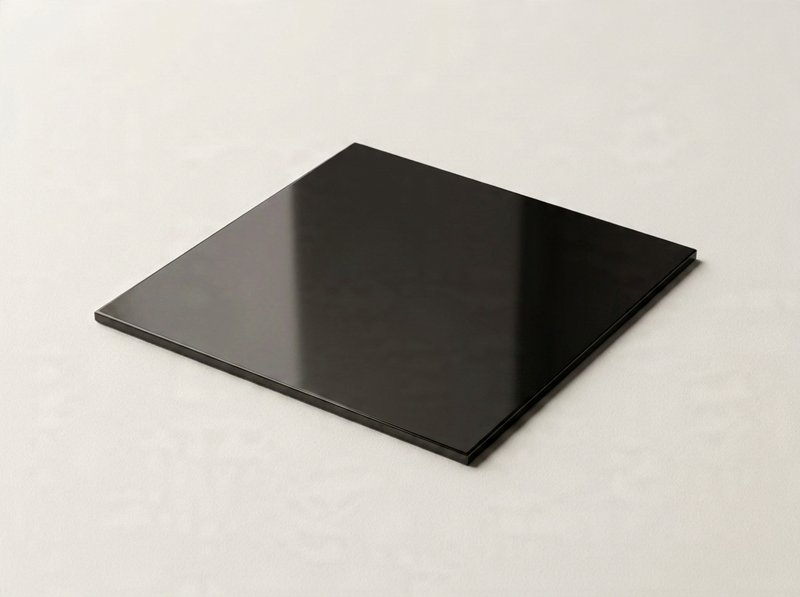
PVD Coating / DLC
Diamond-Like CarbonDLC coating,
diamond-hard, near-frictionless.
A thin amorphous carbon film that carries some of the hardness of diamond with some of the slipperiness of graphite. We apply the full DLC family, from tough metal-doped WC/C to ultra-hard hydrogen-free ta-C, on cutting tools, tungsten carbide, moulds, automotive and medical parts.
What DLC is
DLC is amorphous carbon: a glassy mix of diamond-like (sp3) and graphite-like (sp2) bonds rather than a single crystal. That mix is the whole story. More sp3 bonding gives more hardness; more sp2, hydrogen or metal doping gives more toughness and lower stress. By tuning the recipe we move along a spectrum from soft and tough to nearly as hard as diamond.
The film is deposited a few microns thick in a vacuum, at low temperature, so it holds a sharp cutting edge, keeps tight tolerances and does not soften the substrate beneath. The result is a surface that resists wear and galling and slides with very little friction.
The DLC family
Best for: the everyday workhorse DLC, a good balance of hardness, low friction and cost for engine parts, pump and valve components, fasteners and general anti-wear duty.
Typical values; the exact hardness, friction and temperature limit depend on the recipe, interlayer and substrate. We match the type to the part and document it per batch.
DLC for cutting tools
& tungsten carbide
Cemented tungsten carbide is one of the best substrates for DLC, and one of the most expensive raw materials in a workshop. As tungsten and cobalt prices climb, the economics shift: it costs less to coat a carbide tool and run it longer than to replace it sooner. A DLC layer reduces friction and built-up edge, so drills, end mills, taps and inserts stay sharper, run cooler and need regrinding less often.
DLC is at its best on non-ferrous and abrasive work, where its low friction stops aluminium, copper and composites sticking to the edge. For ferrous high-heat cutting we will often recommend a nitride family instead, or a duplex stack. We make that call with you, per material and operation.
DLC vs CVD diamond
Amorphous, low-temperature
Thin, smooth, very low friction, deposited below about 200 °C. Works on steels, stainless and carbide, and gives a black decorative finish. Best for low-friction wear, anti-stick and non-ferrous machining.
Crystalline, high-temperature
True polycrystalline diamond grown at roughly 700 to 900 °C, extremely hard and thick but rougher, and limited to heat-tolerant substrates like carbide. Best for long runs in graphite, ceramics, fibre composites and abrasive non-ferrous alloys.
In short: reach for DLC for friction, finish and versatility; reach for CVD diamond for maximum abrasion resistance on the hardest non-ferrous work. We advise on both. See the wider functional range on PVD Coating →
Where DLC works
From a single bespoke piece to a production series, part of the wider PVD range. Compare them on DLC vs PVD, or enquire about DLC coating →
DLC coating FAQ
What is DLC coating?
DLC (Diamond-Like Carbon) is a family of amorphous carbon coatings that combine some of the hardness of diamond with very low friction. The film contains sp3 (diamond-like) and sp2 (graphite-like) carbon bonds; the ratio, and any hydrogen or doping, sets the hardness, friction and temperature limit. It is applied as a thin film, usually a few microns, by PVD or PACVD in a vacuum.
How hard is DLC coating?
It depends on the type. Hydrogenated a-C:H films are typically 1,500 to 2,500 HV, while hydrogen-free ta-C can reach roughly 3,000 to 9,000 HV, approaching diamond. Metal-doped WC/C is softer and tougher, around 1,000 to 1,500 HV, but adheres very well and tolerates load.
What is the friction coefficient of DLC?
DLC is one of the lowest-friction engineering coatings available. Typical dry sliding friction coefficients are around 0.05 to 0.2 depending on type and counter-surface, far lower than nitride coatings or uncoated steel, which is why it is used for anti-stick, anti-galling and low-wear applications.
Can you DLC coat tungsten carbide?
Yes. Cemented tungsten carbide is one of the best substrates for DLC. As carbide raw-material prices have risen, DLC is increasingly used to extend the life of carbide cutting tools, drills, end mills and inserts, so each tool cuts longer before regrinding or replacement, lowering cost per part.
DLC vs CVD diamond, what is the difference?
CVD diamond is true crystalline diamond grown at high temperature (around 700 to 900 °C), extremely hard but thick, rough and limited to heat-tolerant substrates, ideal for machining graphite, composites and non-ferrous alloys. DLC is amorphous, deposited at low temperature (often below 200 °C), thinner, smoother and far lower friction, and works on steels and carbide. They solve different problems.
What temperature can DLC withstand?
Most hydrogenated DLC is stable to around 300 to 350 °C; hydrogen-free ta-C tolerates roughly 400 to 500 °C before graphitisation begins. For continuous high-heat cutting, nitride coatings such as AlTiN or AlCrN are usually the better choice, while DLC excels where low friction and low temperature matter.
Is DLC coating biocompatible and food-safe?
DLC is chemically inert, dense and non-porous, which is why it is used on surgical instruments, implants and food-contact components. The exact specification and testing are agreed per application.
What substrates can be DLC coated?
Tool steels, hardened steels, stainless steel, cemented tungsten carbide and titanium are all routinely DLC coated. Aluminium and other low-temperature substrates can be coated with the right interlayer and process control. Surface preparation and an adhesion interlayer (often chromium or silicon) are critical.
How thick is a DLC coating?
Typically 0.5 to 4 microns. Thin enough to hold tight tolerances and sharp cutting edges, thick enough for durable wear and friction performance. Thickness is measured and documented per batch.
What colour is DLC?
DLC is characteristically deep black to dark grey, which also makes it a popular decorative finish for watches, hardware and automotive trim, combining the look with genuine scratch resistance.