Bronze patina colours: where to use them and how to care for them
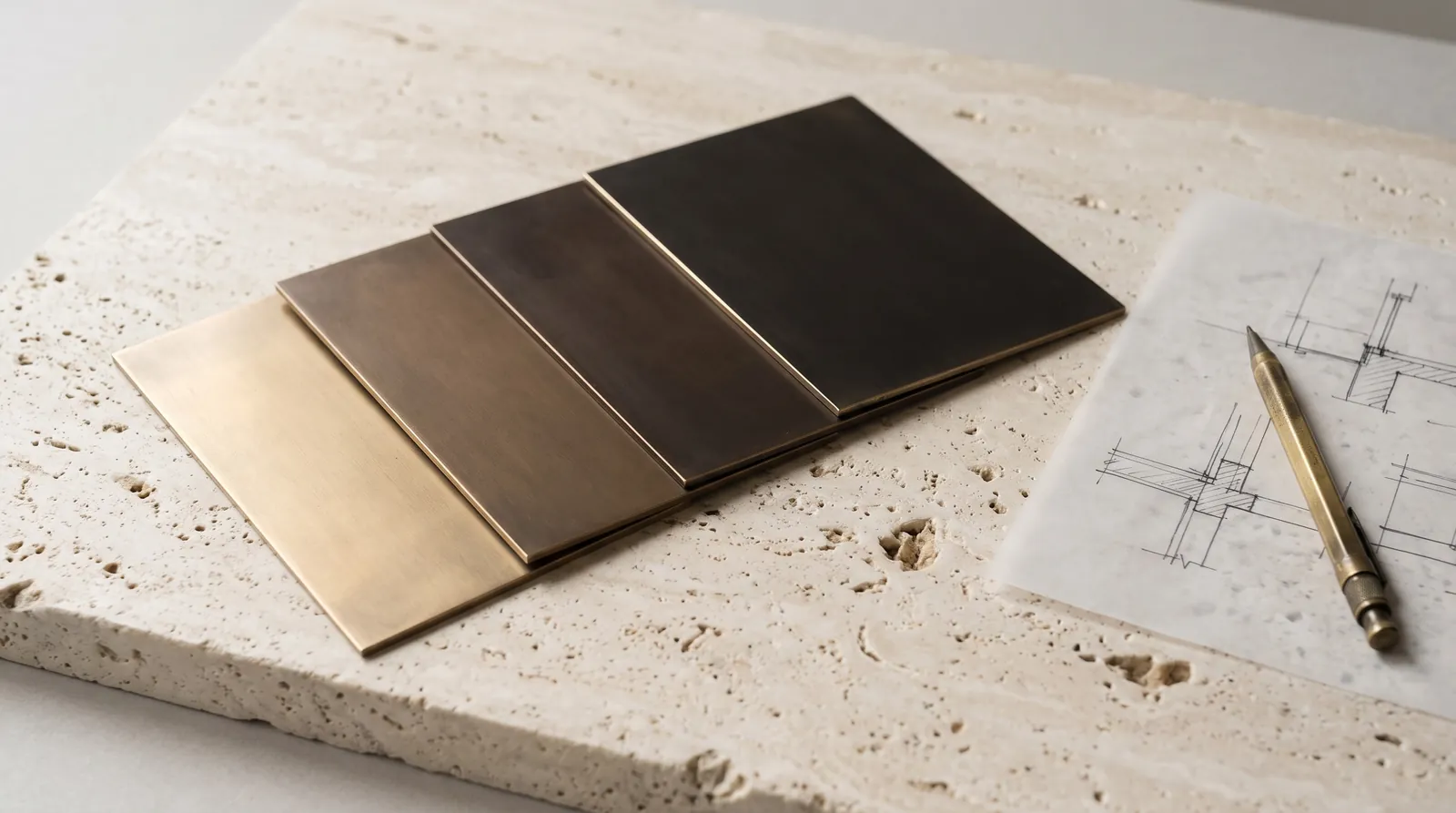
Bronze patina colours are the aged shades of bronze, from light gold to near black, made in the atelier and agreed on a sample.
Patinated bronze is one of the most requested surfaces in hospitality design, and one of the easiest to specify badly. "Dark bronze" means different things to different people, and a colour agreed from a photograph rarely survives delivery.
What patina is
Patina is the aged colour of bronze. Left alone it develops over years and cannot be predicted. Applied in the atelier, it is agreed in advance. The colour sits in the metal, not on top of it like paint, so grain, file marks and cast detail stay visible through it.
Our guide to copper and bronze patina covers the wider family, including the greens. This note stays with the browns and blacks that suit interiors.
The four bronze patina colours
Four tones cover most interior work. The table shows where each suits and how it wears.
| Tone | Where | Shows wear |
|---|---|---|
| Light golden | Reception desks, door hardware, small panels | Most: fingerprints show first |
| Medium brown | Lobby cladding, bar fronts, stone and timber settings | Least: it forgives wear |
| Dark brown | Lift doors, columns, feature panels | At edges and high points, where the metal shows through |
| Near black | Feature walls, fireplace surrounds, bar fronts | Gently at touch points; ask for a hard-wearing seal on bars |
Light golden. A pale, warm gold with a slight brown cast. It is closest to bare bronze, so it shows fingerprints most.
Medium brown. The classic: a soft chocolate or tea colour with some movement. It sits well against stone, timber and leather, and it is the safest tone for lobby cladding and bar fronts.
Dark brown. Deeper and more serious, with the metal showing through at edges and high points. It gives a lift door or a column real weight.
Near black. A brown-black with a faint warmth that separates it from paint or blackened steel. In low light it can read as plain black, so check it under the actual fittings.
The tones shade into each other. A sample plate is the only reliable way to name one.
Working on a project? Tell us about it and we will suggest the right approach.
Where it works
Lobby. Reception fronts, wall panels, door surrounds and column wraps. See metalwork in hotel lobbies.
Bar and restaurant. Dark brown and near black suit bar fronts and foot rails, where hands and glasses touch the metal all night. Ask for a hard-wearing seal, and see metal bar fronts for hotels and restaurants.
Lift. Patinated walls and trim give a calm, dark cab. Hands touch lift surfaces constantly, so the seal matters. See metal in lift interiors, and our guide to architectural bronze for the metal itself.
Corridor, bathroom and shop. Door plates, vanity fronts, mirror frames and display shelving all take patina well, as long as the room is dry.
Exterior. Weather changes patina. If an exterior tone must stay put, specify PVD bronze on 316 stainless steel (see the PVD colour range) or plan for regular maintenance.
Matching bronze patina tones across a run
Two panels are never identical. The aim is a range the eye reads as one colour.
- One approved sample plate, in the same alloy as production, signed off by the architect.
- One batch of metal for each colour-critical run.
- The whole run laid out side by side, in the room's light, before it is sealed.
More in our note on matching metal finishes. Where the colour must not vary at all, we offer bronze as a PVD colour on stainless steel, because there the colour is the coating.
How it ages
Decide early whether the owner wants a fixed colour or a living one. A hard sealed surface stays close to the signed-off colour for a long time, and wears first where hands touch it. A softer sealed surface deepens slowly and picks up a gentle shine. Neither is wrong, but the client should be told what to expect, in writing.
Everyday care
- Dust with a soft dry cloth.
- Wipe marks with a barely damp cloth, then dry.
- Avoid abrasive pads, acid cleaners and bleach.
- Wipe, do not scrub.
Our guide to caring for metal finishes has the full routine.
Writing the specification
A bronze patina specification should state:
- The metal and its form: cast, sheet or machined.
- The tone, tied to an approved sample plate, and who signs it off.
- Fixed colour or living colour.
- One batch of metal for each colour-critical run.
- Interior or exterior.
- A care note for the owner.
Working with Dekap
Yes, we make patinated bronze. We patinate and seal it in our own atelier in Istanbul, agree the tone on full-size sample plates and match it across the run. If the colour must never move, we can carry the same tone in PVD.
Start a project enquiry with the metal, the tone you want and where the piece goes. We will recommend the surface.
FAQ
What are the main bronze patina colours?
Four tones cover most interior work: light golden, medium brown, dark brown and near black. They shade into one another, so name the tone from a signed-off sample plate and not from a photograph.
Can bronze patina be matched from batch to batch?
Closely, not identically. We work from one approved sample plate and one batch of metal, and lay the run out together before it is sealed. Where the colour must not vary, PVD bronze on stainless steel gives a repeatable tone.
How do you clean patinated bronze?
Dust with a soft dry cloth, wipe marks with a barely damp one and dry. Do not scrub, and avoid abrasive pads, acid cleaners and bleach. A hard sealed surface stays closest to the signed-off colour.
Working on a project?
Tell us about it and we will suggest the right approach.
Start a project enquiryOr write to us: info@dekap.com.tr