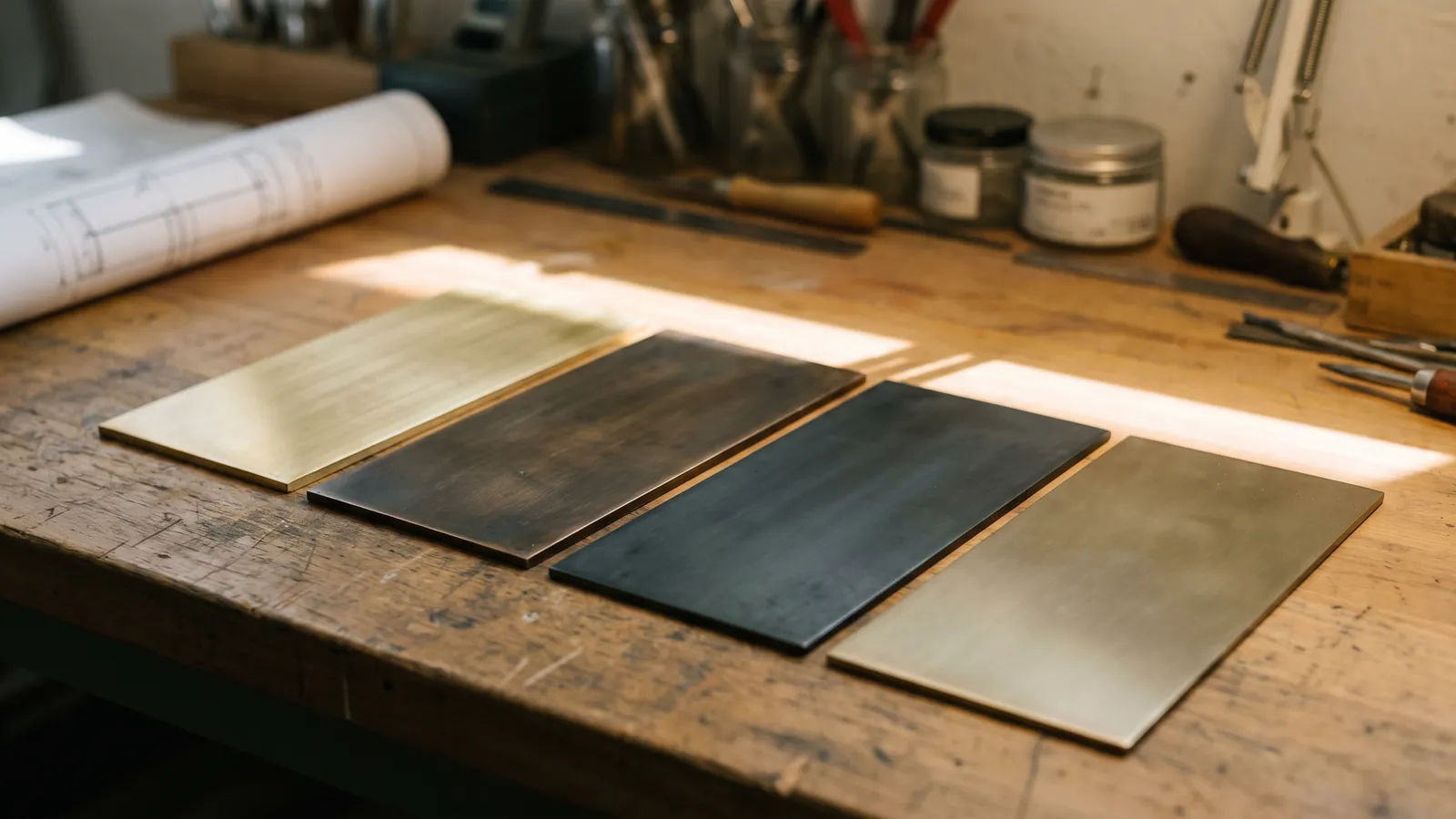
Caring for metal finishes
A metal finish is chosen for the way it looks on the day it is installed. How it looks in five years is a matter of care. The two are not separate decisions. The finish sets what the surface wants, and the care simply keeps it there, or lets it age the way it was meant to. Most metal surfaces ask for very little: a soft cloth, clean water, patience and the discipline not to reach for the wrong bottle. This guide sets out how to look after the finishes we make, family by family, and what to avoid so a good surface stays good.
Why finish and care belong together
Every finish carries an intention. A mirror wants to stay clear. A patina wants to deepen. A lacquered brass wants to hold its bright tone and never tarnish. The care that suits one can spoil another, which is why there is no single routine for all metal. The first thing to know about any surface is not what it is made from but how it was finished and whether it was sealed. Get that right and the rest follows.
Lacquered or living
The single most useful distinction is whether a surface is sealed or left open. A lacquered or coated finish is protected by a clear film. It resists fingerprints and tarnish, and it is cleaned only on its surface, never polished into. A living finish is bare metal, left to react with the air, hands and time. It changes on purpose. Cleaning a living finish too hard removes the very ageing it was chosen for, while polishing a lacquered finish with an abrasive scratches the film that keeps it bright. Before you clean anything, know which of the two you have.

Care by finish family
Brushed and satin stainless is the most forgiving surface we make. Wipe it with a soft cloth and warm water, always along the grain of the brush, never across it or in circles. A little mild soap lifts grease. Dry it to avoid water spots. That is the whole routine. More on the finishes themselves is in our note on stainless steel finishes.
Mirror stainless shows everything, so it is cleaned little and often rather than hard. A soft, lint-free cloth and a streak-free glass cleaner keep it clear. Never use a scouring pad, which leaves fine swirls that catch the light forever.
Blackened steel is a living finish and a chemical colour, not a paint. It wants a light hand: a dry or barely damp soft cloth, and a wax or oil now and then to feed the surface and hold off rust. Water left standing is its enemy. Keep it dry, keep it waxed, and let the depth build. Our fuller account is in blackened steel.

Brass divides cleanly into two. Lacquered brass keeps its bright, gold tone and asks only for a soft cloth and no polish; the lacquer does the protecting, so a metal polish would only cut it. Living, unlacquered brass is meant to warm and darken with handling. If you want it bright you can polish it, and it will re-tarnish; if you want it to age, leave it. The choice is yours, made once, and the care follows from it. See brass finishes for the fuller picture, and architectural bronze for its heavier cousin.
Bronze and patina are living by nature. A patina is a controlled, aged surface, and it deepens with time and touch. Care is gentle: dust it, wipe with a dry cloth, and wax occasionally to protect without stripping. Never use an acidic or abrasive cleaner, which eats a patina back to raw metal. The green and brown depths are the point, so the aim is to protect them, not remove them. We cover this in copper and bronze patina.
PVD coloured stainless is the hard finish, and the easiest to live with. The colour is not a coating on top but a molecular layer bonded into the steel, so it resists scratching, tarnish and fading far better than a plated or lacquered surface. Clean it like stainless: soft cloth, warm water, mild soap, dry to finish. No wax, no polish, no re-doing. This is why we reach for PVD on stainless in high-touch and hard-to-reach positions, and why the PVD colours hold across lifts, doors and facades where a living finish would need constant attention. More on the palette sits in coloured stainless steel.

What to avoid, on every finish
A short list saves most surfaces. Avoid abrasive pads, scouring powders and gritty creams; they scratch films and grain alike. Avoid acidic cleaners, bleach and anything with chlorine; they attack coatings, patinas and even stainless over time. Avoid all-purpose sprays whose contents you cannot name. And never clean a brushed or grained surface against its direction. When in doubt, the safe answer is nearly always a soft cloth and clean water.
Fingerprints and high-touch positions
Handrails, pulls, lift panels and door furniture take the most contact, and they show it. On a lacquered or PVD surface, fingerprints wipe away with a damp cloth and leave nothing behind. On a bright, living finish they mark and, over time, become part of the patina, which is either a flaw or a feature depending on the intent. Where a client wants a bright metal to stay bright in a busy spot, the honest answer is usually to specify a sealed or PVD finish from the start, rather than to chase marks with a cloth forever.
Renewing lacquer and re-patination
Nothing lasts untouched forever, and both sealed and living finishes can be brought back. A lacquer can wear thin at the busiest points after years of use; when it does, the surface is cleaned back and re-lacquered so it protects again. A patina can be deepened, evened or reset if a surface has been marked or repaired. Neither is a failure. They are simply the maintenance a finish was always going to want, done once every long while by someone who knows the surface.

Care by finish, in short
Brushed stainless: soft cloth, along the grain. Mirror: streak-free glass cleaner, no pads. Blackened steel: keep dry, wax occasionally. Lacquered brass: wipe only, never polish. Living brass and bronze: dust, wax, let it age. Patina: protect, do not strip. PVD stainless: clean like stainless and leave it be. That is nearly the whole of it.
Working with Dekap
If you are asking whether we help with this, the answer is yes. Dekap documents the care for every finish it makes, and where a surface should stay sealed we finish it with our own protective formula, developed in the atelier to hold colour and resist tarnish longer than a standard coat. We can advise on a routine, supply a care note with a project, and re-finish or re-patinate a surface that has been marked or has simply reached the age where it wants renewing. Where a position is high-touch or hard to reach, we recommend a hard, fixed finish by PVD on stainless so the care is close to none.
If you are choosing finishes for a current project and want them to age well, start a project enquiry, and tell us where each surface sits and how much hand it will take. We will recommend the finish and the care together, not one without the other.
FAQ
How do I clean brass, bronze or blackened steel?
Gently, and according to whether the finish is sealed or living. Lacquered brass needs only a soft cloth and no polish, since the lacquer protects it. Living brass and bronze are dusted, wiped with a dry cloth and waxed occasionally to age evenly. Blackened steel is kept dry and waxed now and then. On all three, avoid acidic and abrasive cleaners, which strip the finish back to raw metal.
What should I never use on a metal finish?
Avoid abrasive pads, scouring powders and gritty creams, which scratch films and grain. Avoid acidic cleaners, bleach and anything containing chlorine, which attack coatings, patinas and stainless over time. Avoid unlabelled all-purpose sprays. And never clean a brushed or grained surface against its direction. In most cases a soft cloth and clean water is the safe and sufficient answer.
What is the difference between a lacquered and a living finish?
A lacquered or coated finish is sealed under a clear film that resists fingerprints and tarnish, so it is cleaned only on the surface and never polished into. A living finish is bare metal, left to react with air, hands and time, and it changes on purpose. Cleaning a living finish too hard removes its intended ageing, while polishing a lacquered one scratches the film that keeps it bright.
Which metal finish needs the least maintenance?
PVD coloured stainless. Its colour is a molecular layer bonded into the steel rather than a coating on top, so it resists scratching, tarnish and fading and is cleaned exactly like plain stainless: soft cloth, warm water, mild soap, dried to finish. This is why it suits high-touch and hard-to-reach positions such as lift panels, door furniture and facades, where a living finish would need constant attention.
Can a worn or marked finish be renewed?
Yes. A lacquer that has worn thin at busy points can be cleaned back and re-lacquered so it protects again. A patina can be deepened, evened or reset if a surface has been marked or repaired. Neither is a failure of the finish; it is the routine maintenance the surface was always going to want, done once every long while by someone who knows it.
Does Dekap help with finish care and maintenance?
Yes. We document the care for every finish we make, seal surfaces that should stay bright with our own protective formula where wanted, and can advise on a routine or supply a care note with a project. We also re-finish and re-patinate surfaces that have been marked or have reached the age where they want renewing, and we recommend a hard, fixed finish by PVD on stainless where a position is high-touch or hard to reach.
Choosing finishes that age well?
Tell us where each surface sits and how much hand it will take. We will recommend the finish and the care together, not one without the other.
Start a project enquiry