
How to specify a metal finish
A metal finish is the part of a building people actually meet: the surface hands touch, light catches and photographs read. Specify it loosely and the same word arrives as three different surfaces from three workshops. This is a practical guide to writing a finish specification that can be quoted, made and checked, drawn from the way we review and finish metal every day. It sets out the three decisions every finish rests on, the main finish families and where each belongs, and the short checklist that turns a preference into a specification.
Why a finish specification matters
A finish is not a decorative afterthought. It is the working surface of the piece, and it behaves differently on different metals and in different positions. "Bronze", "brushed", "black" and "gold" are not specifications on their own. They are the start of a conversation. A finish specification closes the gap: it fixes the base metal, the surface, the colour, the seal and the position into one agreed standard. The cost of leaving it loose is not just an unhappy sample. It is a delivered elevation that has to be remade because the tone drifted, or a marine handrail that blooms with rust in a season because the finish was named and the grade was not.
The substrate, finish and application triangle
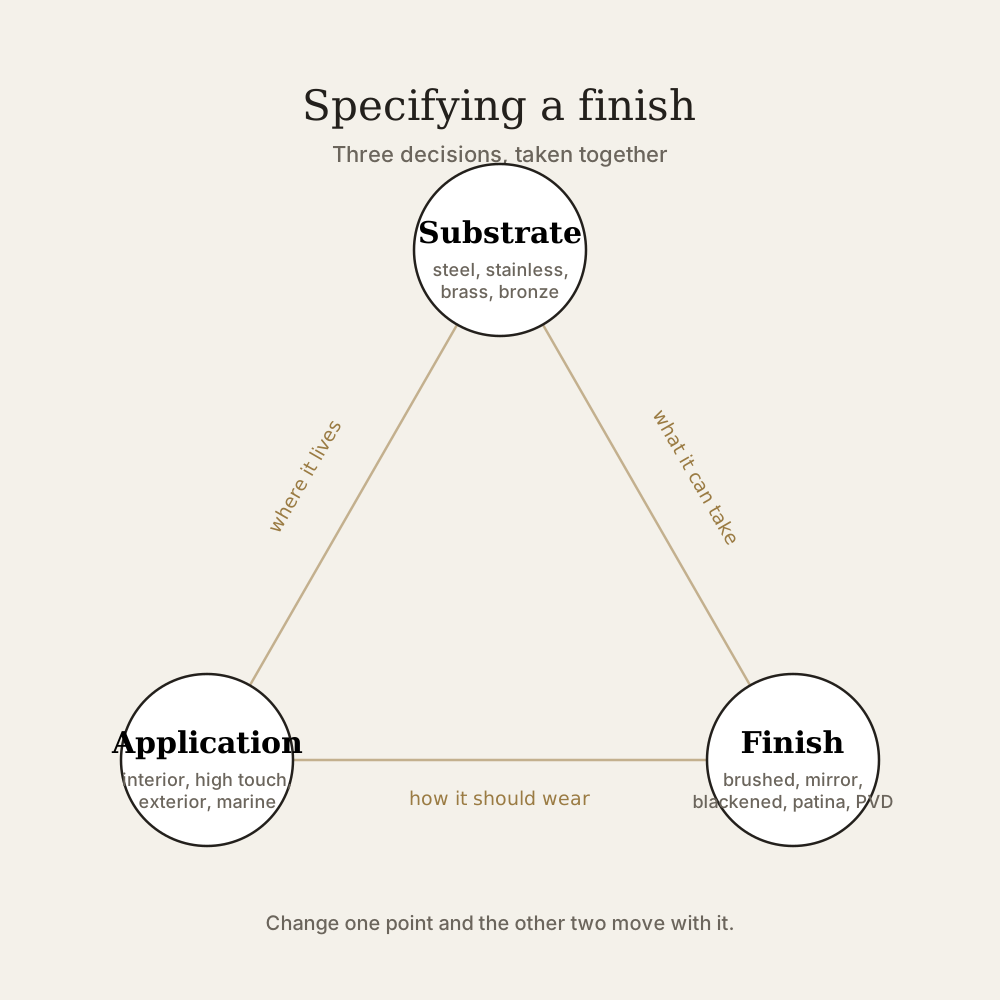
Every durable specification holds three decisions together.
The substrate is the base metal and its grade: mild steel, brass, bronze, or stainless in 304 or marine-grade 316. It sets what is possible and how the piece will behave outdoors, underfoot or by the sea.
The finish is what happens to that surface: the texture, whether brushed, satin, mirror or bead-blasted, the colour or patina, and any coating or seal.
The application is the real position: interior or exterior, sheltered or coastal, a feature wall no one touches or a door pull worked a thousand times a day.
Change one and the other two should be revisited. A brushed gold that is right for a lobby reveal is the wrong call, on the wrong grade, for a poolside gate. Our materials library is organised this way, substrate first, because the metal decides the envelope the finish lives inside.
The main finish families
Most architectural work draws from a handful of finish families. Each has its own character, its own journal and its own rules.
Brushed and satin finishes carry a fine directional grain that softens reflection and hides marks, which is why they suit high-touch surfaces. The full range on stainless is set out in stainless steel finishes, and the warm-metal version in brass finishes.
Mirror and polished finishes are bright, reflective and demanding, beautiful and quick to show every fingerprint. On stainless, super mirror is also the base for the deepest PVD colours.
Blackened steel is a controlled oxide brought up on the metal itself, a living dark grey to black with depth rather than a coat of paint. Its behaviour and sealing are described in blackened steel.
Patina is chemistry on copper alloys, warm browns through to green and near-black grown into the surface. The craft is covered in copper and bronze patina and, for solid bronze, in architectural bronze. Weathering steel takes the same idea outdoors, as set out in Corten in architecture.
PVD colour is a hard, permanent metal colour fused onto stainless in a vacuum, gold, bronze, black and more, with the durability of the steel beneath. It is the route to warm and dark tones on large or exterior surfaces without tarnish, explained in coloured stainless steel and documented on the PVD coating and PVD colours pages.

Batch consistency and matching
Metal is not printed, and finishes are not paint chips. Two sheets from the same coil can take a brushed grain a shade apart, and two patina runs a week apart will differ. The way to hold a scheme together is the sample plate. One approved plate becomes the reference for the whole run, and pieces for a single elevation are finished together wherever the sequence allows, so the eye reads them as one surface. Living finishes, patina and blackened steel especially, are agreed as a tolerance by eye against that plate rather than to a number, because that is what they honestly are. Keep the signed plate. When phase two arrives two years later, it is what the new work is matched against.
Durability by environment
The right finish is the one that suits the position, and position is mostly about exposure.
Interior, low-touch: almost anything works. Feature walls, reveals and ceilings can carry mirror, patina or bare brass because little touches them.
Interior, high-touch: handrails, pulls and bar fronts want finishes that forgive handling. Brushed and satin hide marks, sealed surfaces resist fingerprints, and a living finish here should be a knowing choice to let the metal wear.
Exterior: the substrate leads. Sealed patinas and weathering steel suit outdoor life, while bare brass and blackened steel usually want shelter or an accepted change.
Marine: marine-grade 316 stainless is the base, with PVD colour or a mirror or satin surface over it. This is where a loose specification costs the most.
Samples and sign-off
No finish should go to production on a screen or a word. It should be signed off on a physical sample, made on the intended substrate, at the intended surface, and viewed in the actual light of the room. A gold that sings under warm gallery light can turn green under cool daylight. The sample is also the contract: once signed, it is the standard the delivered work is measured against, which protects both sides. For a matched scheme, ask for the finishes as a set of plates seen together, not one at a time.

What to put in the spec
A finish that can be quoted, made and checked names all of this:
- Base metal and grade, for example brass, or 316 stainless
- Surface texture: brushed, satin, mirror or bead-blasted
- Colour or patina, and its reference
- Coating or seal: lacquer, PVD, our protective formula, or "living, unsealed"
- Reflectivity or gloss level
- Position and exposure: interior, exterior, marine, high-touch
- Batch and matching tolerance
- The sample or plate it is signed off against
- Cleaning and care regime
Miss the substrate line and the rest can be perfect and still wrong.
Specifying with Dekap
If you are asking whether we do this, the answer is yes. We make architectural metal and surfaces across all of these finishes, and we help write the specification before anything is made. This is the checklist we work from with architects and specifiers every week. We recommend the substrate for the position, pair the surface with the colour, make approved sample plates to sign off, and seal high-touch and high-gloss work with our own protective formula, developed in the atelier for longer-lasting colour and fingerprint resistance. Where a warm or dark tone needs to survive scale, traffic or weather, we carry it in PVD colour rather than a finish that will tarnish, and we document every finish for contract-grade specification.
We will say this plainly, because we have learned it the hard way. The line most often missing from a finish spec is the substrate. We once had a bronze-tone sign-off that looked right on the plate and shifted on site, because the plate had been made on one base metal and the run on another, and the tone moved with the metal underneath. Now we will not sign a finish without the substrate written beside it. It is a small line. It is the one that holds.
If you are specifying metal for a current project, start a project enquiry, and tell us the finish, the substrate and the position. We will recommend the finish, not just supply it.
FAQ
How do you specify a metal finish?
Specify a metal finish as three linked decisions: the substrate (the base metal and grade), the finish (surface texture, colour and any patina or coating) and the application (position, exposure and how the piece is touched). Name each one, agree a physical sample, and state whether the finish is sealed or left living. A finish named without its substrate and position is not yet a specification.
What goes in a metal finish specification?
A complete metal finish specification names the base metal and grade, the surface texture, the colour or patina, any coating or seal, the reflectivity, the position and exposure, and the sample it is signed off against. It also states how batches should be matched and how the finish is cleaned. Written this way, the finish can be quoted, made and checked against one agreed standard.
How do you ensure batch consistency?
Batch consistency comes from an approved sample plate, kept as the reference for the whole run, and from finishing the pieces for one elevation together where the sequence allows. Living finishes such as patina and blackened steel vary by nature, so consistency is agreed as a tolerance by eye against the plate rather than a single exact colour. Retaining the signed plate lets later phases be matched to the original.
Which finish is best for exterior or marine use?
For exterior and marine positions the substrate matters more than the finish. Marine-grade stainless such as 316 or 316L is the usual base, and it can carry PVD colour, a mirror or a satin surface for facades and coastal work. Weathering steel is made to oxidise outdoors, and sealed patinas can suit sheltered exterior positions. Bare brass, blackened steel and unsealed finishes are better kept to interior use unless they are specified to weather.
How do you request samples?
Request samples by naming the substrate, the finish and the position, then asking for a physical sample plate in that combination before production. A sample should be made on the intended base metal at the intended surface, viewed in the room's own light, and signed off as the reference for the run. For a matched scheme, ask for the finish family on one set of plates so the tones are read together.
Does Dekap help specify metal finishes?
Yes. We review and write metal finish specifications with architects and specifiers, recommend the substrate, surface and finish for each position, and make approved sample plates to sign off before production. We finish in-house across brushed, mirror, blackened, patinated and PVD colour, seal high-touch surfaces with our own protective formula, and document the finish for contract-grade specification.
Specifying metal for a project?
Tell us the finish, the substrate and the position. We will recommend the finish, not just supply it.
Start a project enquiry