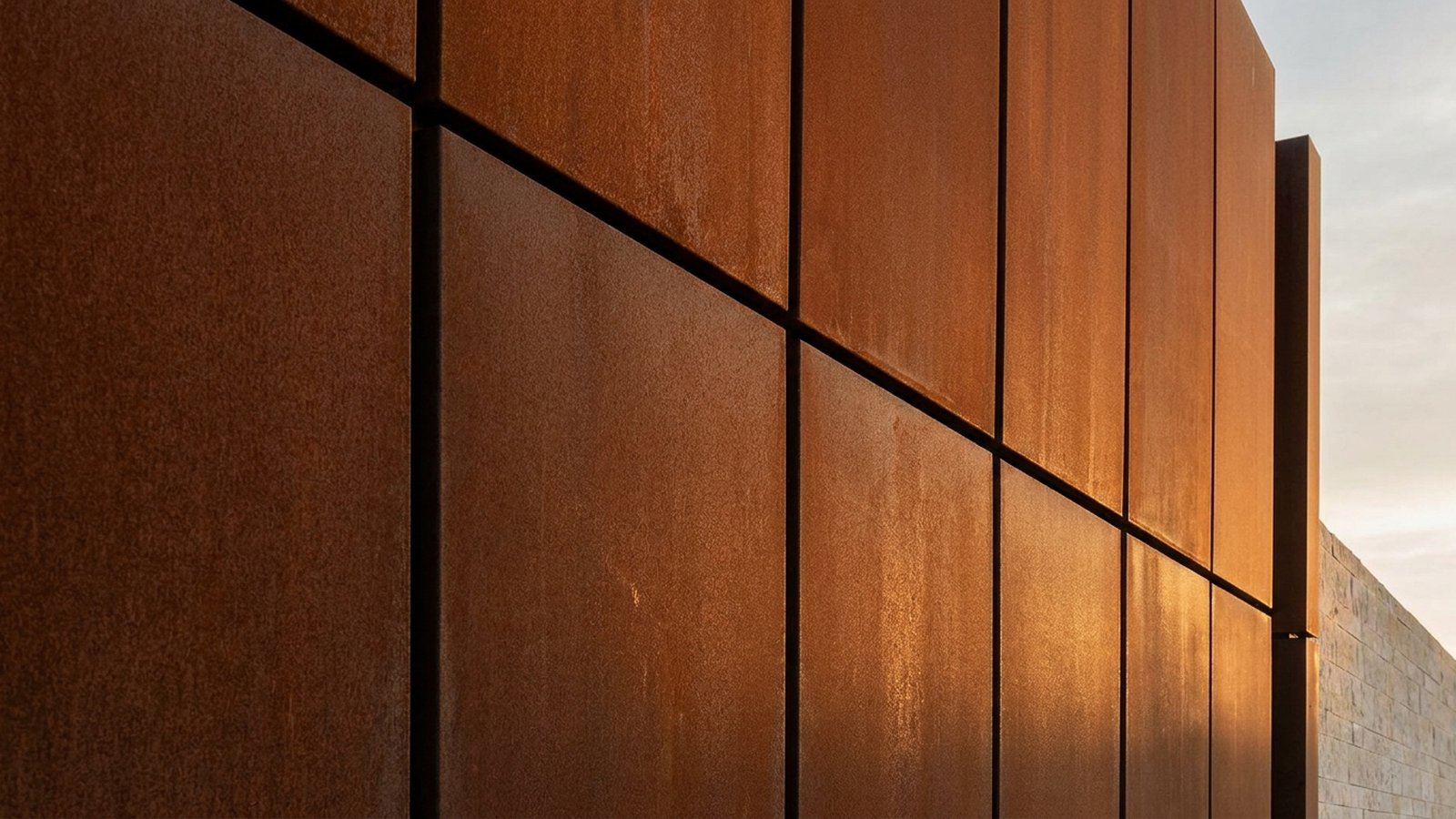
Corten steel in architecture
Few materials carry a building's age the way weathering steel does. Corten arrives raw and bright, then turns through orange and rust to a deep, settled brown over months in the open. Used well, it gives a facade warmth, depth and a sense of having always been there. Used without thought, it streaks the stone beneath it and keeps shedding colour for years. This guide is written for architects and project teams specifying corten and weathering steel on real buildings, where the patina has to be understood, detailed and controlled.
What corten (weathering) steel is
Corten, more correctly called weathering steel, is a family of structural steels alloyed with small amounts of copper, chromium, nickel and phosphorus. Those additions change how the steel rusts. Ordinary steel rusts and keeps rusting, the corrosion flaking away to expose fresh metal underneath. Weathering steel rusts and then largely stops, because the alloy forms a dense, tightly bonded oxide layer that slows further corrosion to a crawl.
"Corten" began as a brand name and is now used loosely for the whole category. On a specification it is worth naming the grade, because weathering steel is the accurate, neutral term. The colour, that warm russet brown, is the patina itself, the same family of living oxide finish as a copper or bronze patina, grown here on steel rather than on a copper alloy.
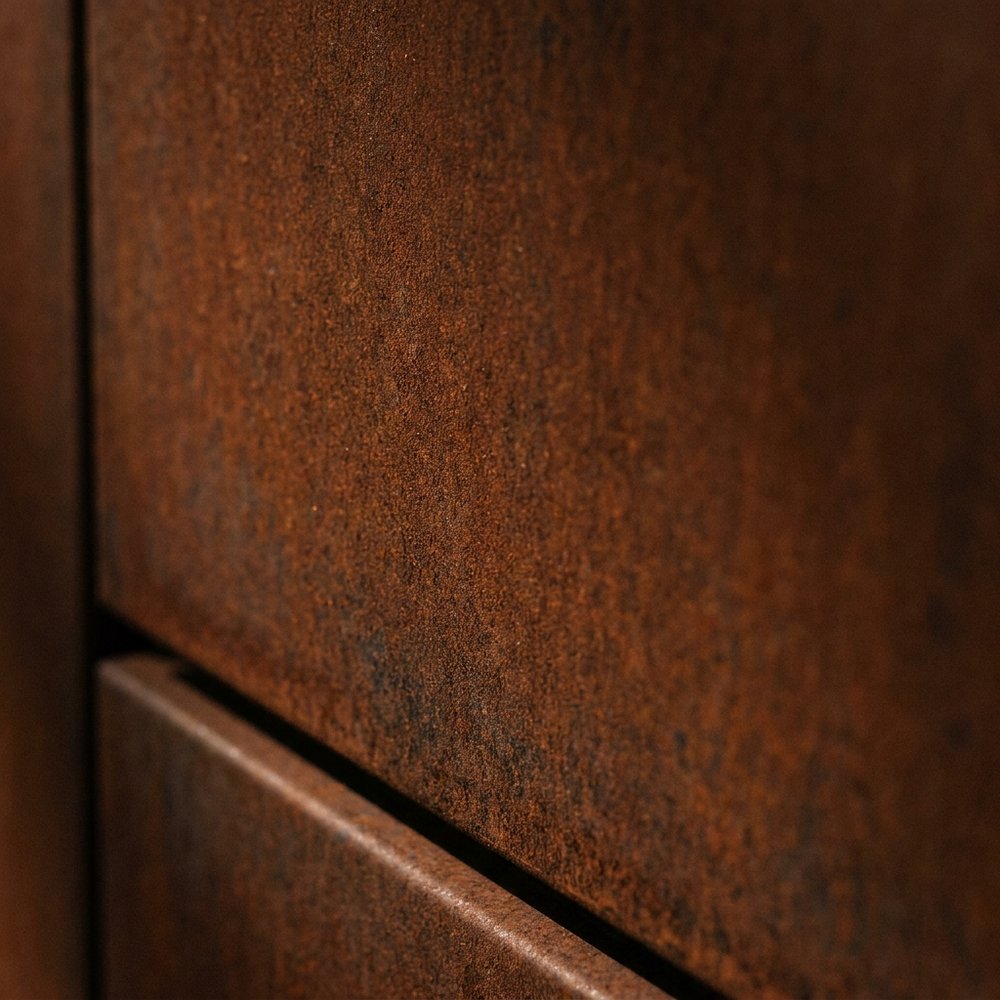
How the protective rust patina forms and stabilises
The patina is not instant. Fresh weathering steel needs repeated cycles of wetting and drying to build its protective layer, so the colour develops over months and settles over a year or more, depending on climate and exposure. Sheltered faces patinate more slowly than exposed ones, which is why a single building can read unevenly in its first season.
Two things shorten and control that process in practice. The patina can be pre-weathered in the workshop, accelerating the oxide so panels arrive close to their settled colour and far more consistent than steel left to weather on site. And the finish can be sealed once the colour is reached, which holds the tone and, importantly, reduces the run-off described below. In the atelier the choice between an open, still-developing patina and a sealed, stabilised one is made against the building, the climate and what sits beneath the steel.
The look over time: colour, run-off and how it is managed
Weathering steel is never flat. It moves from light orange through russet to deep umber, varies panel to panel, and keeps a fine granular texture that catches raking light. That variation is the point of the material, and it deepens for the first year or two before settling.
The risk to design for is run-off. As the patina develops, rainwater carries rust-coloured particles off the steel and can stain pale stone, concrete, render and paving below. This is managed by detailing, not by hope: drips, reveals and shadow gaps that throw water clear of surfaces beneath, sacrificial or tolerant materials at the base, and where appropriate a sealed patina that sheds far less. Good corten detailing assumes run-off and routes it, the same way good architecture routes any water.
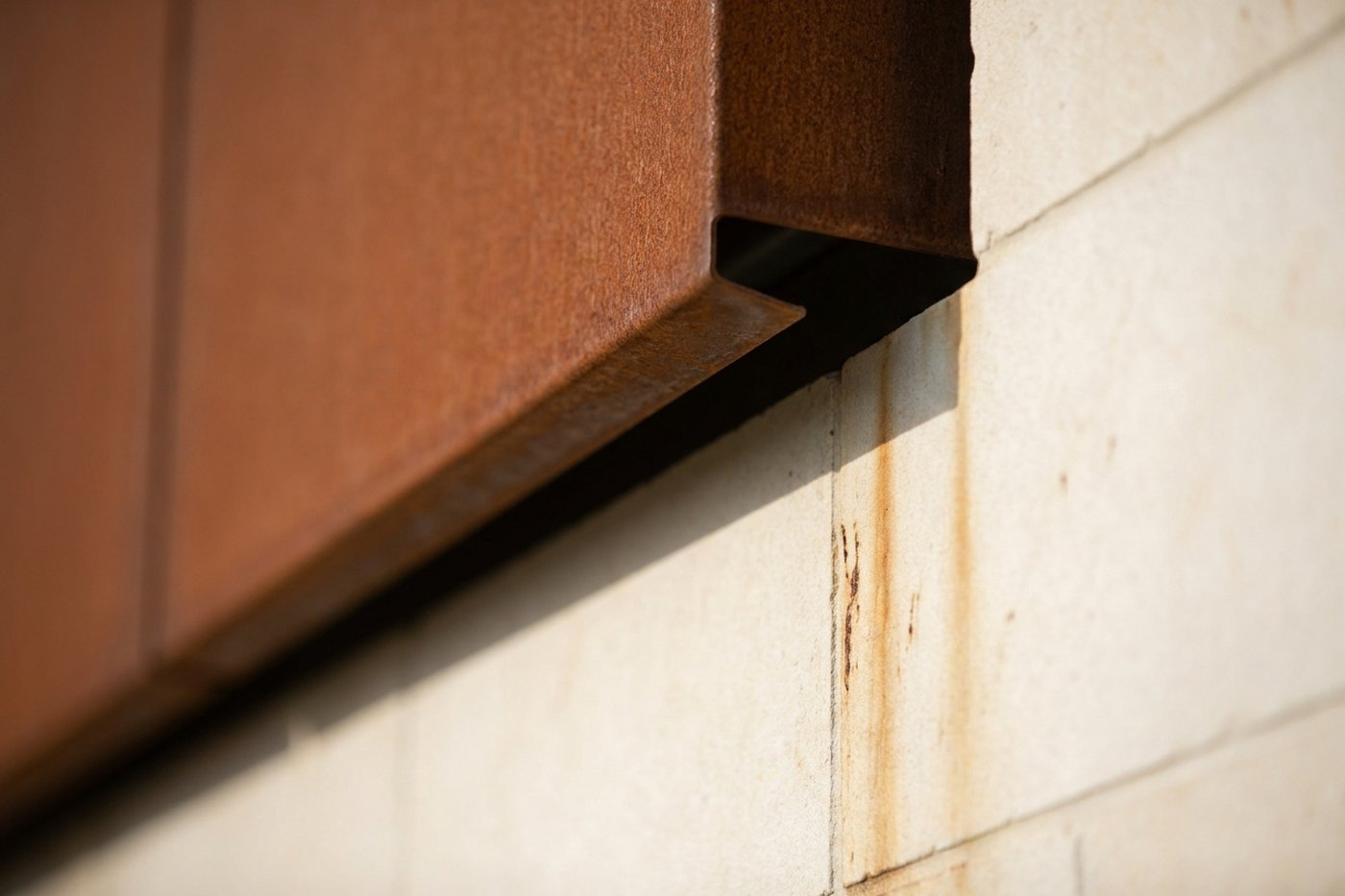
Corten in facades and cladding
The natural home of weathering steel is the facade. As rainscreen cladding, fascia and solid panels it gives a building a warm, matte, deeply textured skin that ages with grace and needs almost no maintenance once settled. It cuts and folds well, takes perforation for screens and brise soleil, and pairs beautifully with timber, glass and pale stone. For architecture, the considered route is pre-weathered, carefully detailed panels rather than raw sheet left to find its own colour on the building.
Interior and feature use
Indoors, weathering steel is used more for character than for weathering, since the patina is largely complete and stable. As feature walls, fireplace surrounds, reveals and stair elements it brings the same warm russet depth into a room. Sealed for interior use, it stops transferring colour to hands and surroundings while keeping its look. Where a darker, cooler tone is wanted instead, blackened steel is the companion finish.
Durability, lifespan and maintenance
Properly specified and detailed, weathering steel is one of the longest-lived architectural metals, lasting many decades with little intervention, which is why it is used on bridges and large structures. The conditions it dislikes are constant wetness, standing water, heavy salt and trapped moisture, where the patina cannot dry between cycles and corrosion continues. Coastal and marine positions need specific advice and often a different specification. Maintenance is mostly about drainage staying clear and, on sealed finishes, renewing the seal over time.
Corten vs painted or blackened steel
The three dark, warm steel finishes are chosen for different reasons. Weathering steel gives a living russet patina and decades of low-maintenance life outdoors, with run-off to detail for. Painted or powder-coated steel gives any fixed colour and a hard, uniform surface, but it sits on the metal, reads flat, and fails by chipping rather than ageing. Blackened steel gives a hand-made charcoal-to-gunmetal depth for interior and sheltered use. Where a project wants a fixed, repeatable warm-metal tone with no run-off and no change over time, a bronze or warm PVD finish on stainless carries the colour while staying constant.
Working in corten and weathering steel
If you are asking whether we make this finish, the answer is yes. Dekap fabricates and finishes weathering steel to order, from facade and cladding panels to interior features, and pre-weathers and seals it in-house so the colour arrives consistent and signed off against a sample plate rather than left to chance on site. We seal with our own protective formula, developed in the atelier to hold the tone and reduce run-off longer than a standard seal, and document the finish for contract-grade specification. Where a position is coastal, constantly wet, or needs a fixed russet tone with no run-off, we deliver the look as a sealed finish or a warm PVD finish on stainless, or guide the specification there. The same hands carry the piece from drawing to the crated, finished panel on its way to site.
If you are specifying corten or weathering steel for a current project, start a project enquiry, and tell us the position, the exposure and what sits below the steel. We will recommend the finish and the detailing, not just supply the metal.
FAQ
What is corten steel?
Corten, properly called weathering steel, is a steel alloyed with copper, chromium, nickel and phosphorus so that it forms a dense, protective rust patina and then largely stops corroding. The warm russet brown is the patina itself. "Corten" was originally a brand name now used loosely for the whole category.
Does corten steel keep rusting?
No, not in the way ordinary steel does. After the protective patina forms, over months of wetting and drying, further corrosion slows to a crawl and the surface stabilises. The exception is constant wetness, standing water or heavy salt, where the patina cannot dry and corrosion continues.
Does corten stain the surfaces below it?
It can. As the patina develops, rain carries rust-coloured particles off the steel that can stain pale stone, concrete and render beneath. This is managed by detailing, with drips, reveals and shadow gaps that throw water clear, tolerant materials at the base, and where appropriate a sealed patina that sheds far less.
How long does corten steel last?
Properly specified and detailed, weathering steel is one of the longest-lived architectural metals, lasting many decades with little maintenance, which is why it is used on bridges and large structures. Its lifespan depends on being able to dry between wettings, so drainage and detailing matter more than upkeep.
Is corten suitable for interiors?
Yes. Indoors the patina is largely complete and stable, so weathering steel is used for its warm character on feature walls, fireplaces and reveals. Sealed for interior use, it stops transferring colour to hands and surroundings while keeping its look.
Corten or blackened steel, which should I use?
Use weathering steel for a living russet patina and decades of low-maintenance exterior life, accepting run-off to detail for. Use blackened steel for a hand-made charcoal-to-gunmetal depth in interior or sheltered positions. They are different colours and different intents rather than direct substitutes.
Can corten steel be sealed?
Yes. Once the patina reaches the wanted colour, a sealant holds the tone and greatly reduces run-off, which is useful for interiors and for exteriors above pale materials. A sealed finish needs renewing over time, while an open patina is left to keep developing.
How is corten detailed on a facade?
As rainscreen cladding or panels, with the detailing designed to manage water from the start: drips and reveals that shed run-off clear of surfaces below, shadow gaps, tolerant base materials, and panels usually pre-weathered for consistent colour. The detailing assumes run-off and routes it rather than trying to prevent the patina.
Does Dekap make corten and weathering steel?
Yes. We fabricate and finish weathering steel bespoke, from facade and cladding panels to interior features, pre-weathered and sealed in-house and signed off against a sample plate. We seal it with our own protective formula for a held tone and reduced run-off, and where a position is coastal, constantly wet or needs a fixed russet with no run-off, we deliver it as a sealed finish or a warm PVD finish on stainless, or guide the specification there.
Specifying corten or weathering steel?
Tell us the position, the exposure and what sits below the steel. We will recommend the finish and the detailing, not just supply the metal.
Start a project enquiry