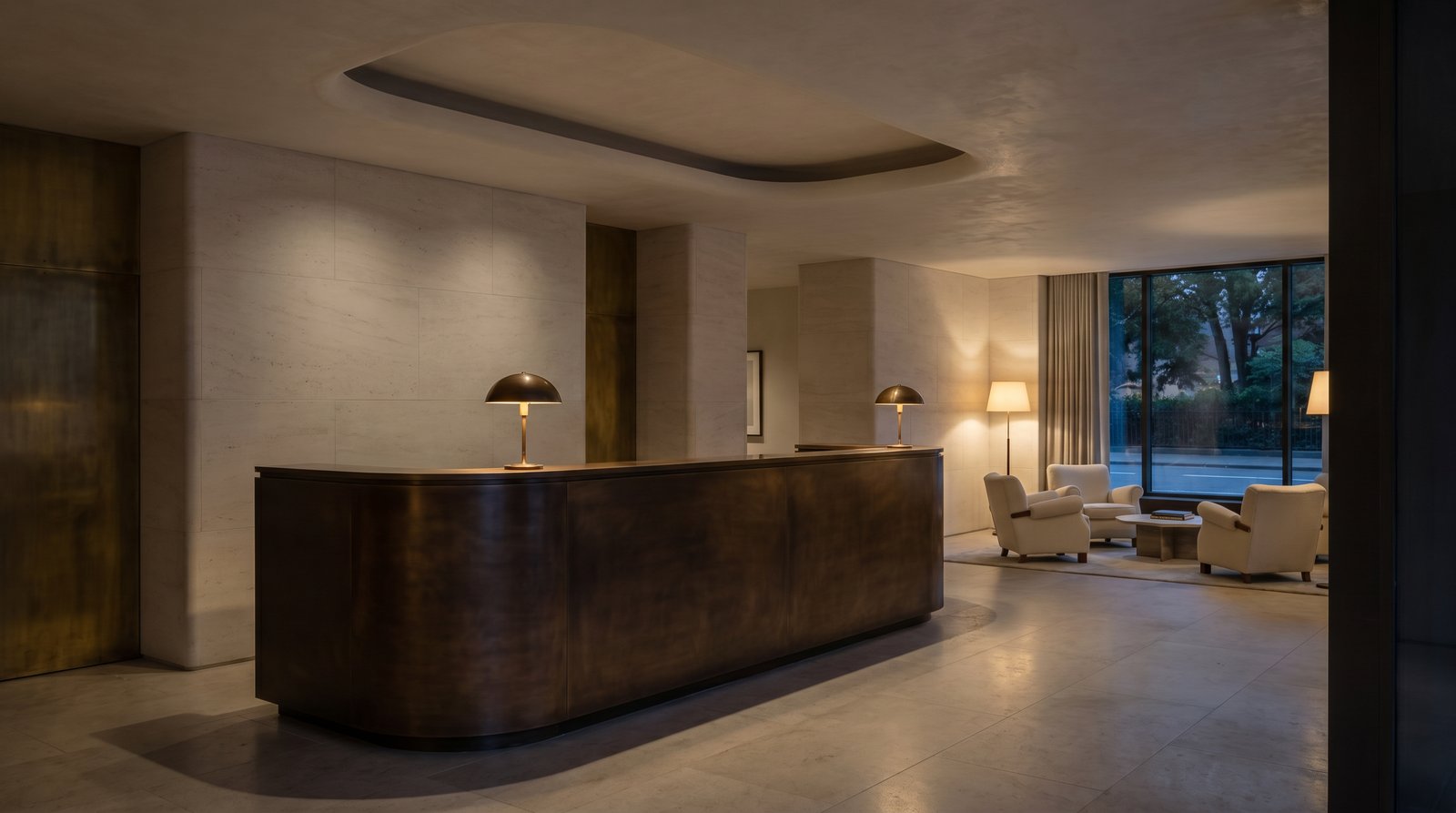
Copper and bronze patina, a finish guide
Patina is the finish architecture borrows from time. It is the green of an old roof, the warm brown of a worn handrail, the soft black of a cast door. Specified well, it gives a new building the depth of an old one. Specified loosely, it is unpredictable. This guide is written for architects, designers and project teams choosing patinated copper, bronze and brass for a real space, where the colour has to be agreed, repeated and made to last.
What patina is
Patina is the layer that forms on copper and copper alloys as the surface reacts with air, moisture and time. On copper, bronze and brass that reaction produces colour, from warm browns through to the blue-greens of verdigris. It is a chemical change in the top of the metal, not a coat laid over it, which is why a patina has the depth and movement that paint never quite reaches.
It helps to separate three words that get used loosely. Tarnish is the early, thin dulling of a bright metal. Corrosion is decay that eats into and weakens the metal. Patina is the stable, often protective film that sits between the two and, on copper alloys, can be both beautiful and durable. A patina is a living finish: it begins somewhere and settles somewhere, and good specification is about controlling where.
The patina colour range
The colour of a patina depends on the metal, the chemistry used and how far the reaction is taken. Across copper, bronze and brass the working range covers three broad families.
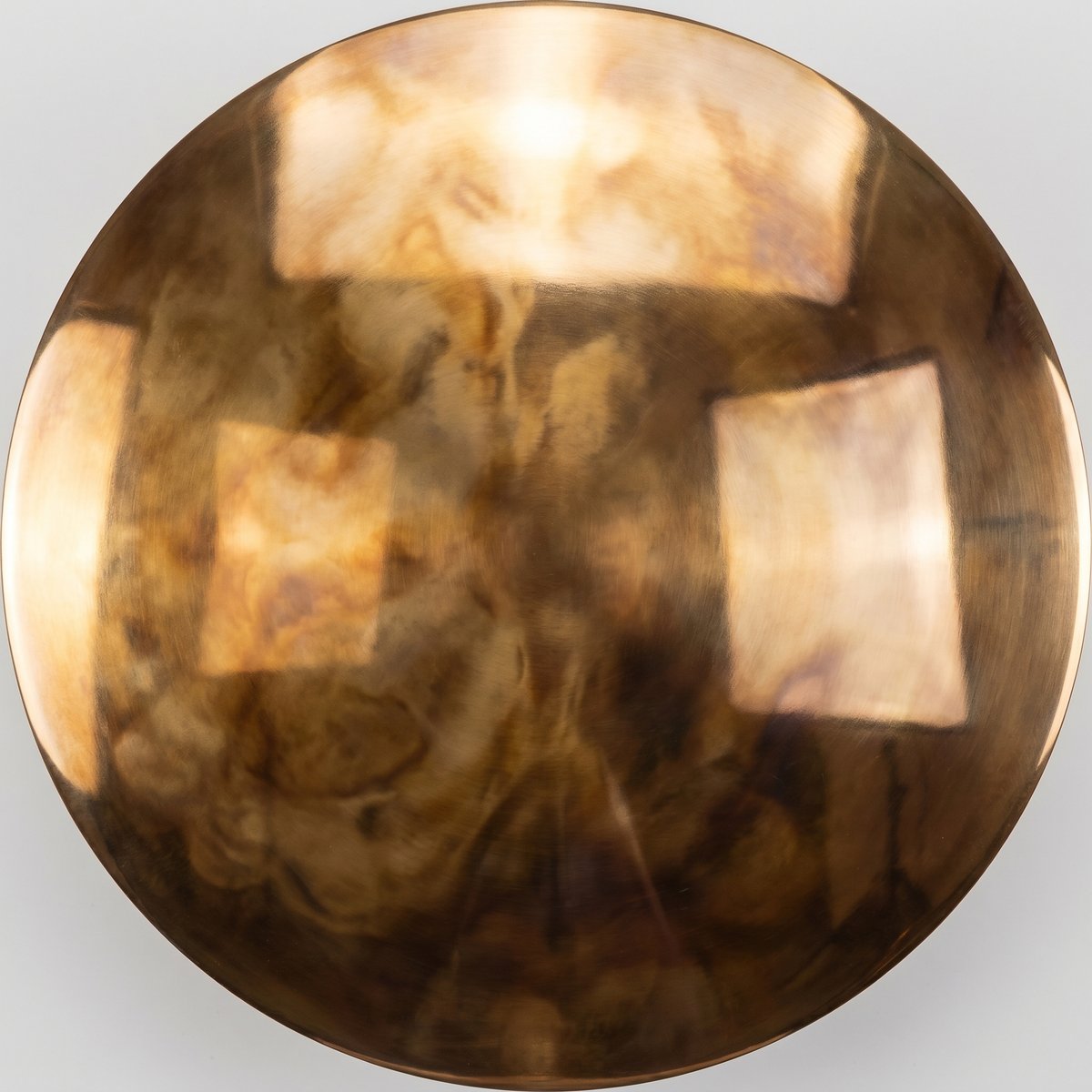
Brown, chocolate and russet
The warm browns are the most architectural and the most controllable. They run from light honey-brown through chocolate to deep near-black russet, and they suit handrails, cladding, joinery and hardware where a warm, grounded metal is wanted. These tones read as aged rather than green, and they are the everyday language of patinated bronze.
Green and verdigris
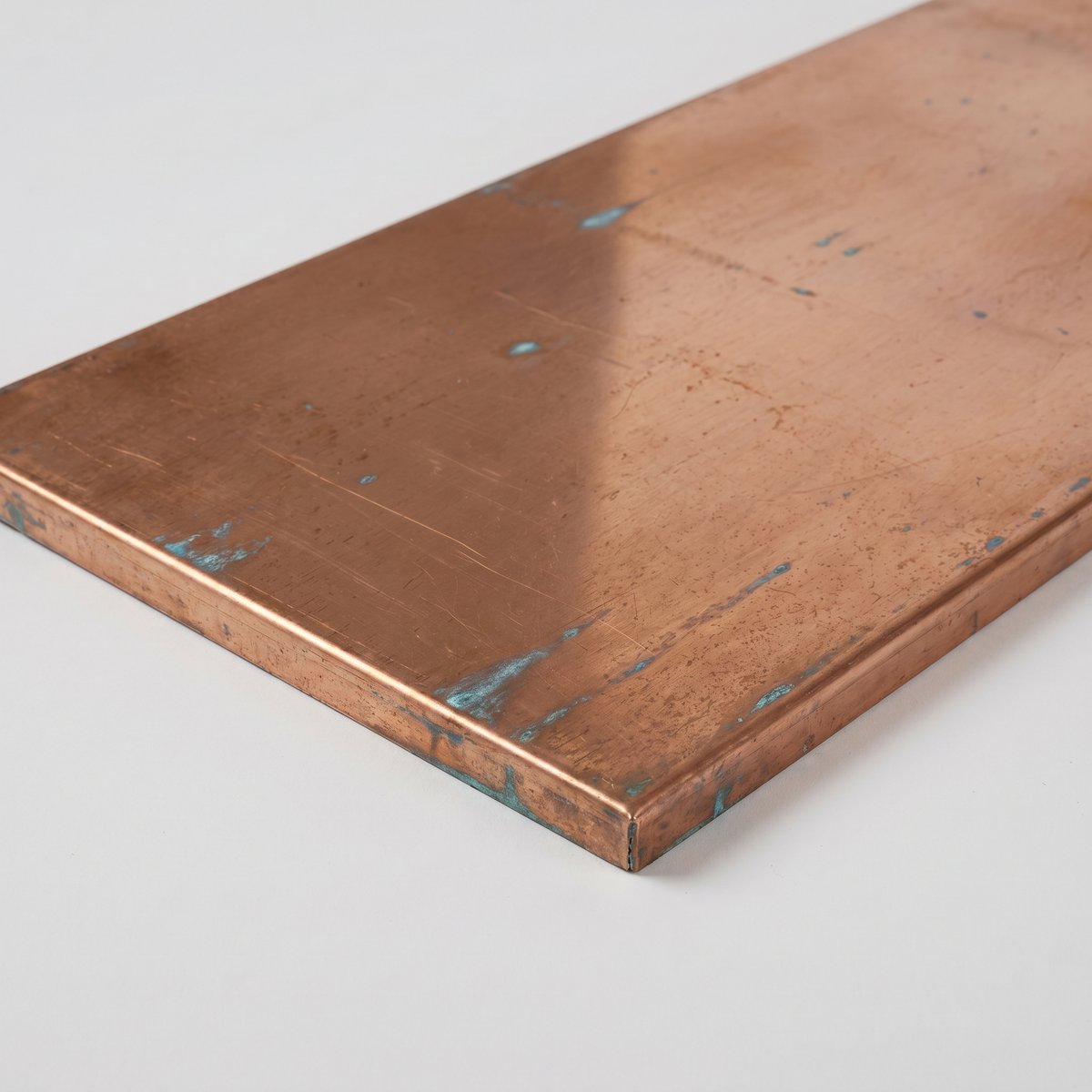
Verdigris is the classic blue-green of weathered copper, the colour of old roofs and monuments. It is the most expressive end of the range and the most demanding to control, because it depends on patterning as much as colour. Used as a feature, on a panel, a relief or a single wall, it carries enormous character.
Blue, grey and black
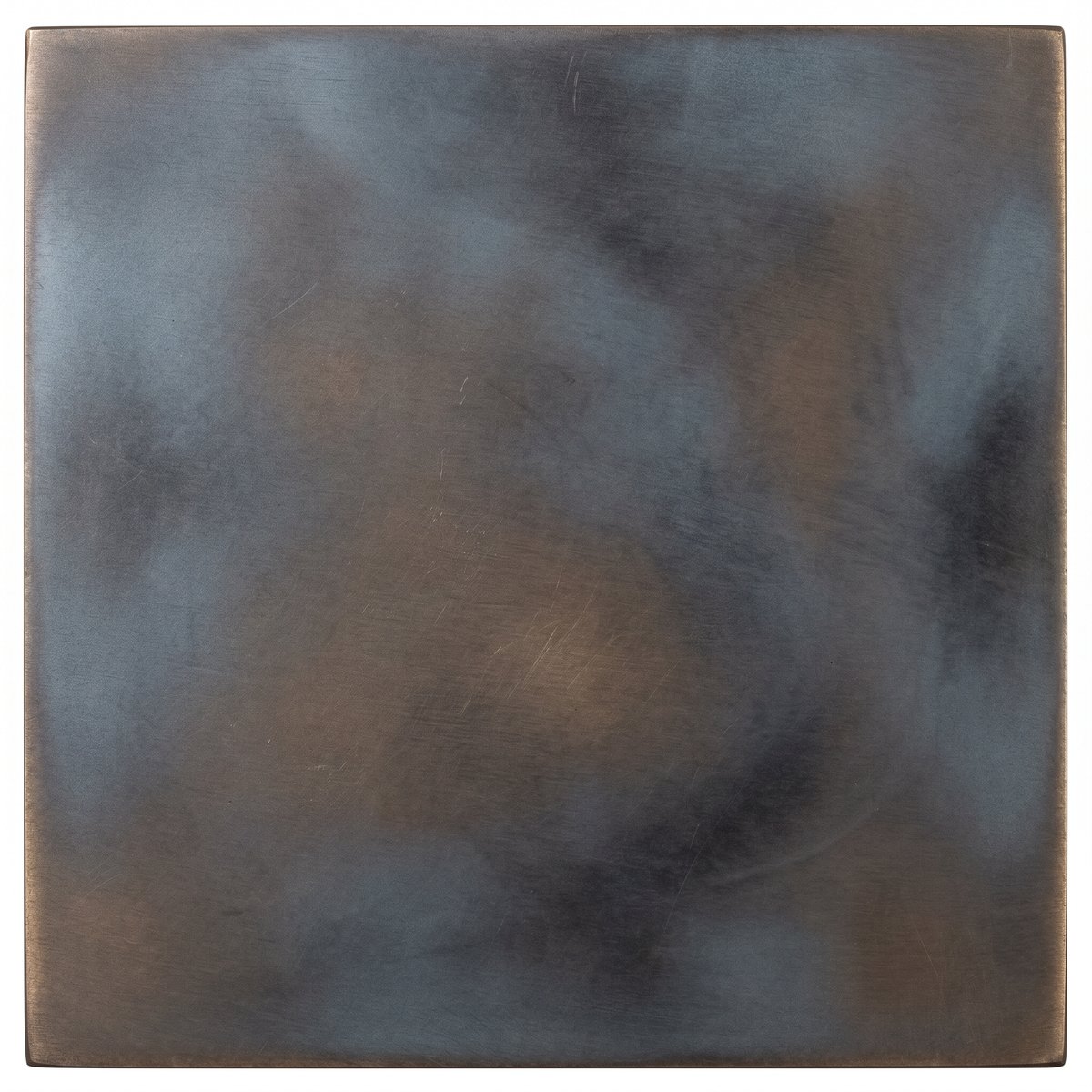
Between the browns and the greens sit the blues, slate greys and soft blacks, often used to cool a scheme or to read almost as a dark stone. Black and near-black patinas on bronze are a quiet, classical choice for sculpture, lettering and fine hardware.
Natural vs applied patina
A natural patina forms on its own over years of exposure, and it is genuinely unpredictable: the same copper will weather differently on a sheltered wall and an exposed parapet. An applied patina is the same chemistry, accelerated and directed in the workshop, so the colour arrives in weeks rather than decades and can be agreed in advance.
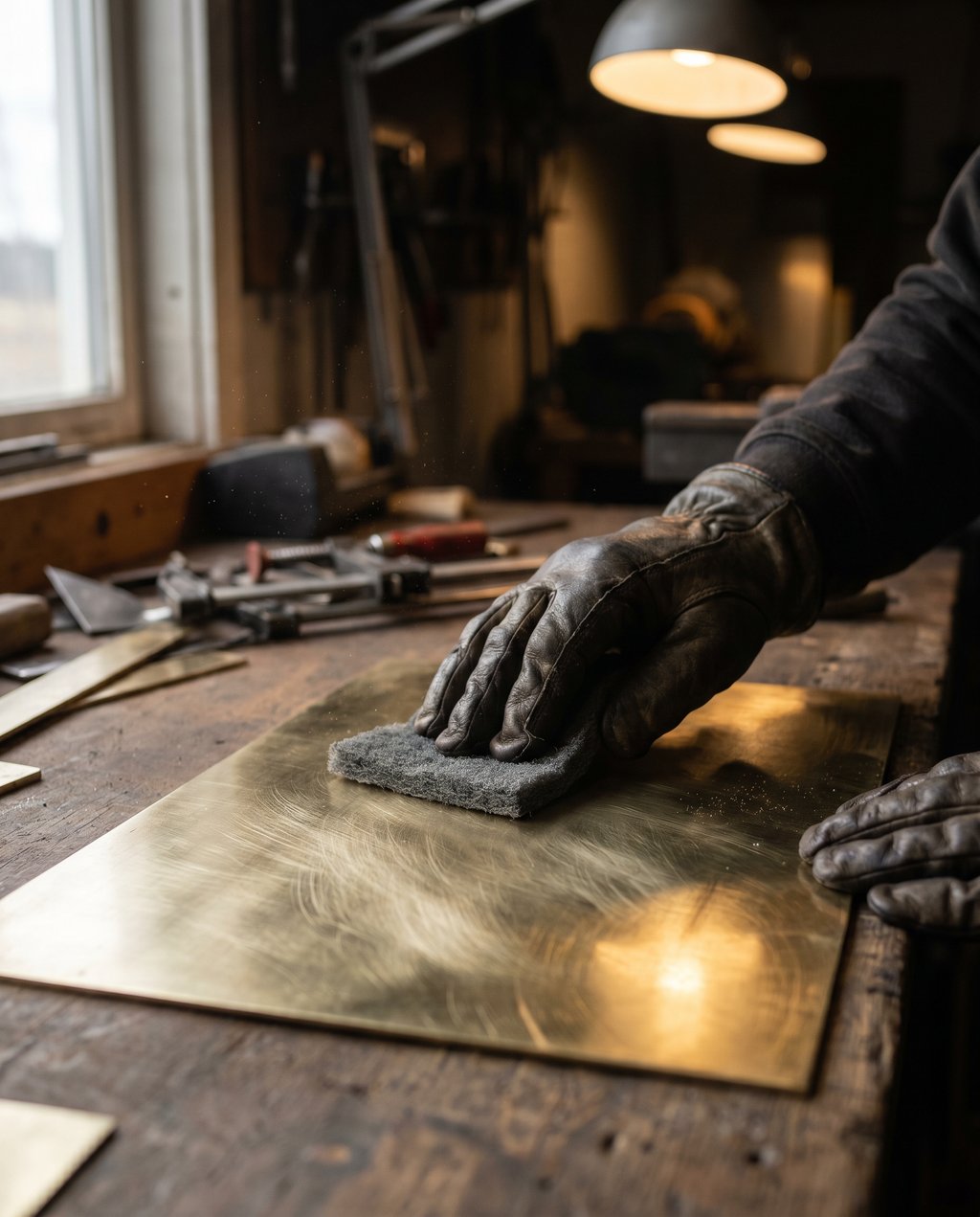
For architecture, applied patina is almost always the right route. It lets the finish be signed off against a sample, repeated across a panel run, and matched to a palette. The skill is in the hand: patina is brushed, sprayed, stippled or layered, heat is sometimes used to drive the colour, and the depth is built up in stages. Done well, an applied patina looks like time, not like a treatment. This is craft, not a kit, and it is a long way from the DIY patina sprays sold for hobby use.
Patina on copper, bronze and brass
The three metals patinate differently, and the difference matters on a specification.
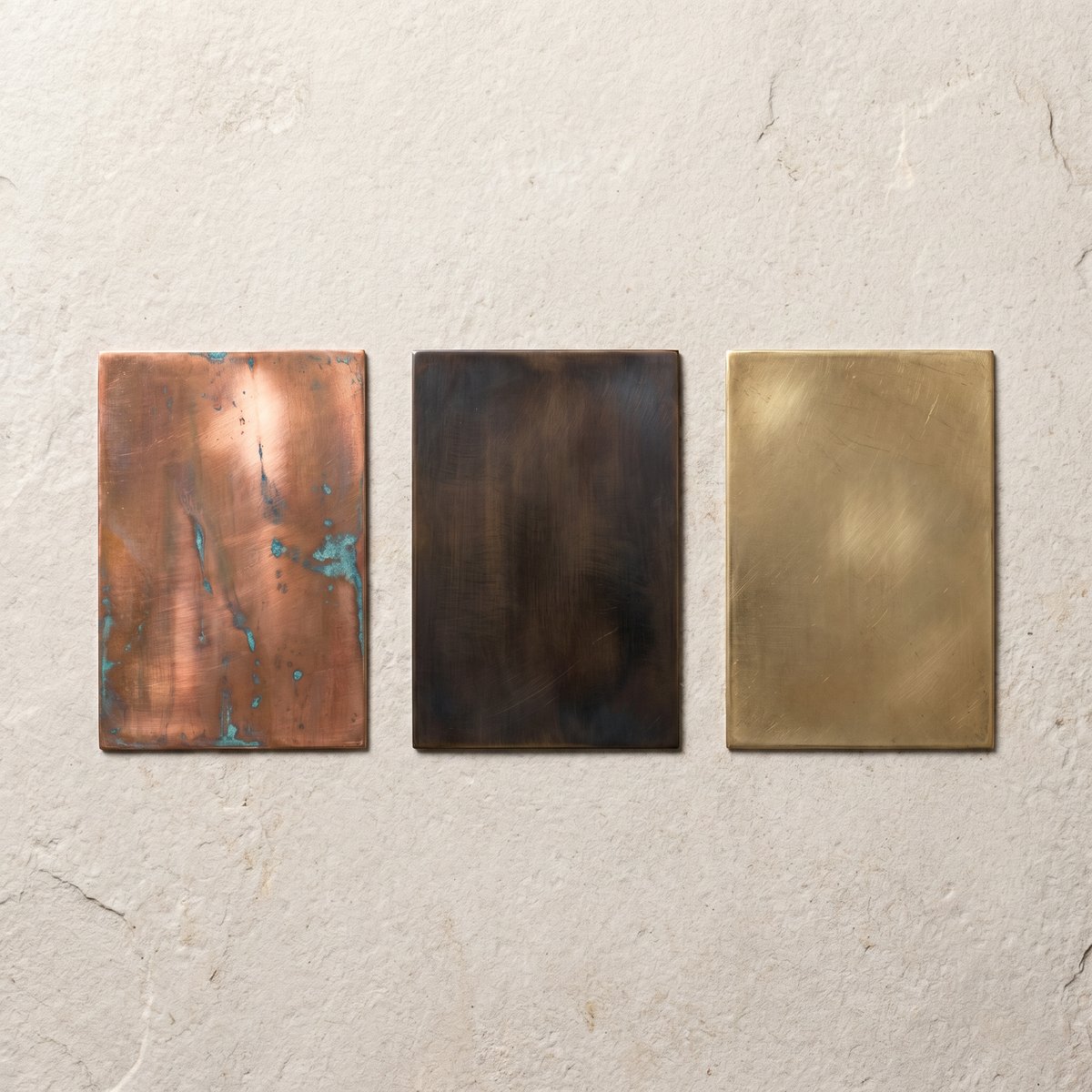
Copper is the most reactive and gives the widest range, from warm browns to full verdigris. It is the metal for the green and blue-green effects. Bronze, a copper-tin alloy, is the classical patina metal, taking deep, stable browns and blacks beautifully, which is why patinated bronze is the language of sculpture and fine architectural detail. Brass, a copper-zinc alloy, patinates more slowly and to a narrower, warmer range; patinated and antique brass tends toward soft browns and aged golds rather than green. Where a project wants a fixed, repeatable bronze or copper tone with no further change, a bronze or copper PVD finish on stainless steel reads as the metal while staying constant, which is a useful alternative we cover in our note on coloured stainless steel.
Sealing and stabilising for architecture
Left alone, a patina keeps reacting. For architecture that is usually not what is wanted, so the finish is stabilised once the agreed colour is reached. A lacquer holds the colour fixed and even, ideal where the surface must match across many pieces and stay put. A wax or oil slows the change rather than stopping it, keeping a softer, hand-fed surface that can be maintained over time.
The choice follows the position. Interior pieces are commonly lacquered for stability and ease of care. Living finishes, left waxed so they continue to develop, are a deliberate decision that the client should make knowingly, because the surface will keep moving. Exterior and marine positions need the most thought, since exposure both drives the colour and threatens it.
Where patina works
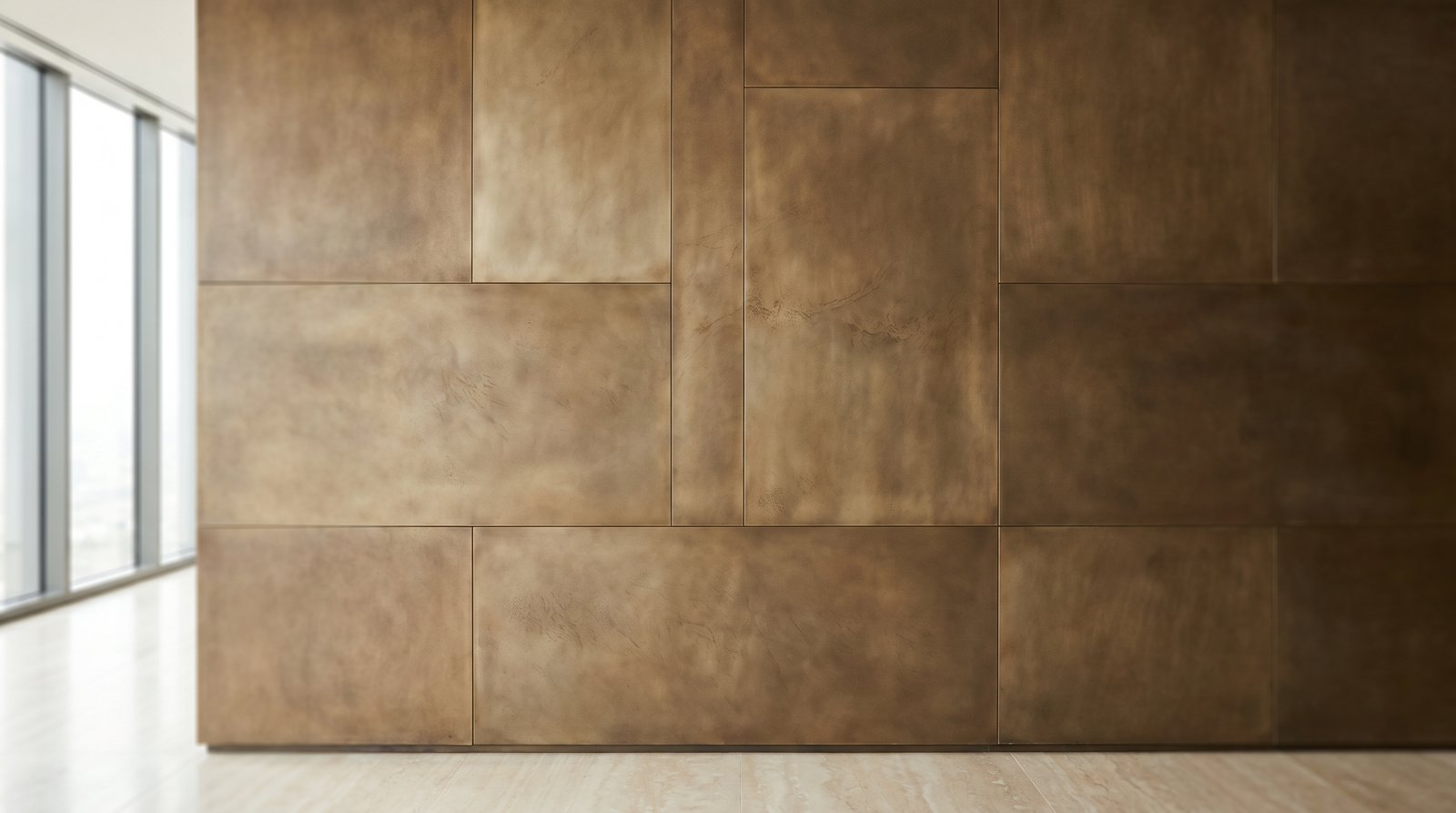
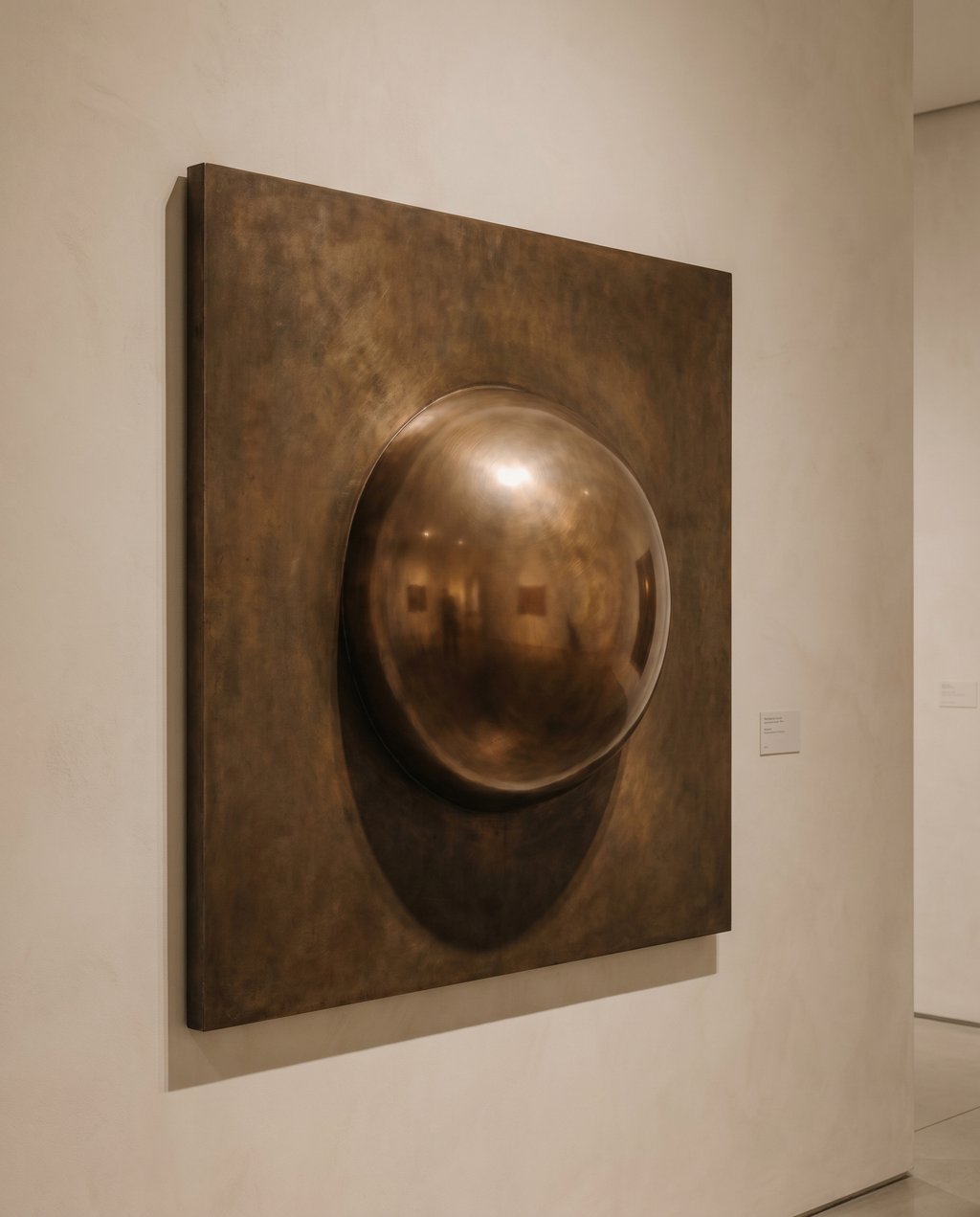
Patina belongs anywhere a surface should feel considered and quiet rather than new and bright. As cladding and feature walls it gives a scheme instant depth. On reliefs, screens and art pieces it carries the most expressive colour. On hardware, handrails and joinery it warms a space at the points people touch. In yacht and marine interiors it is used with care and the right sealing, away from constant salt and water. Across all of these it pairs naturally with darker finishes such as blackened steel, the warm patina against the cool oxide.
How patina ages over time
A sealed patina is designed to hold the agreed colour, with maintenance: lacquers are renewed when they eventually wear, waxes are refreshed, and minor damage is patched by hand. A living, unsealed finish will keep developing, deepening and sometimes greening, which can be exactly the intent for the right piece in the right place. The single most useful thing to settle early on a project is which of the two a client wants, because it changes the finish, the care and the expectation. We set that expectation in writing as part of the specification.
Bespoke patina with Dekap
If you are asking whether we make this finish, the answer is yes. Dekap develops and applies patina by hand on copper, bronze and brass, from a single relief panel to the patinated cladding of an interior. We work from approved sample plates so the colour is signed off before production, repeat it across a panel run, and seal it with our own protective formula, developed in the atelier to hold the agreed colour longer than a standard seal. We document the finish for contract-grade specification. Where a project needs a patinated look that never moves, we carry the same tone in a fixed bronze or copper PVD finish, or guide the specification there.
If you are specifying a patina for a current project, request a sample set or start a project enquiry, and tell us the metal, the colour you have in mind, the position and whether you want it sealed or living. We will recommend the finish, not just supply it.
FAQ
What is patina?
Patina is the coloured film that forms on copper, bronze and brass as the surface reacts with air, moisture and time. It is a chemical change in the top of the metal rather than a coat applied over it, which gives it depth and movement. On copper alloys it is often both decorative and protective.
Is patina the same as tarnish or corrosion?
No. Tarnish is the early, thin dulling of a bright metal. Corrosion is decay that weakens the metal. Patina is the stable film that sits between them, and on copper alloys it can be both attractive and protective rather than damaging.
What colours can a patina be?
On copper, bronze and brass the range runs from warm browns, chocolate and russet, through slate blues, greys and soft blacks, to the blue-greens of verdigris. The colour depends on the metal, the chemistry used and how far the reaction is taken.
What is the difference between natural and applied patina?
A natural patina forms slowly through exposure and is unpredictable. An applied patina uses the same chemistry, accelerated and directed in the workshop, so the colour arrives quickly and can be agreed against a sample and repeated across a project. For architecture, applied patina is almost always the right route.
Can you seal a patina so it stops changing?
Yes. Once the agreed colour is reached, a lacquer holds it fixed and even, while a wax or oil slows the change rather than stopping it. A surface left unsealed remains a living finish and will keep developing over time.
Does patina protect the metal underneath?
On copper, bronze and brass a stable patina generally protects the metal beneath it, which is why weathered copper roofs last so long. That is different from active corrosion, which damages metal. Sealing adds a further layer of protection and keeps the colour where it was agreed.
What is the difference between copper, bronze and brass patina?
Copper is the most reactive and gives the widest range, including full verdigris. Bronze takes deep, stable browns and blacks and is the classical patina metal for sculpture and fine detail. Brass patinates more slowly to a narrower, warmer range of soft browns and aged golds.
Can you match an existing patina?
Often, yes. Working from a physical reference and approved sample plates, an applied patina can be developed to sit close to an existing finish, though patina is a hand process so a faithful match is agreed by eye against the sample rather than guaranteed to a number.
Does Dekap make patinated copper, bronze and brass?
Yes. We develop and apply patina by hand across copper, bronze and brass, signed off against a sample plate and repeatable across a project. We seal it with our own protective formula for longer-lasting colour, and where a project needs a tone that never changes, we deliver it as a fixed bronze or copper PVD finish or guide the specification there.
Specifying a patina?
Tell us the metal, the colour you have in mind, the position and whether you want it sealed or living. We will recommend the finish, not just supply it.
Start a project enquiry