Coloured stainless steel in architecture
Coloured stainless steel is how a building gets gold, bronze, black or blue metal that behaves like stainless: hard, stable and built to last. The colour is not paint and not a plated layer that can flake. It is grown into the surface as a thin, permanent film. For an architect or designer, coloured stainless is the route to warm and dark metal tones on large surfaces, in high-traffic and exterior positions, without the weight, cost or tarnish of solid brass or bronze. This guide explains how it is done and where it works.
How stainless steel gets its colour
The architectural method is PVD, physical vapour deposition. In a vacuum chamber, metal is vaporised and bonded onto the stainless surface as an extremely thin film, only a fraction of a micron thick. That film is what you see. Because it is fused to the steel rather than laid on top, it does not chip or peel the way paint does, and it keeps the exact surface texture of the steel beneath it. The result is a true metal colour with the hardness and corrosion resistance of stainless. The full process, substrates and performance are set out on the PVD coating page.
The colour palette
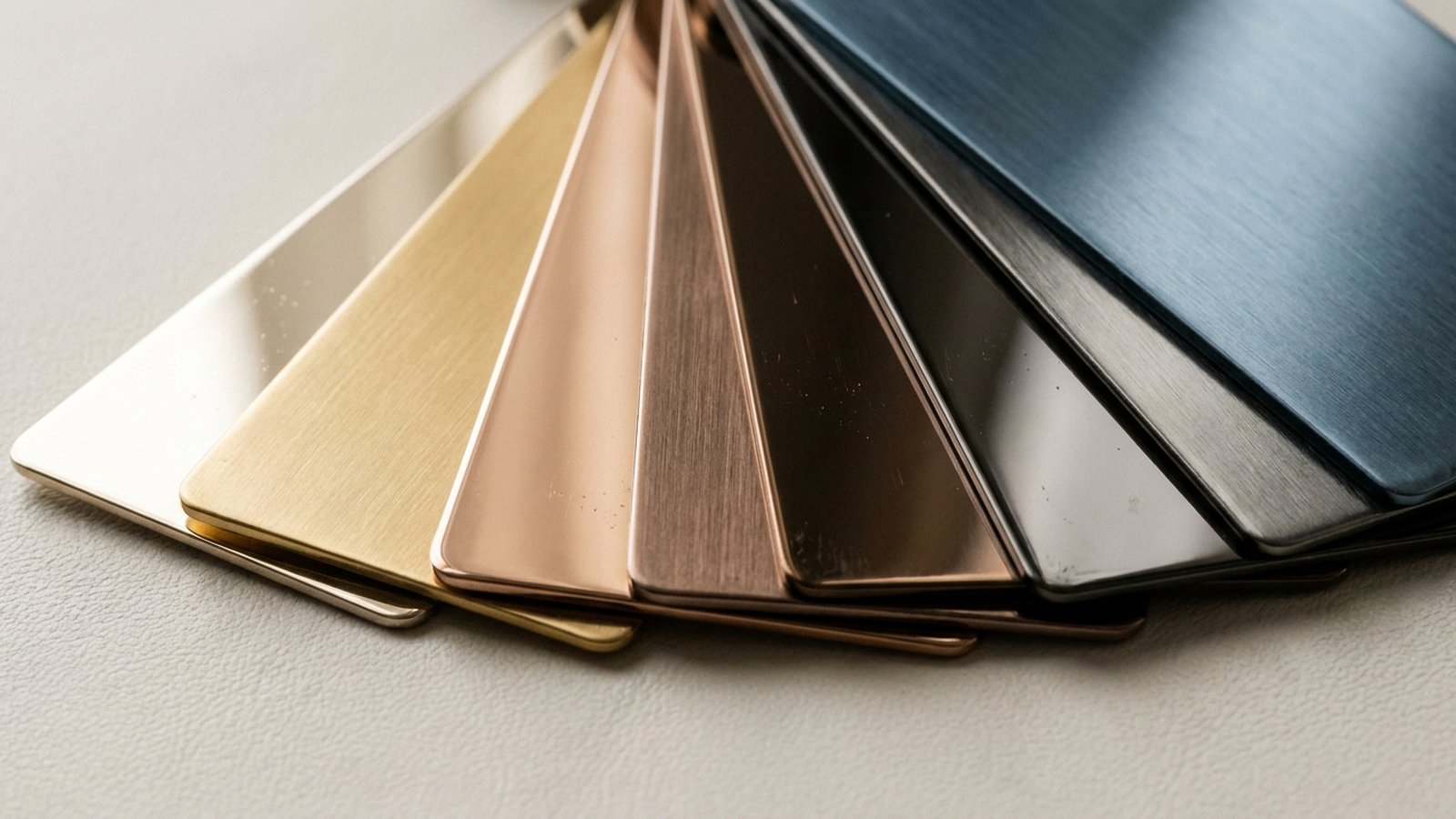
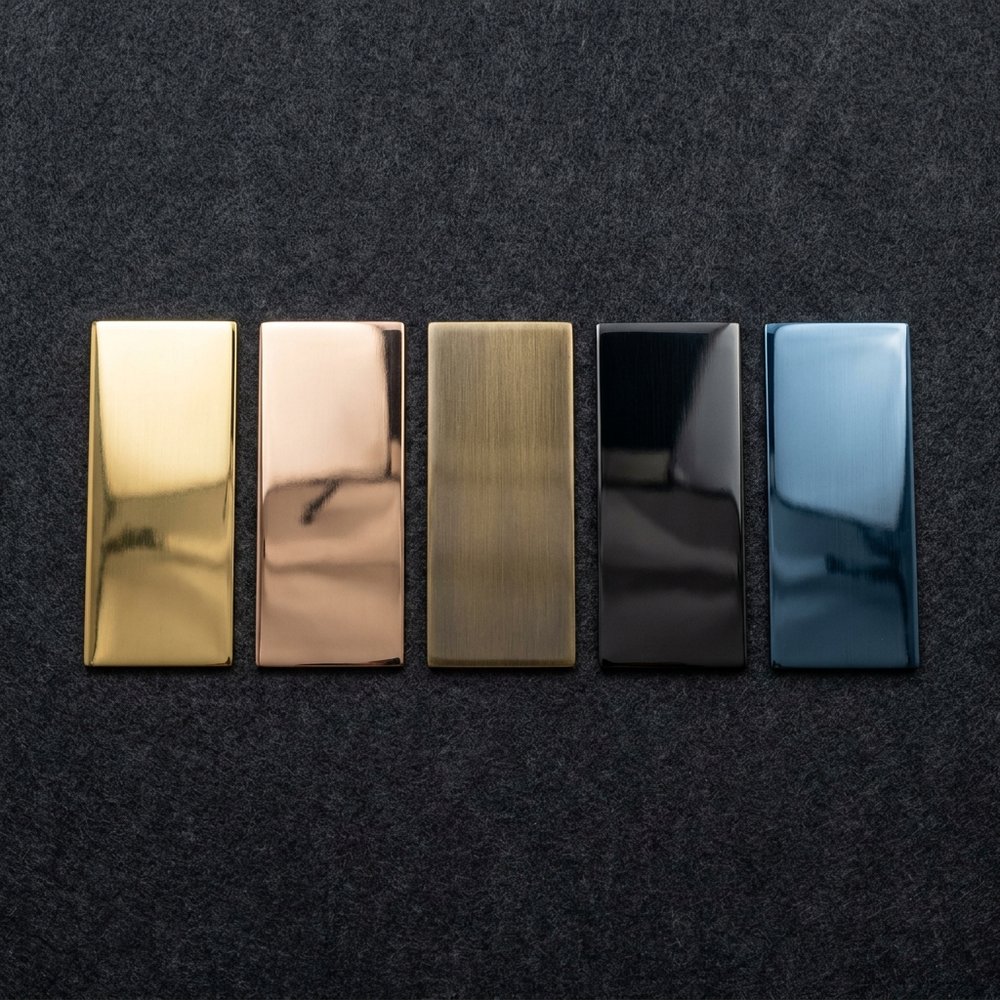
The palette runs across warm and cool. The gold family covers champagne, light gold, brass-tone and deeper red gold. The warm tones bring copper, rose gold and bronze. The cool and neutral end holds titanium, nickel, gun metal, anthracite and black, and there are specials such as blue, green and near-mirror finishes. The warm tones let stainless read as brass, bronze or copper while staying constant, and the neutrals give the dark, quiet metals that suit considered interiors. The full range is on the PVD colours page, and new tones can be developed for a project.
Surface and colour together
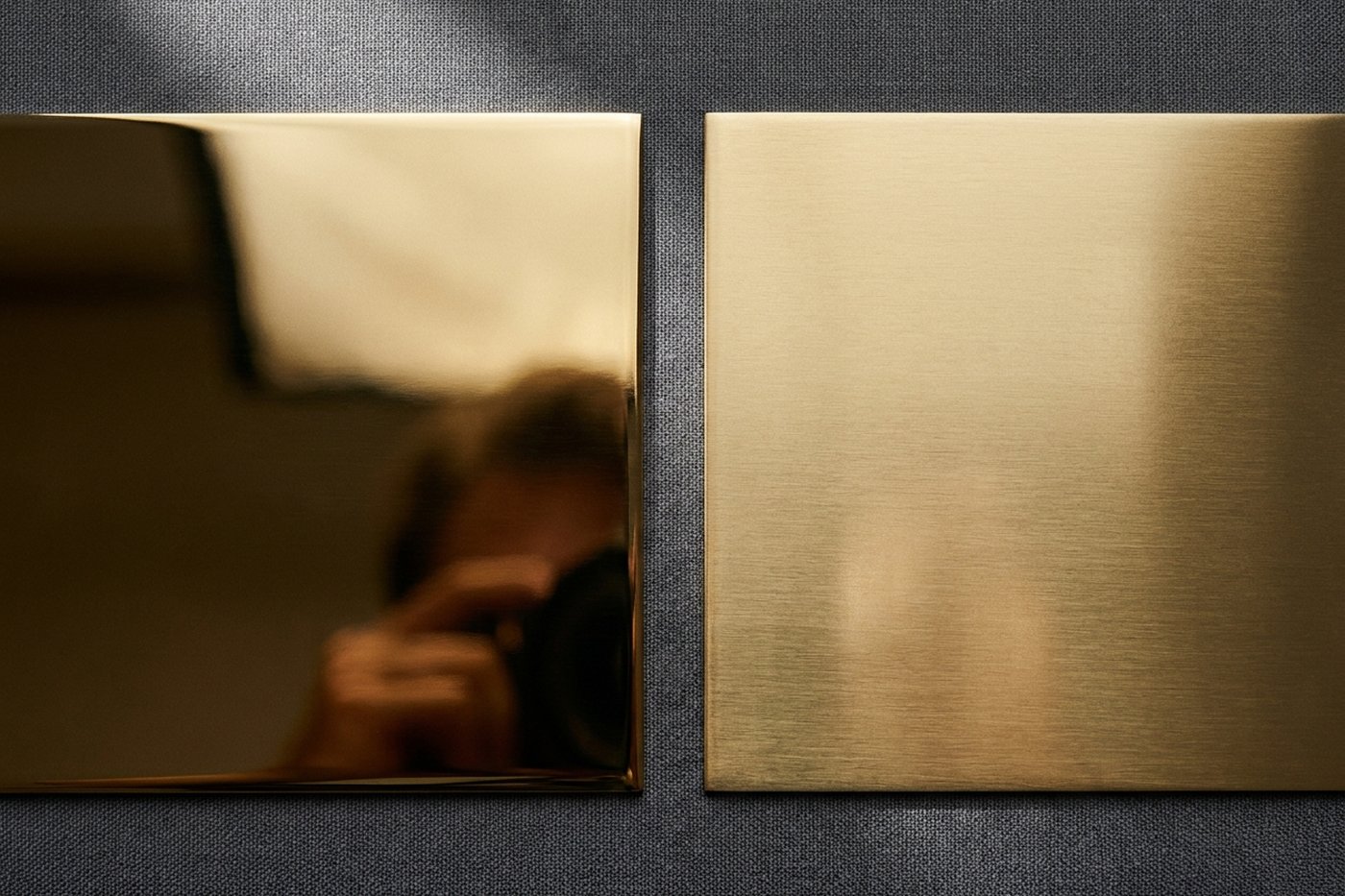
Colour and surface finish work as a pair, and the same colour changes completely with the finish beneath it. On a super mirror surface a PVD gold reads deep and reflective, almost like light. On a satin or brushed surface the same gold turns soft and matte, hiding fingerprints and suiting high-touch positions. A bead-blasted surface reads as an even, quiet matte. The considered route is to choose the surface and the colour together against the room, because the pairing, not the colour alone, sets the character.
Durability and where it works
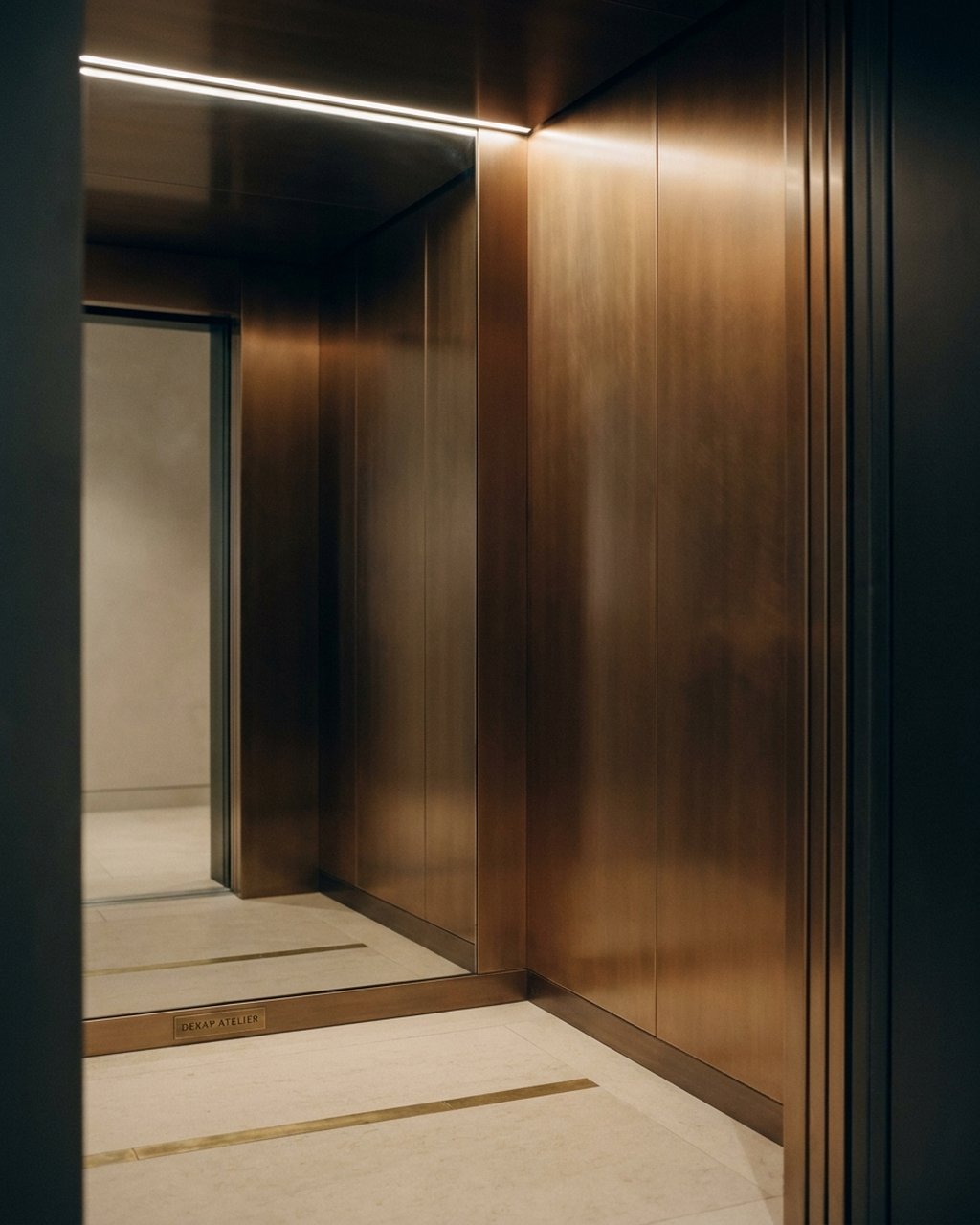
PVD colour on stainless is hard, scratch-resistant and colour-stable, which is why it holds up where softer finishes struggle. It suits large feature surfaces, cladding and panels, high-traffic hospitality and retail, lift interiors, and, on the right marine-grade substrate, exterior and marine positions. Because the colour is fused into a stainless surface, it resists tarnish, handling and cleaning far better than a bare solid metal, and matched substrates and colours can carry from an interior detail to an exterior facade. The performance figures by substrate and tier are documented on the PVD coating page.
Coloured stainless vs solid brass and bronze
The choice between coloured stainless and solid metal is one of economy, weight and behaviour. Solid brass and bronze are beautiful and age with a living patina, but they are heavy, costly at scale, and tarnish unless lacquered or accepted as living finishes, as covered in copper and bronze patina. Coloured stainless gives the same warm read as a hard, light, fixed colour that does not tarnish or change, ideal for large surfaces and demanding positions. Many projects use both, solid metal where its weight and ageing are wanted, coloured stainless where constancy and scale matter.
Working in coloured stainless with Dekap
If you are asking whether we make this finish, the answer is yes, and it is at the centre of what we do. Dekap colours stainless steel by PVD in-house, across the full palette and every surface finish, from a single feature panel to the panelised cladding of a tower. We match colour and surface against approved sample plates so the finish is signed off before production, protect high-touch and high-gloss surfaces with our own proprietary post-PVD layers for longer-lasting colour and fingerprint resistance, and document the finish for contract-grade specification with the substrate and performance tier stated. Where a project also wants a living metal or a patinated tone, we make that too and guide the specification.
If you are specifying coloured or PVD stainless steel for a current project, start a project enquiry, and tell us the colour, the surface, the substrate and the position. We will recommend the finish, not just supply it.
FAQ
How is stainless steel coloured?
The architectural method is PVD, physical vapour deposition. In a vacuum chamber, metal is vaporised and bonded to the stainless surface as an extremely thin, fused film. That film gives the colour. It is not paint and not a plated coat, and it keeps the surface texture of the steel beneath it.
Does coloured stainless steel fade or scratch?
PVD colour is hard, scratch-resistant and colour-stable, far more durable than paint or plating, because the film is fused into the stainless surface. It resists handling, cleaning and, on the right substrate, exterior exposure. The performance depends on the substrate and film thickness, which are documented per tier on the PVD coating page.
Which colours are possible?
The palette runs from champagne, light gold, brass-tone and red gold, through copper, rose gold and bronze, to titanium, nickel, gun metal, anthracite and black, with specials such as blue and green. Warm tones let stainless read as brass, bronze or copper, and new colours can be developed for a project.
Is coloured stainless steel a real colour or a coating?
It is a true metal colour created by a fused PVD film, not a painted or plated coat that sits on top and can flake. The film is bonded into the surface of the stainless, so it keeps the metal's texture and hardness while carrying the colour.
Coloured stainless or solid brass, which should I use?
Use solid brass or bronze where their weight and living, ageing patina are wanted. Use coloured stainless where you need the same warm read as a hard, light, fixed colour that does not tarnish or change, especially on large surfaces and in high-traffic, exterior or marine positions.
Can you colour 316 stainless for marine or exterior use?
Yes. Marine-grade stainless such as 316 or 316L is the substrate for exterior and marine positions, and it can be PVD coloured for use near the coast, on facades and around water. The substrate and finish are specified together for the exposure, and confirmed on the PVD coating page.
Does Dekap make coloured stainless steel?
Yes, it is central to what we do. We colour stainless by PVD in-house across the full palette and every surface finish, matched against approved sample plates and signed off before production. We protect high-touch and high-gloss surfaces with our own proprietary post-PVD layers for longer-lasting colour and fingerprint resistance, and document the substrate and performance tier for contract-grade specification.
Specifying coloured stainless?
Tell us the colour, the surface, the substrate and the position. We will recommend the finish, not just supply it.
Start a project enquiry