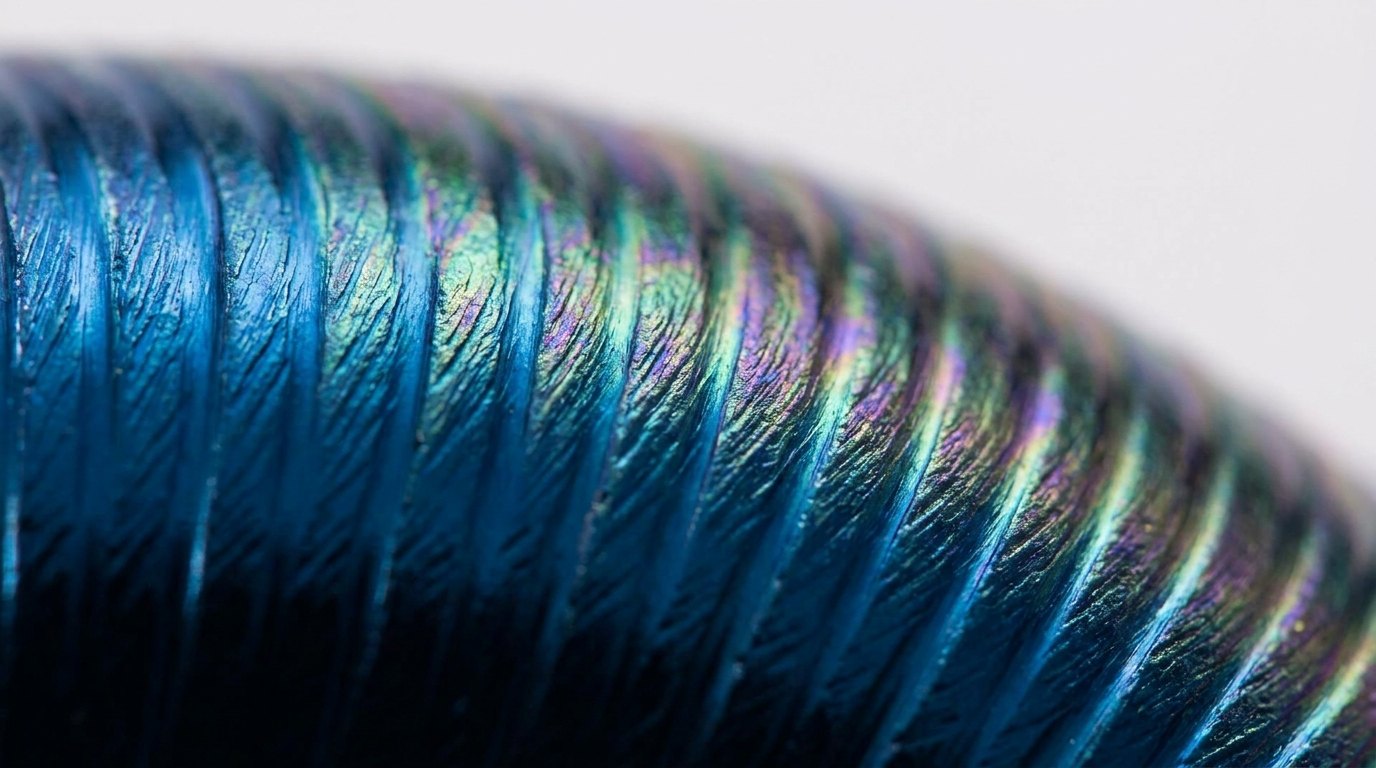
PVD Coating / Colours
Colour chartPVD coating colours
Nineteen PVD coating colours on a super-mirror base, plus custom. The same chart whether you write colours or colors: gold, rose gold, bronze and champagne through to black, blue and rainbow, on coloured stainless steel, brass and bronze. Below is the full range, the surfaces it sits on, and how the colour holds.
The 19-colour chart
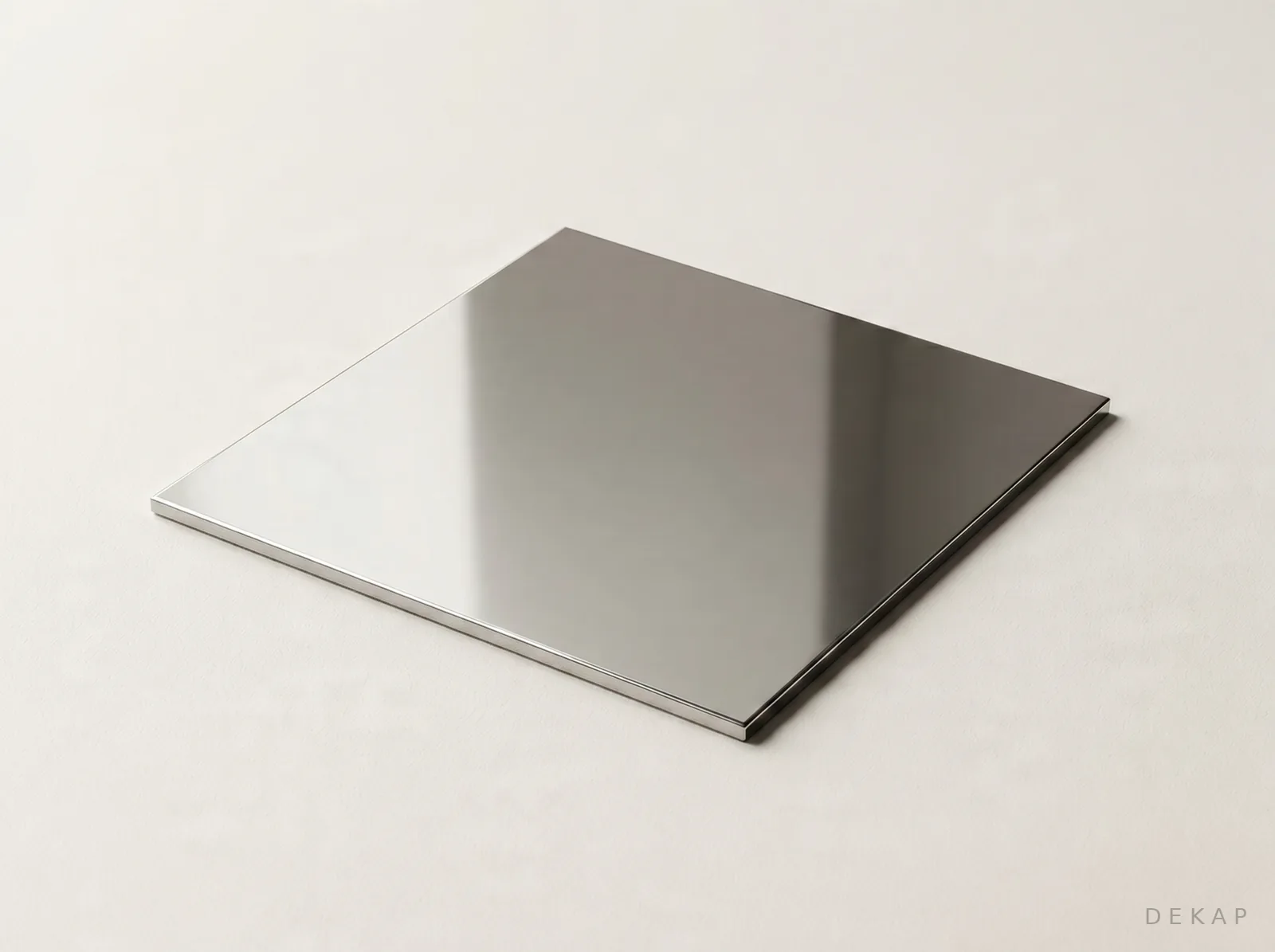
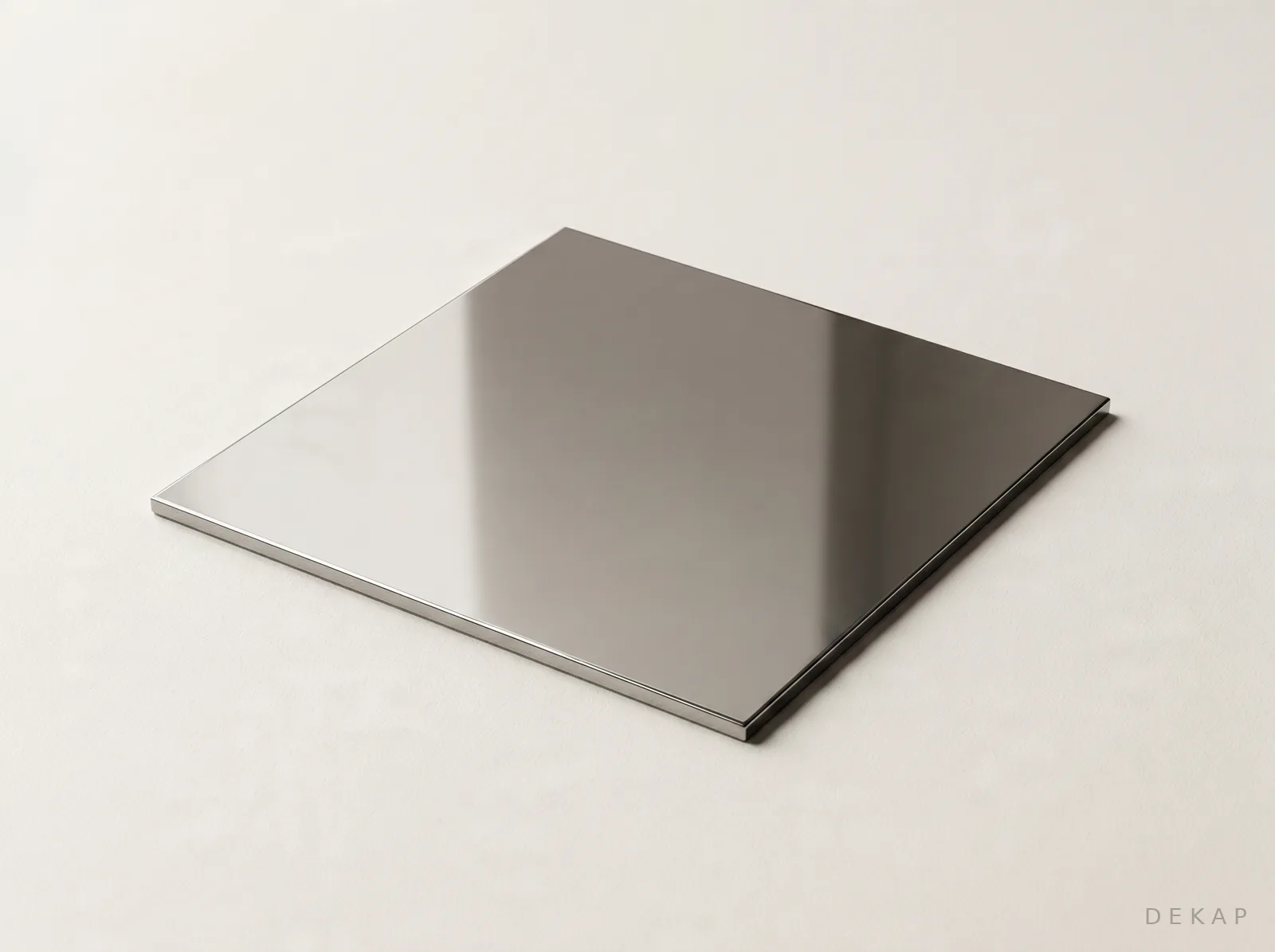
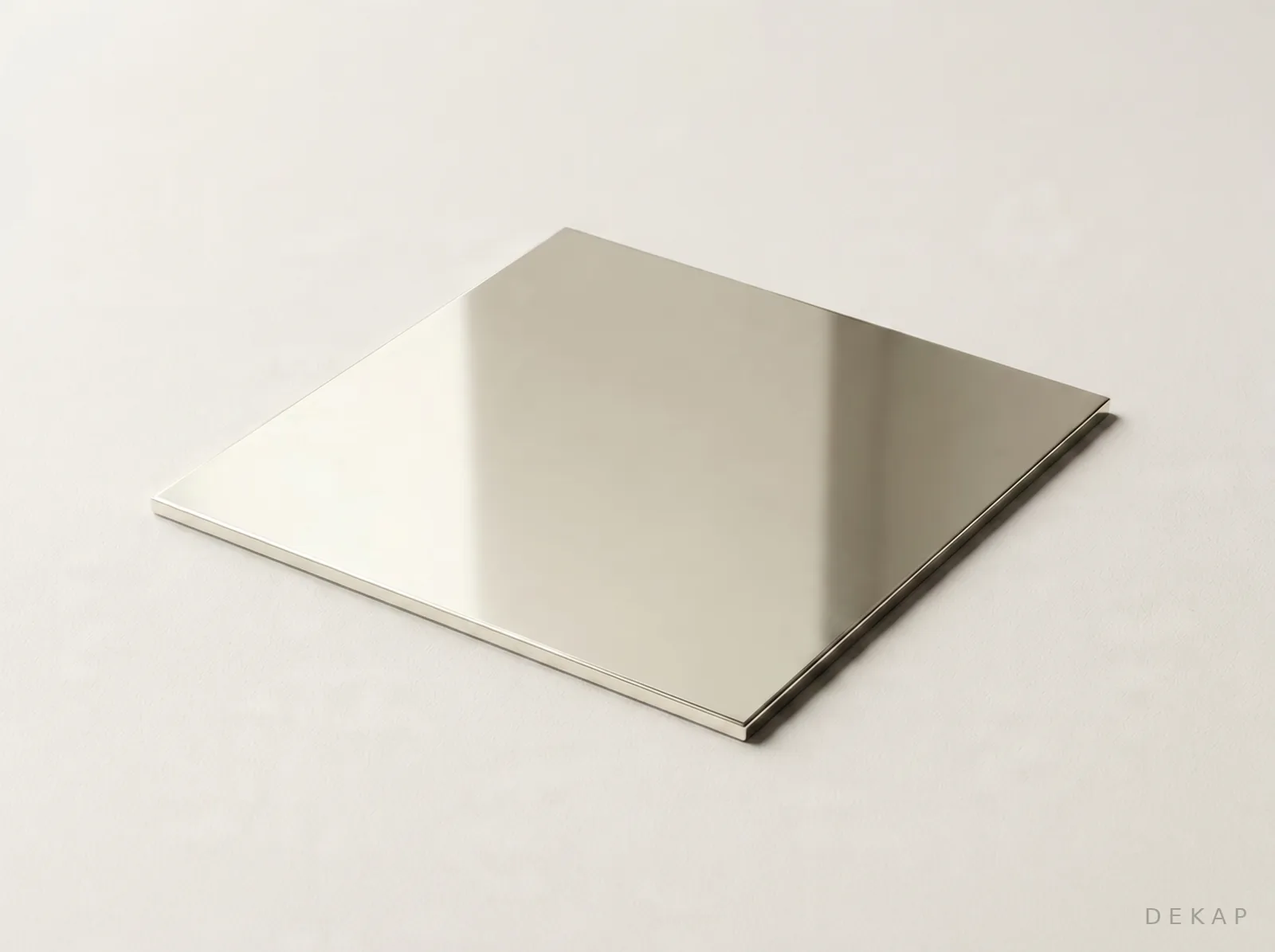
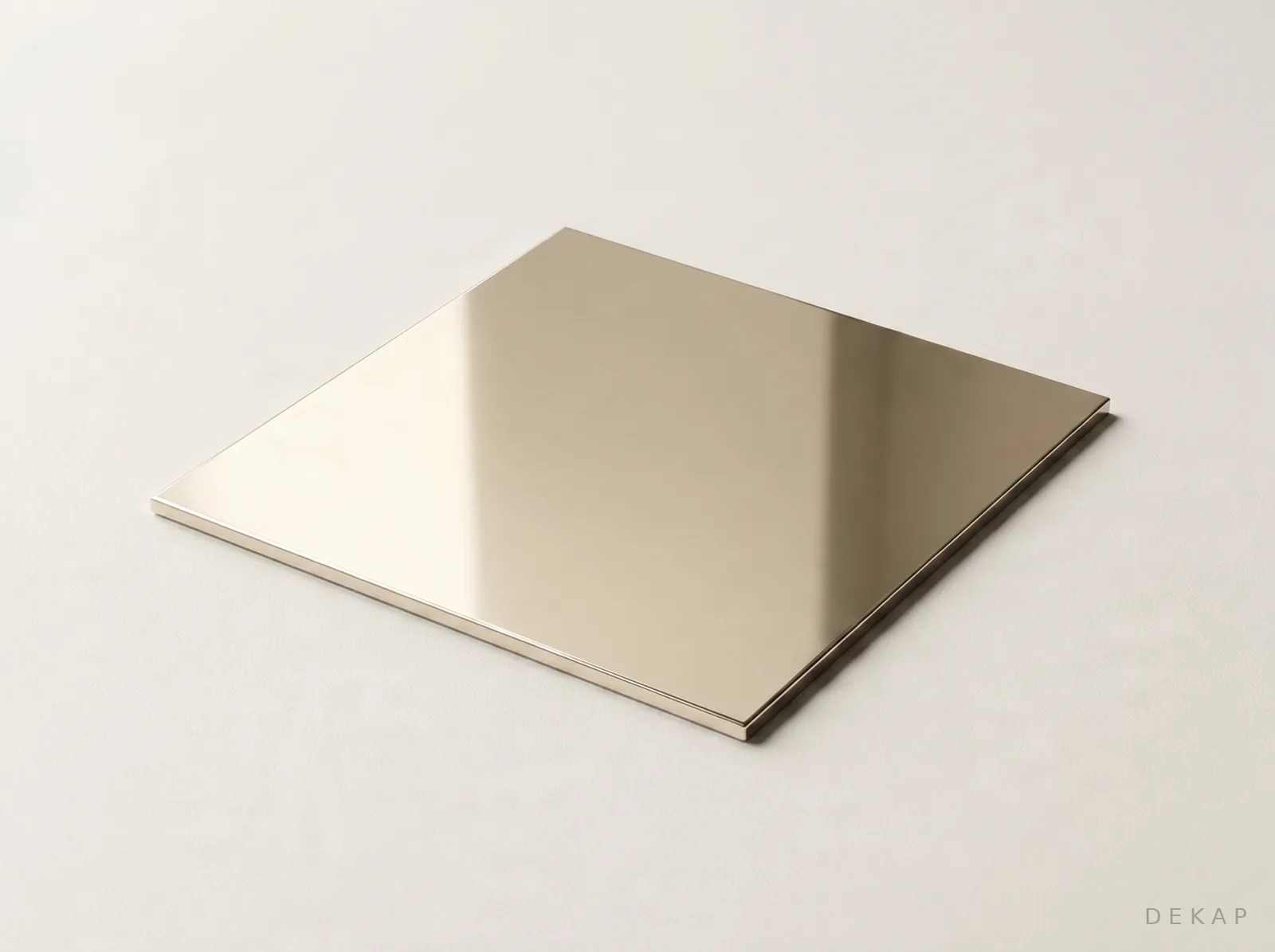
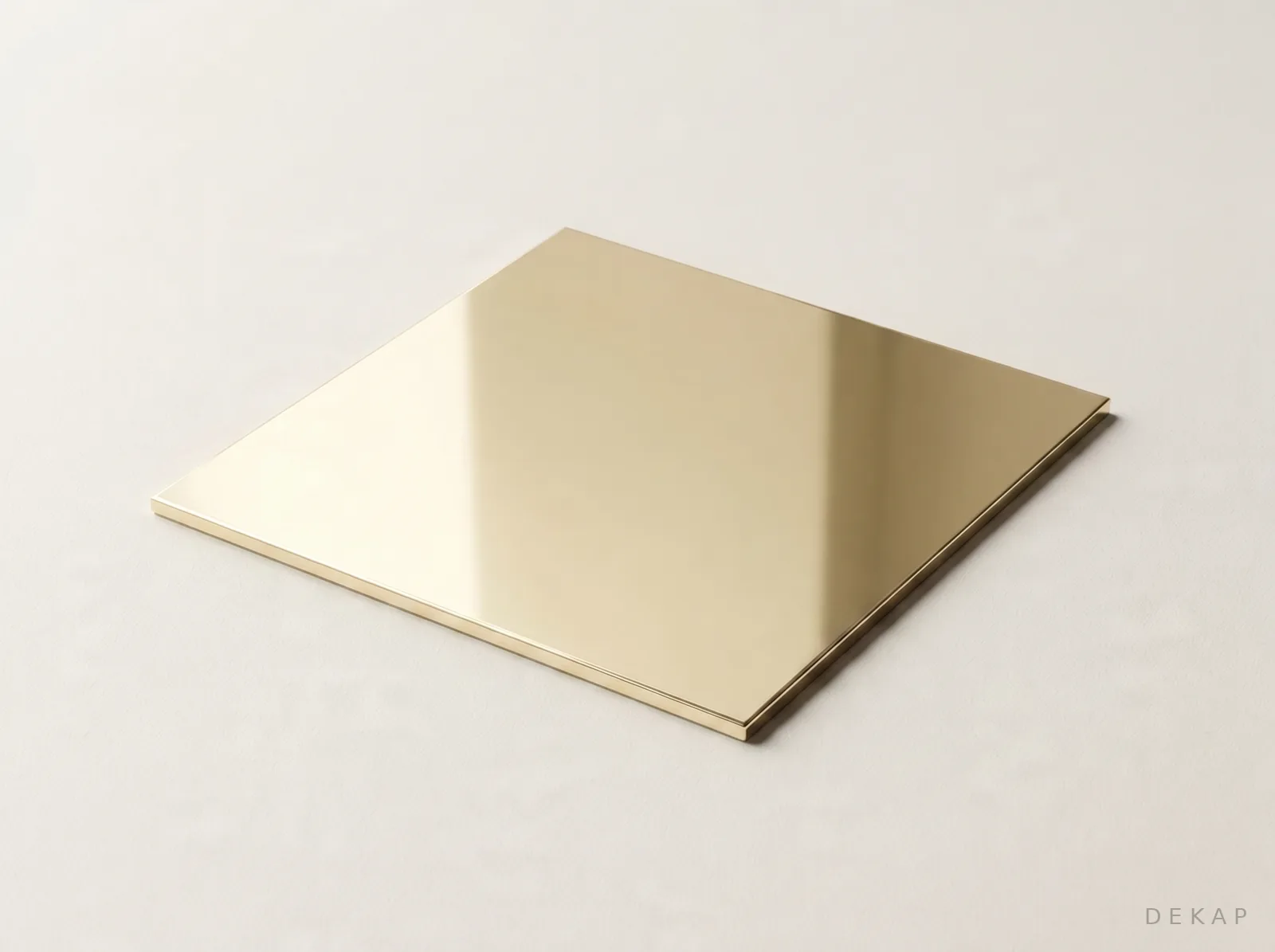
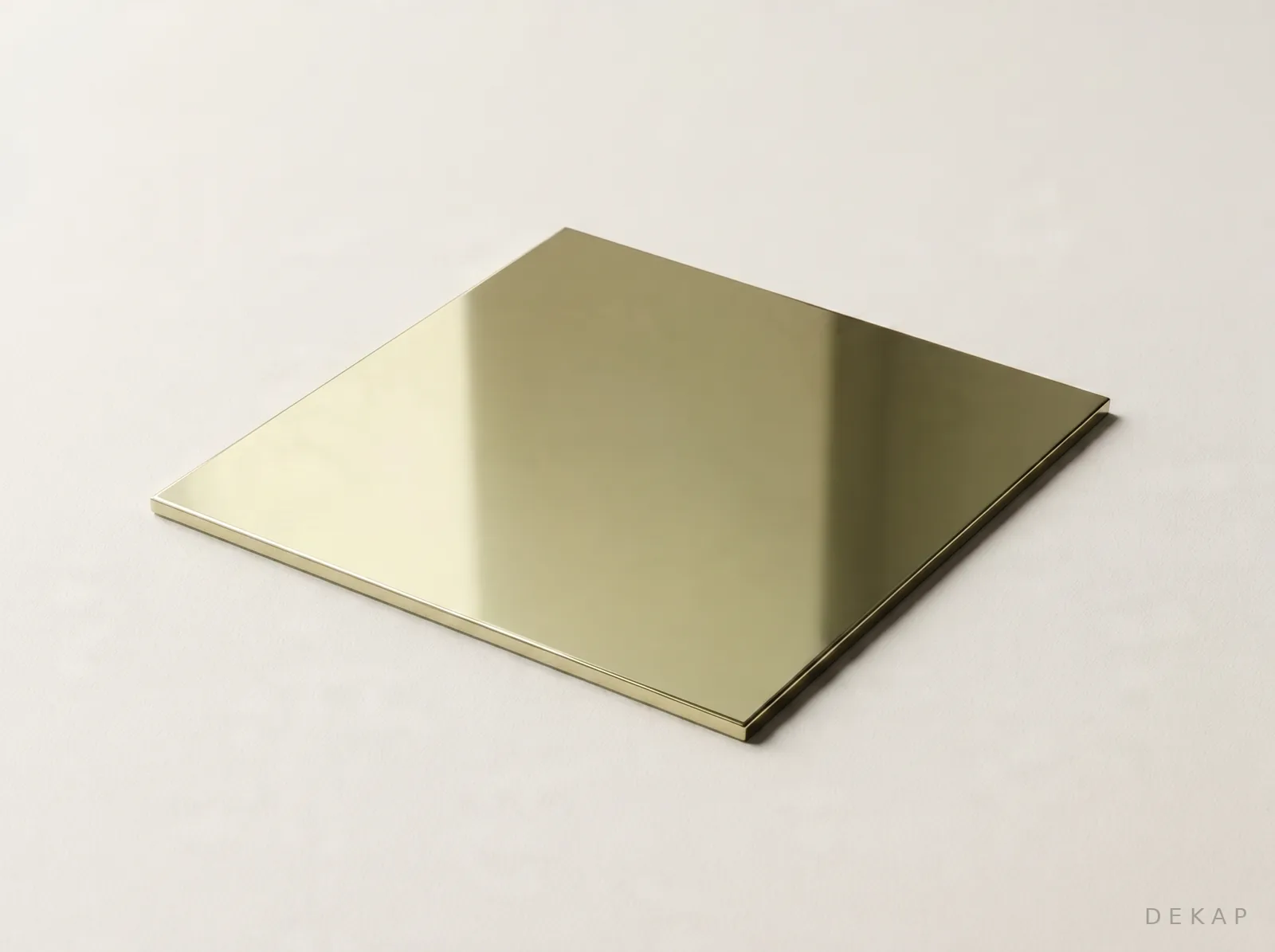
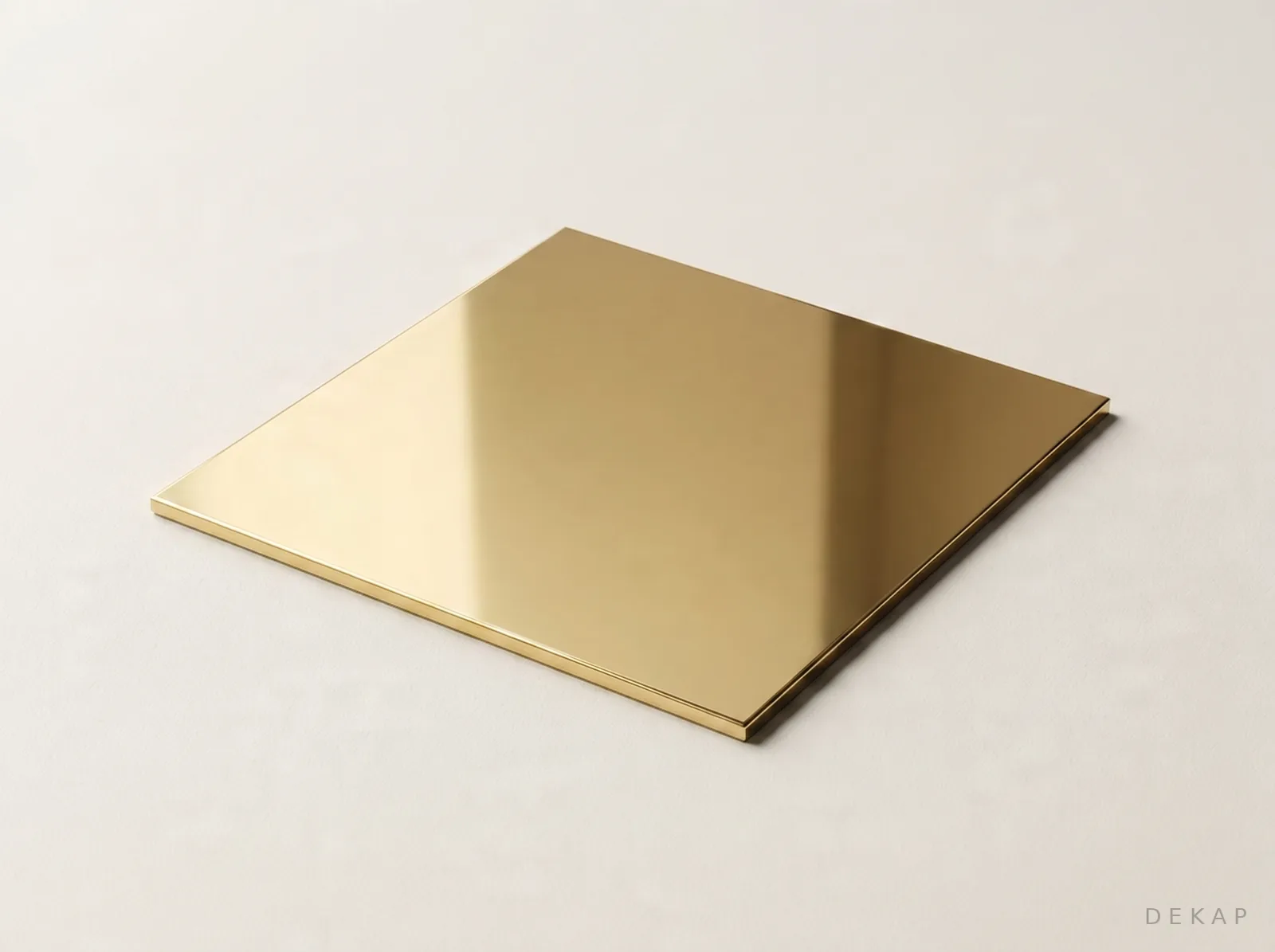
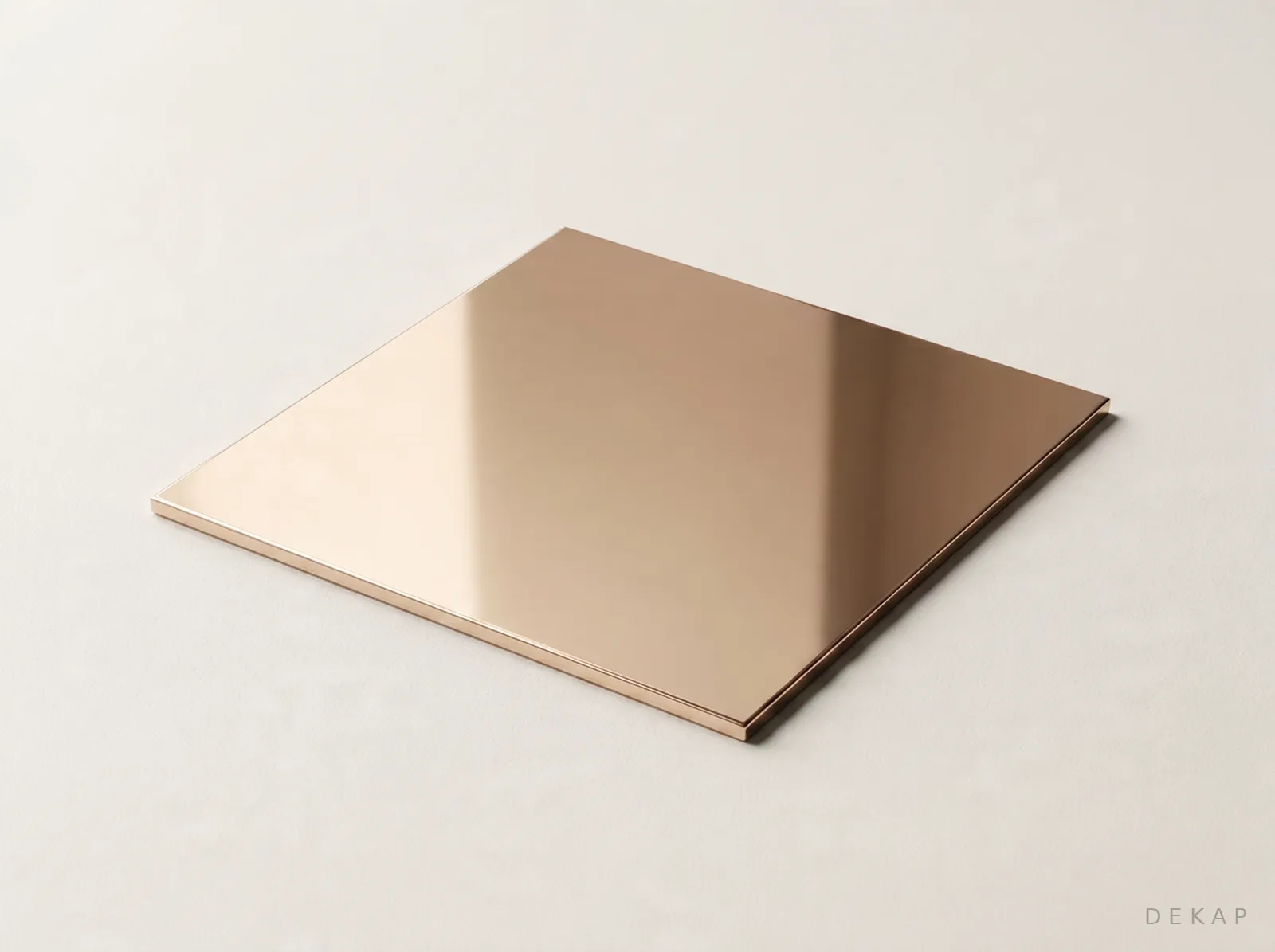
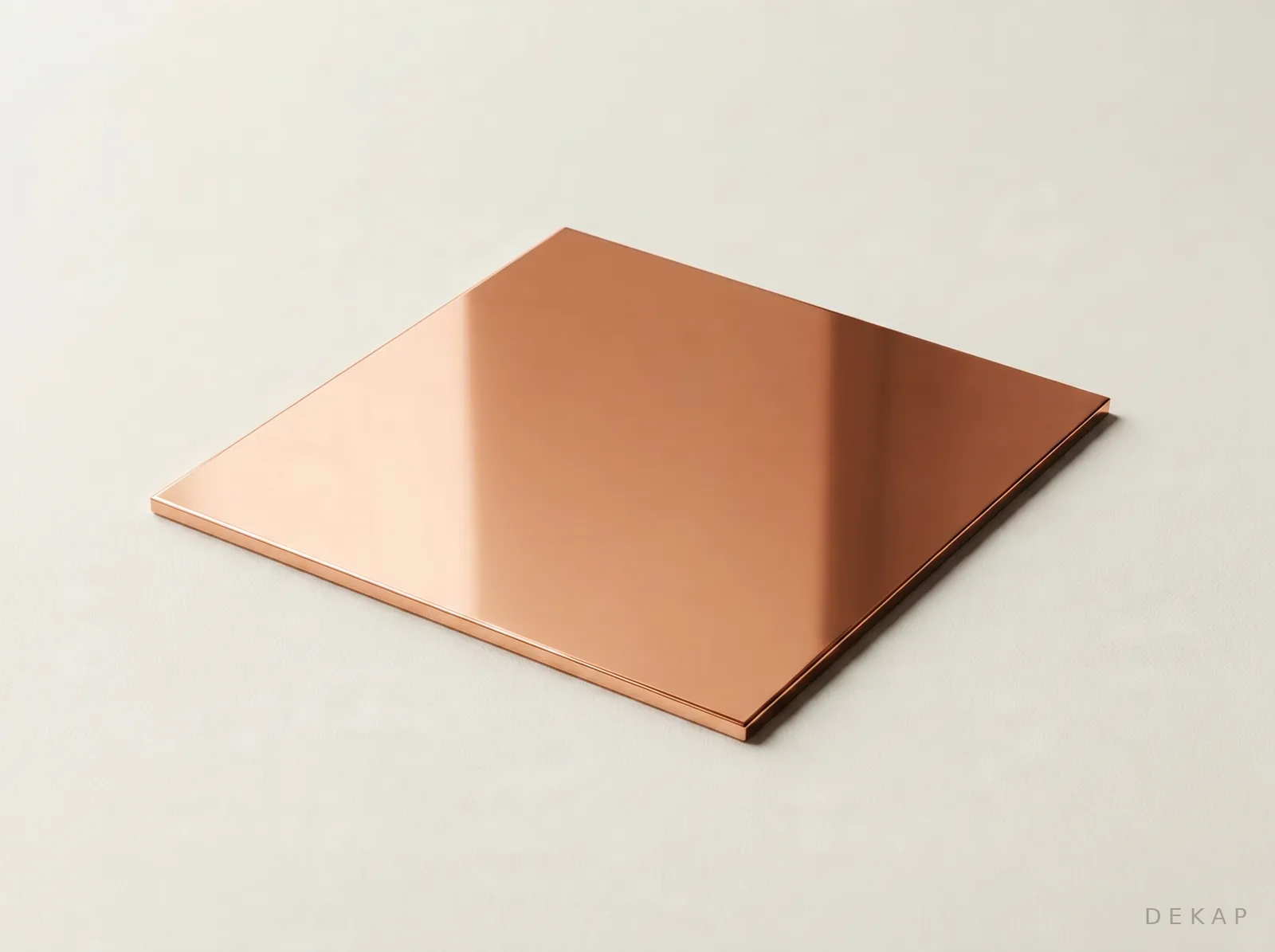
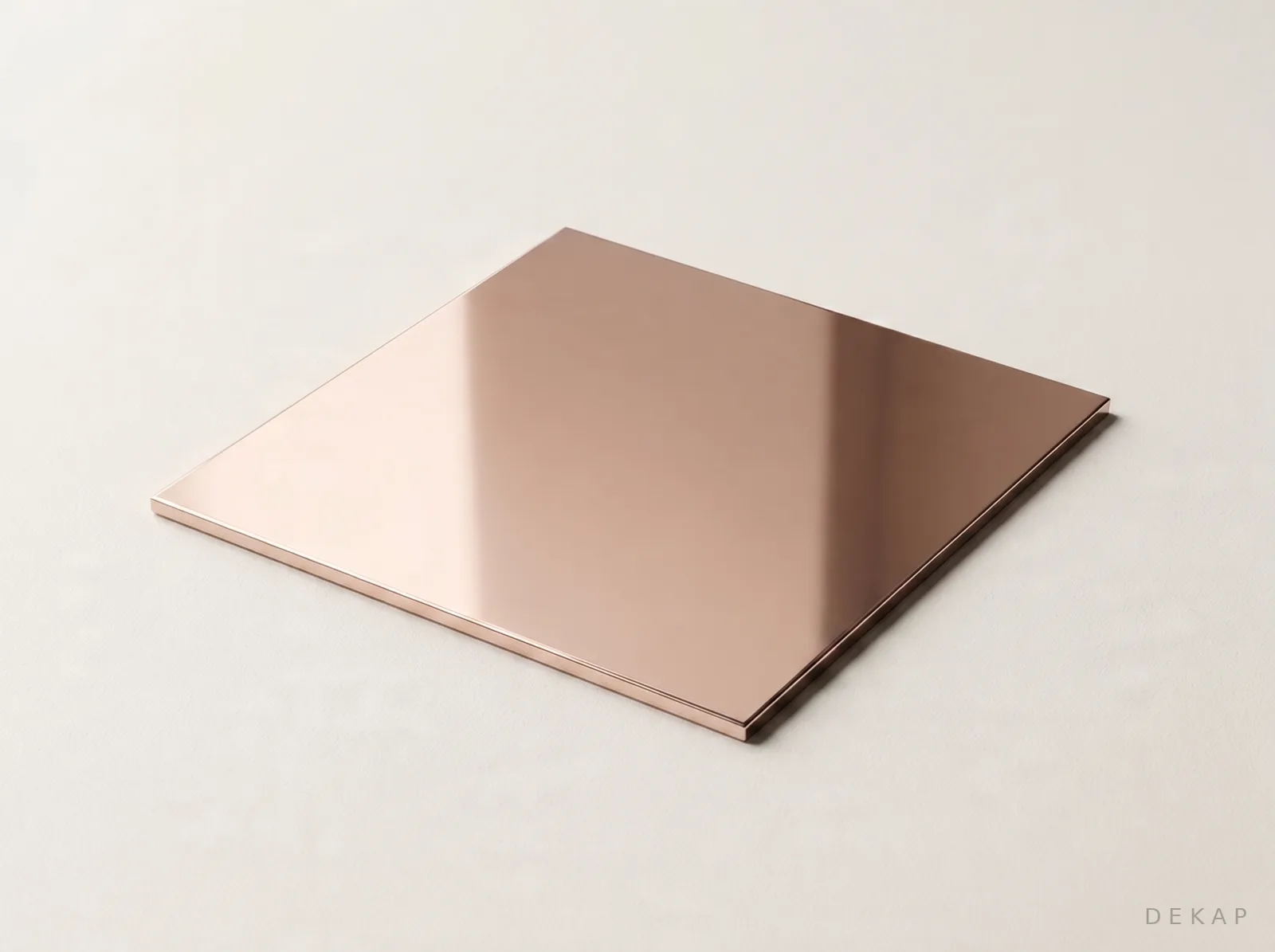
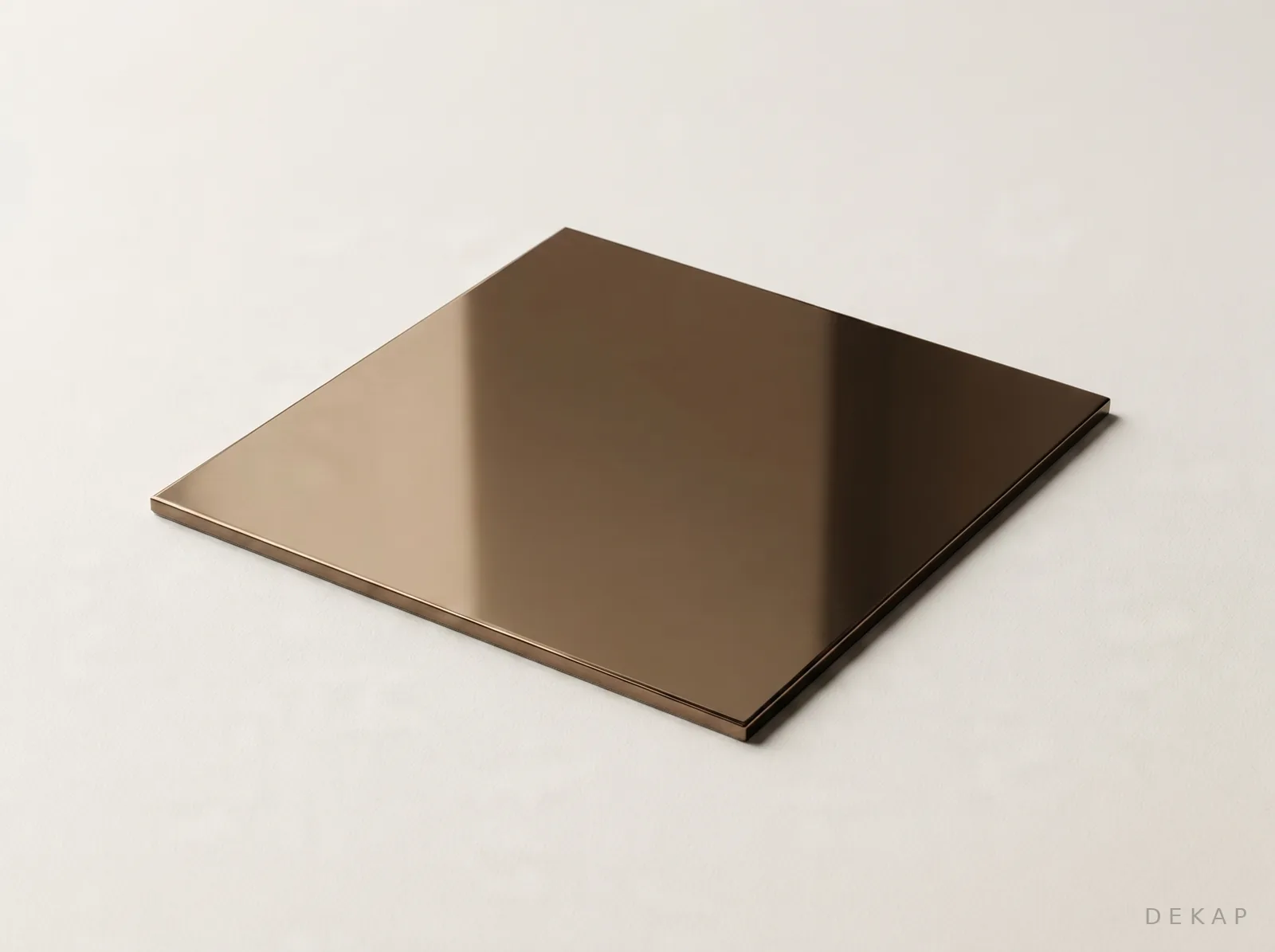
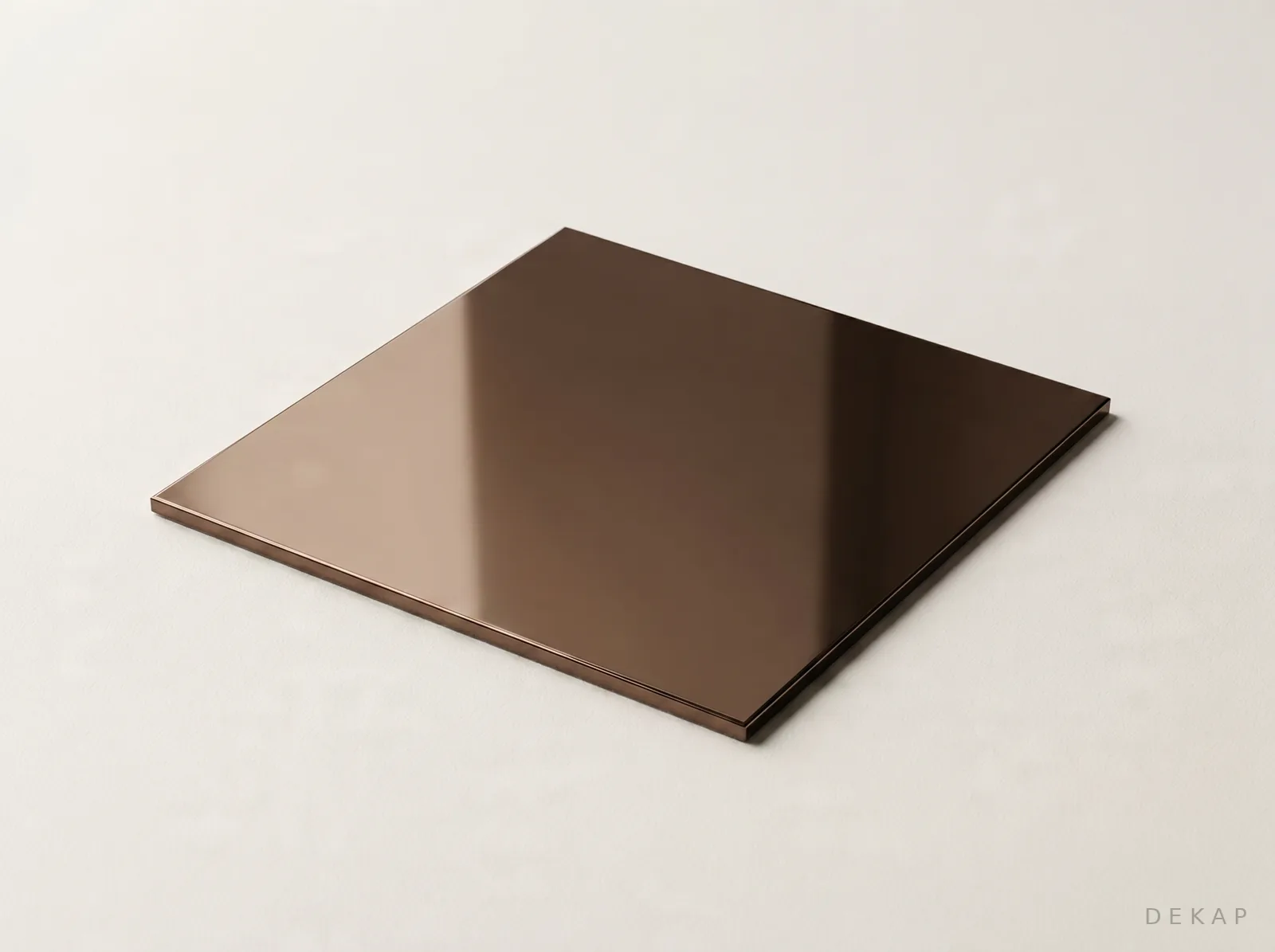
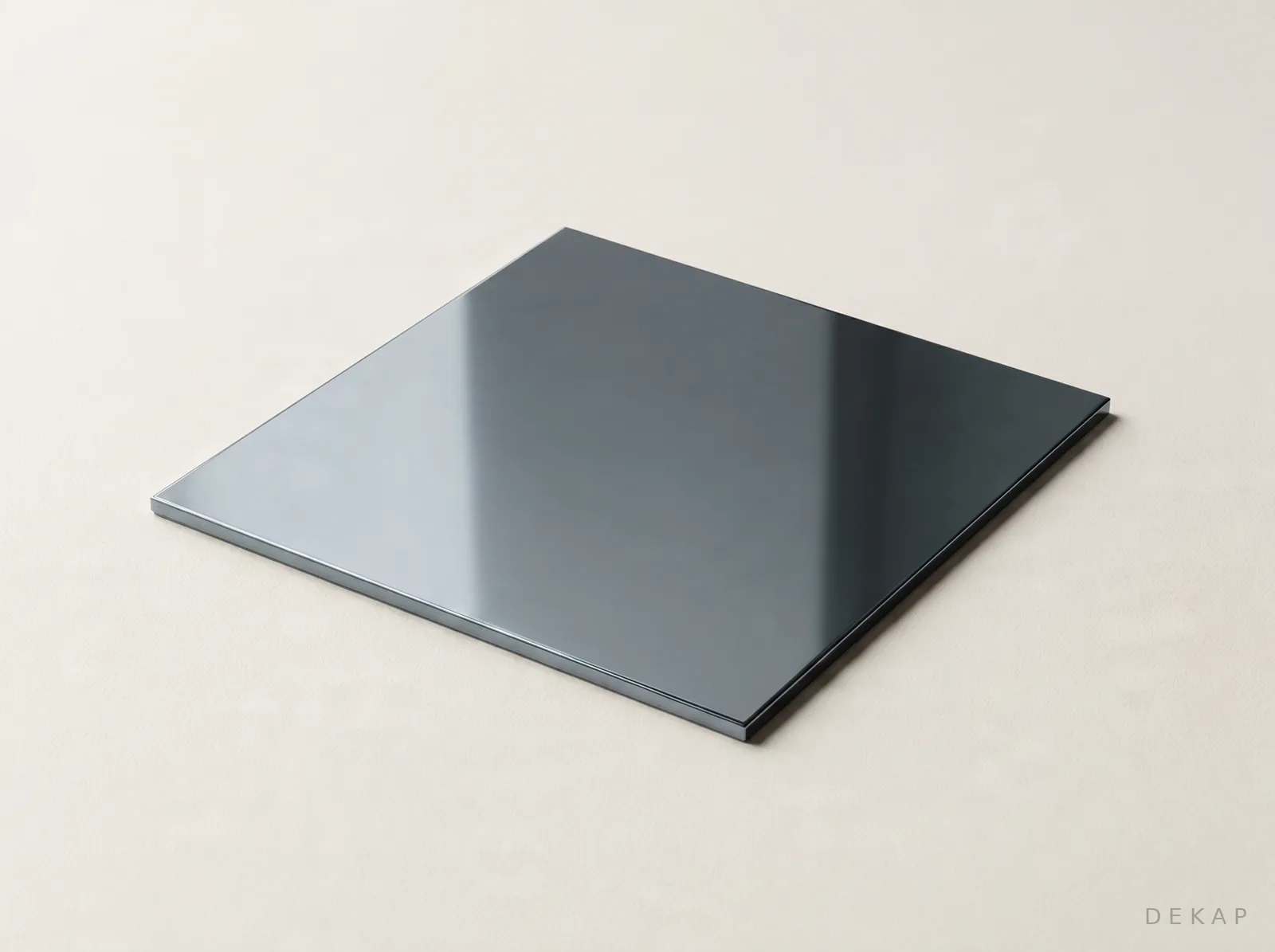
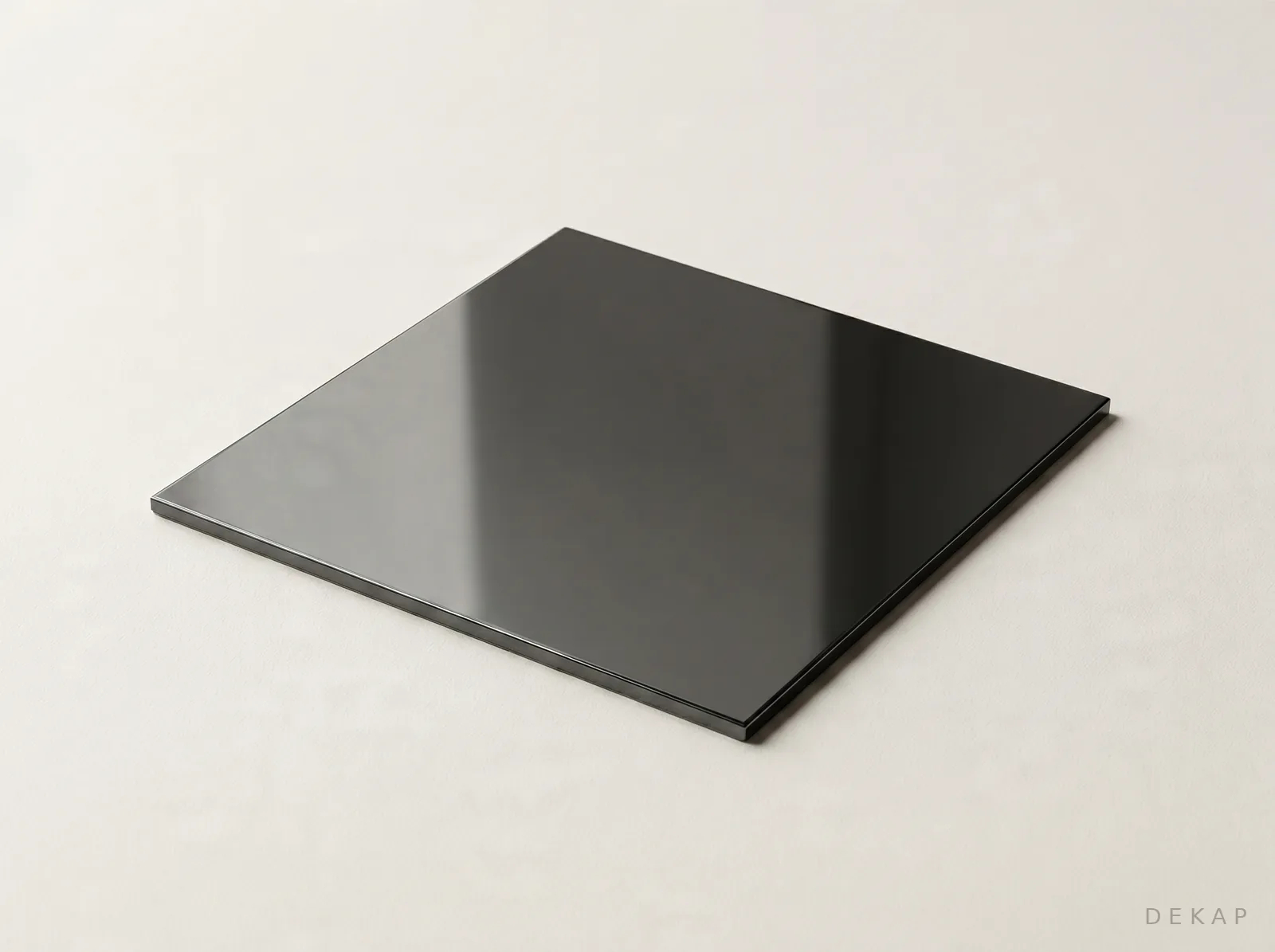
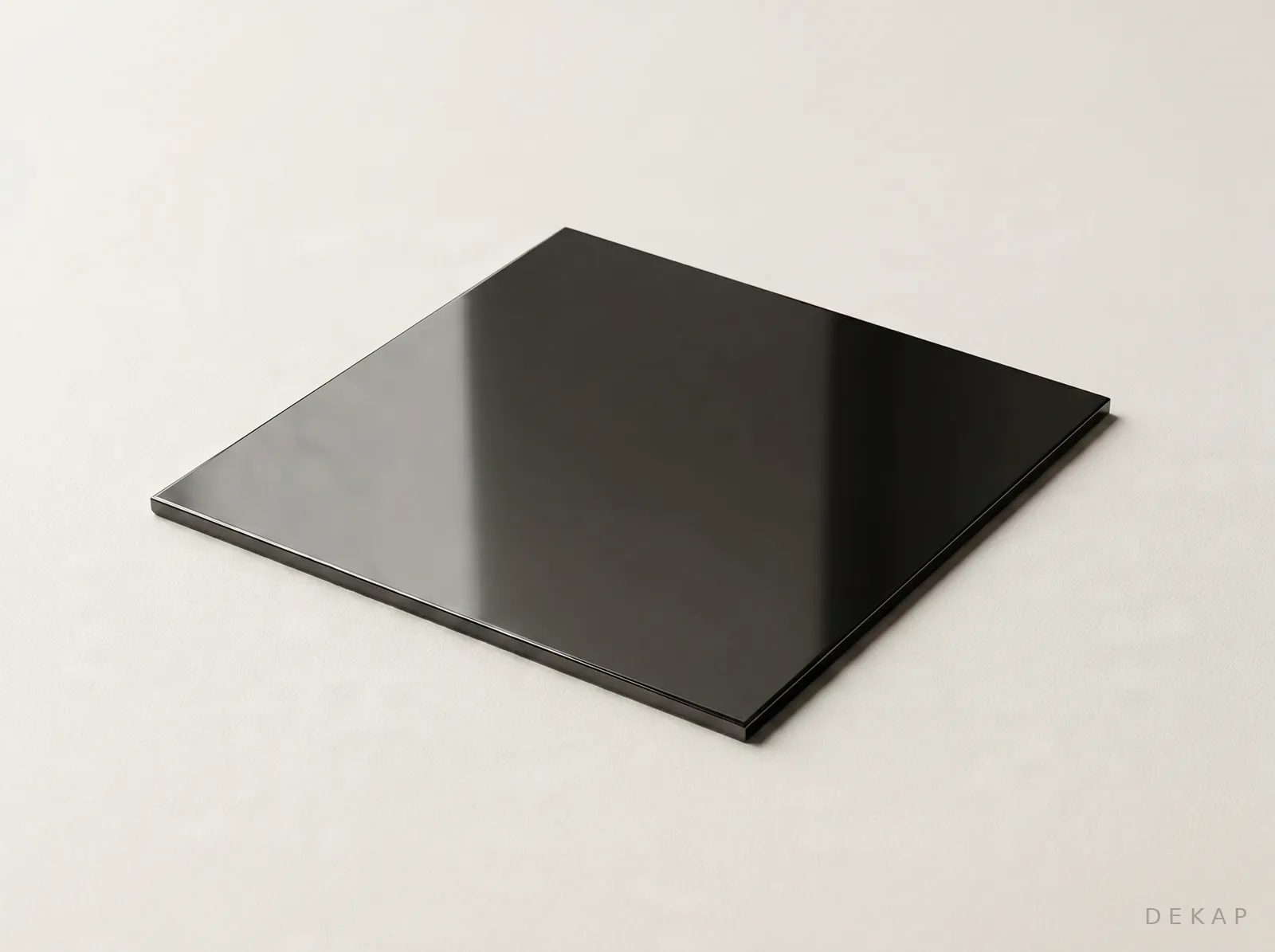
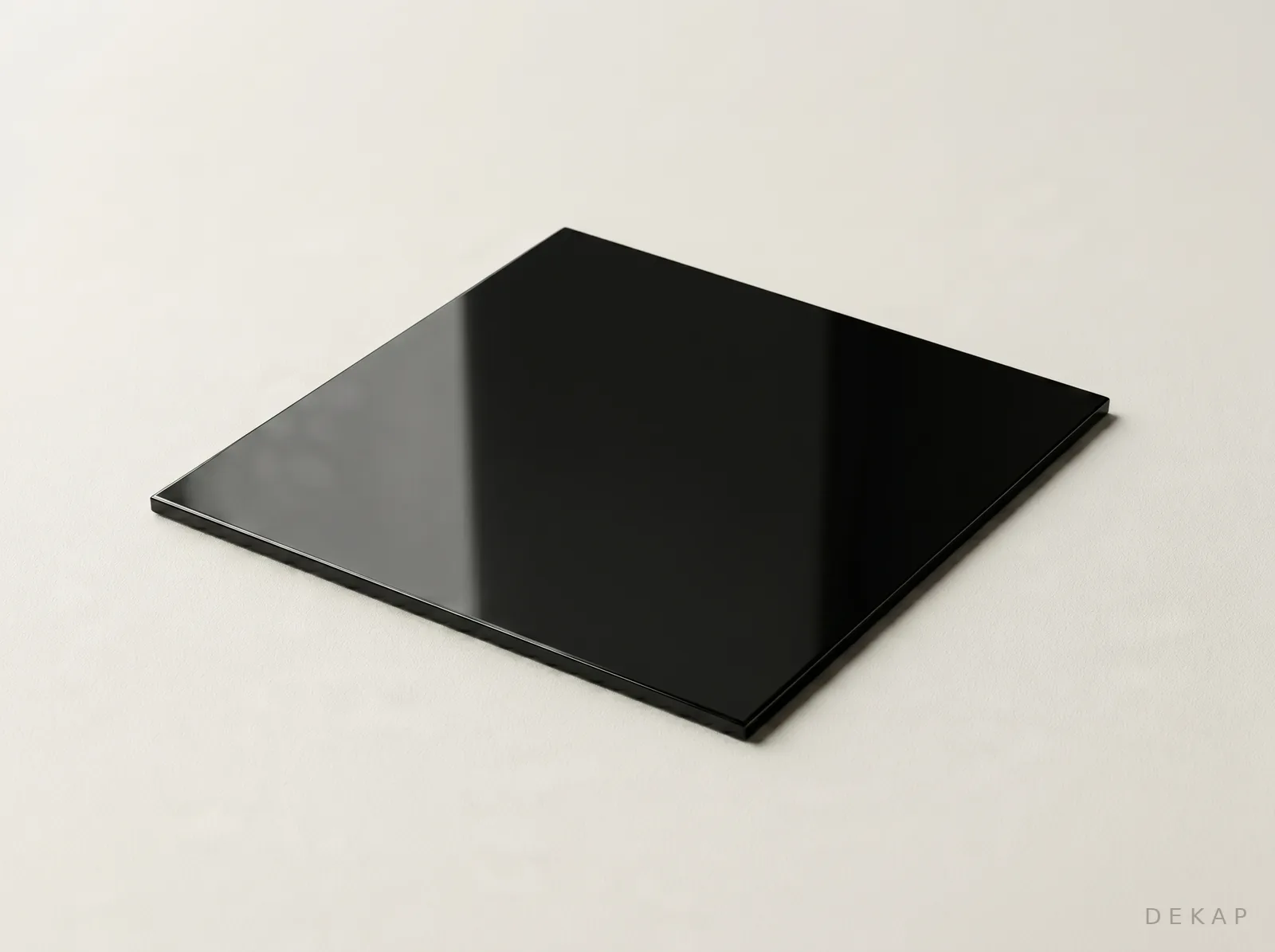
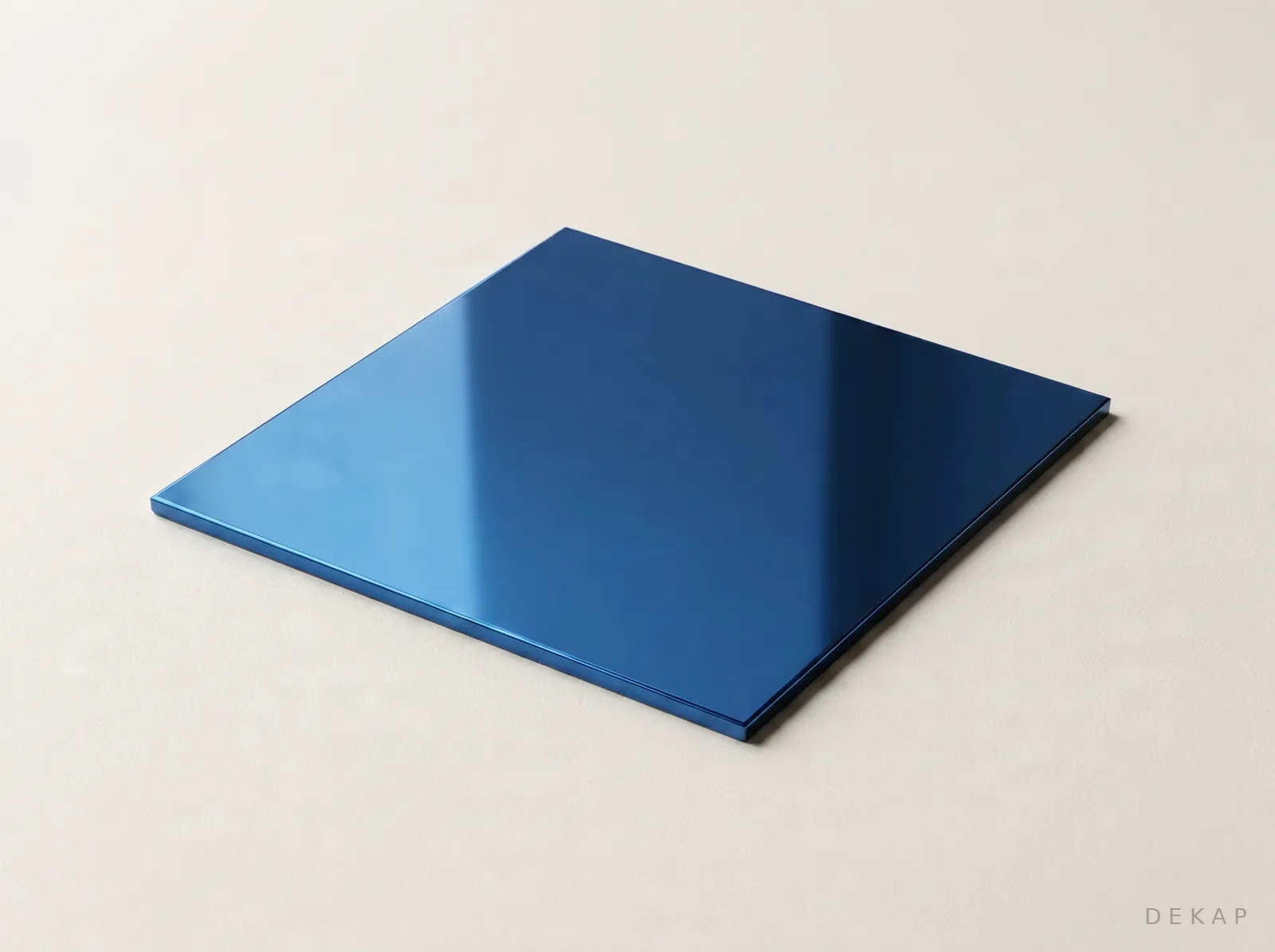
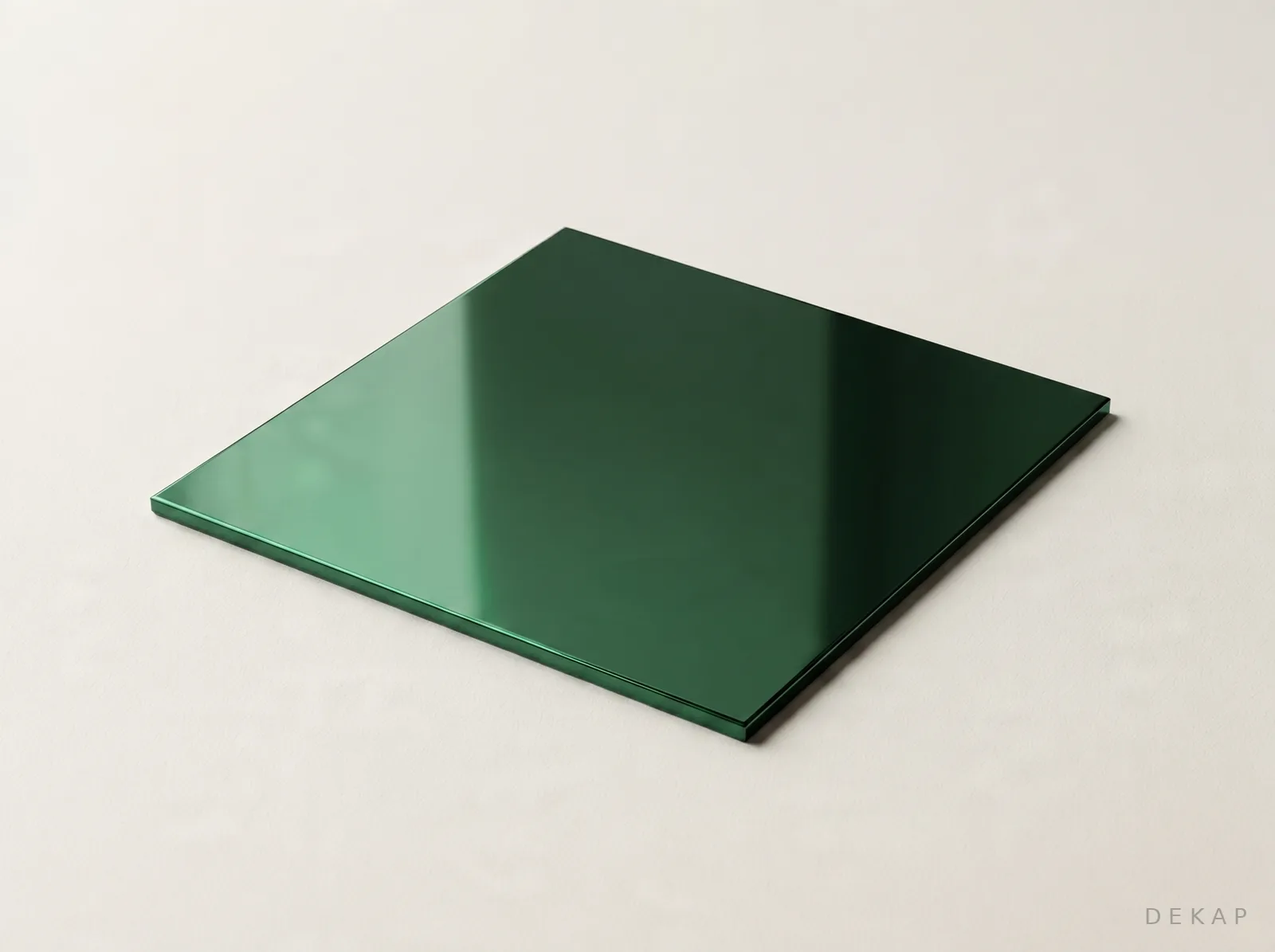
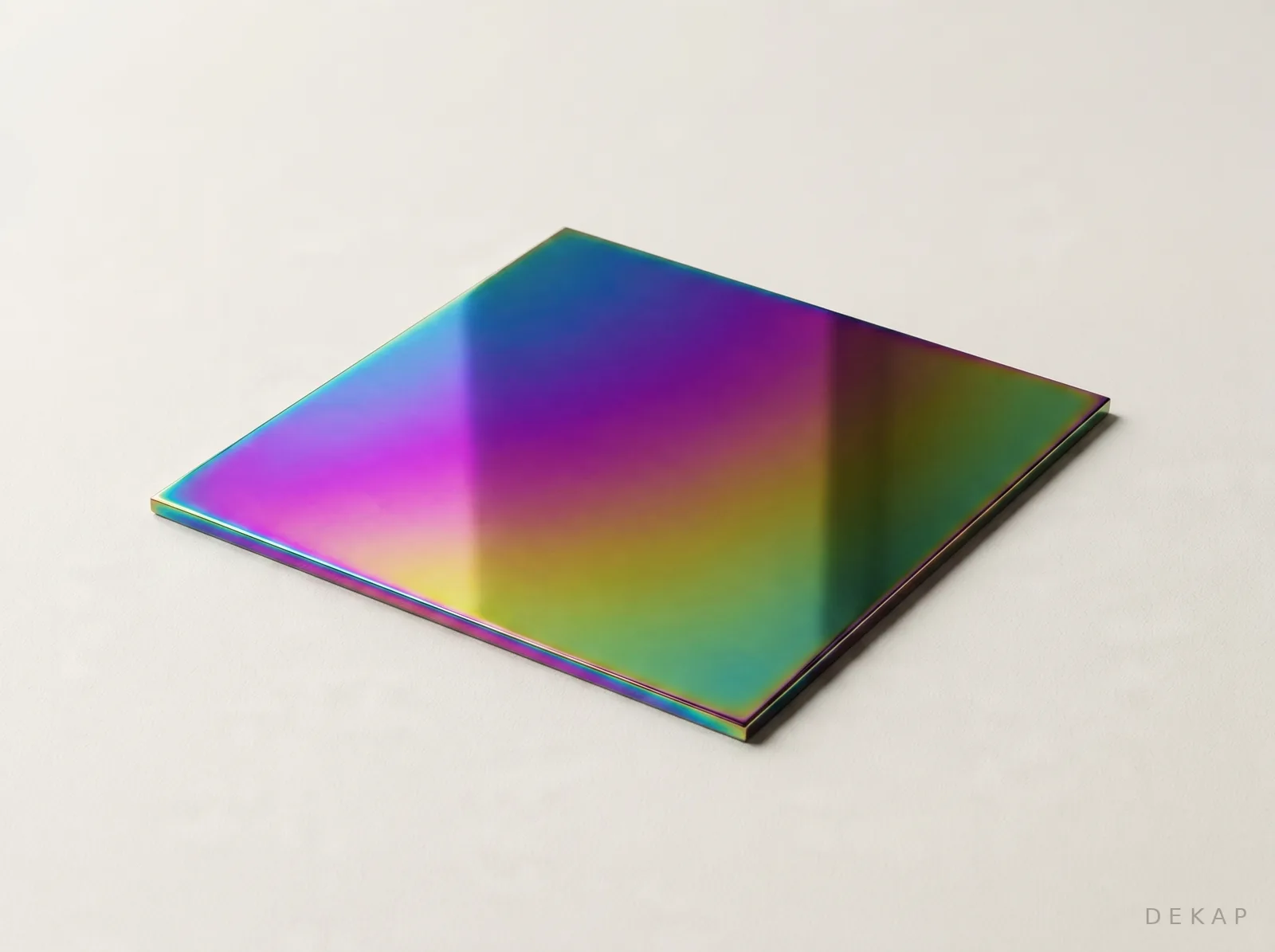
Whether your specification says colours or colors, this is the chart. Every tone is shown on super mirror; the same colour reads differently on satin or brushed, and on brass or bronze rather than stainless. See how it is applied on the PVD coating page. Read coloured stainless steel in architecture for how these colours work on stainless; for solid-metal finishes, read brass finishes, blackened steel, blackened brass and bronze and copper and bronze patina in the Journal, and compare the gold routes in gold PVD vs gold plating.
Coloured and colored stainless steel: PVD coating colors
Coloured stainless steel, also written colored stainless steel, is what PVD does best for architecture. The colour is grown into a hard, chemically bonded film, so it does not peel, flake or fade the way a painted or anodised surface can. On 304 and 316 stainless it carries reveals, soffits, balustrades, fascias, lift lobbies and façades in a consistent tone across a whole project.
Because the colour sits in the coating, large runs match batch to batch, and damaged pieces can be re-coated rather than re-sprayed. For exterior and marine work we salt-test the finish, so a gold, bronze or black façade holds its colour through bright light and salt air for years.
Surfaces and finishes
Every PVD colour begins on a super-mirror base and can then be read across eight surfaces. Mirror and super mirror give the deepest, most reflective colour. Satin softens it to a quiet sheen. Brushed adds a directional grain that catches light along its length. Hammered and etched break the surface for texture, while patina and our Lustre Series add depth and age.
The surface changes the colour as much as the chemistry does: a gold reads bright and clean on mirror, warm and restrained on satin, and graphic on brushed. We prepare, polish and mask each piece to the surface it needs before it ever enters the chamber.
Colour stability and care
PVD colour does not fade like paint, because it is integral to the coating rather than a tint on top. The layer is hard, dense and scratch-resistant, which is why the same colours are used on watches and architectural hardware as well as façades. Indoors and out, a well-prepared PVD colour holds for years.
Care is simple: a soft cloth and mild soap, no abrasives or acidic cleaners. For high-touch pieces such as door pulls and handles, an optional anti-fingerprint Untouched treatment keeps the colour clean to the eye. Where colour stability outdoors is critical, we recommend the tones that test best and confirm them on a sample.
Order a sample, request the chart
Screens flatten metal. The honest way to choose a PVD colour is to hold it. Tell us the colours you are weighing, the base metal and the surface, and we will send physical samples and the full chart. For a project, we can match a tone to a reference and confirm a custom colour before any batch is coated. Request a colour sample →
PVD colours FAQ
How many PVD colours are available?
Nineteen standard PVD coating colours on a super-mirror base, plus custom. The range runs from stainless, titanium and nickel through champagne, light gold, brass, gold, red gold, copper, rose gold, bronze, chocolate, gun metal and anthracite to black, DLC black, blue, green and rainbow.
Can you match a custom colour or RAL?
Often, yes. We hold nineteen standard colours and develop custom tones. An exact RAL or Pantone match is not always possible because PVD colour is set by the coating chemistry, but we get as close as the process allows and confirm on a physical sample first.
Does PVD colour fade or scratch?
The colour does not fade like paint, because it is integral to the coating rather than a surface tint. The layer is hard and scratch-resistant, and an optional anti-fingerprint Untouched treatment is available for high-touch pieces.
Which colours suit exterior architecture?
Darker and metallic tones such as black, gun metal, bronze, champagne and gold are popular and stable outdoors on stainless steel. We salt-test exterior and marine pieces, so colour holds in bright light and salt air for years.
Can you colour brass and bronze as well as stainless?
Yes. Decorative PVD colours apply to stainless steel, brass, bronze and copper, as well as titanium and nickel. The base metal and its surface set the depth of the colour, which is why preparation matters.
Can I order a physical colour sample?
Yes. We send physical colour samples and the full chart on request, so you can judge a tone in real light before committing a project to it.