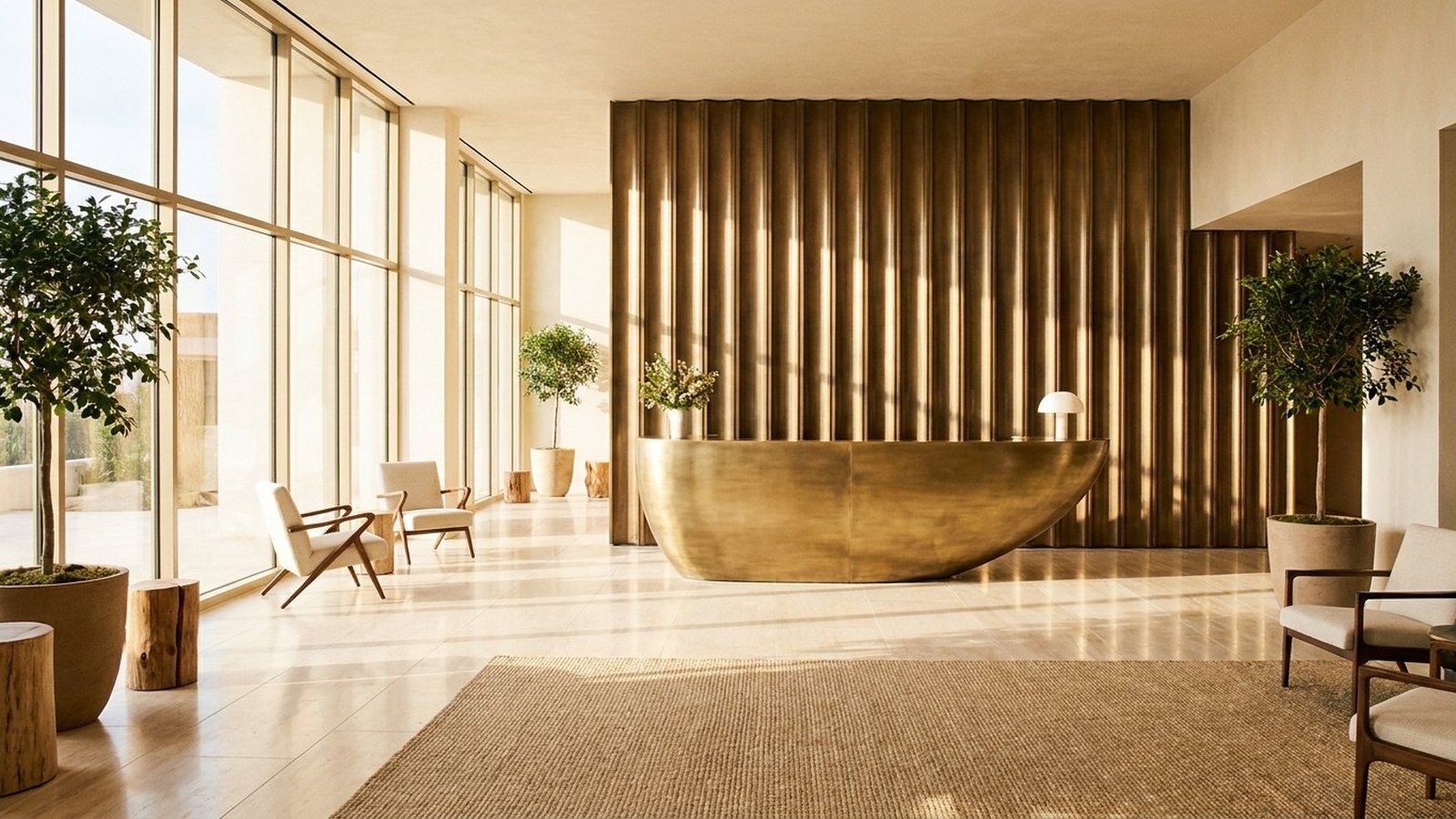
Brass finishes for architecture
Brass is the warmest metal in the architectural palette, and the most often misunderstood. The same alloy can read as a soft brushed gold, a deep antique brown or a mirror so bright it behaves like light. The difference is the finish, not the metal. For an architect or designer specifying brass for joinery, a reveal or a bar front, the real choice is which finish, whether it should stay bright or be left to age, and how it will look in three years. This guide sets out the finishes and how each behaves.
Brass as an architectural metal
Brass is an alloy of copper and zinc, warmer and more golden than bronze and more forgiving to work than either steel or stainless. It takes a wide range of surface finishes, holds fine detail, and ages gracefully, which is why it has been the metal of considered interiors for centuries. In architecture it is used in sheet and panel for cladding and feature surfaces, and as solid sections for handrails, reveals, frames and fittings. This guide is about the architectural finish, not the high-street tap.
The finish range
A single brass surface can be taken in several directions, and the finish sets the entire character of the piece.
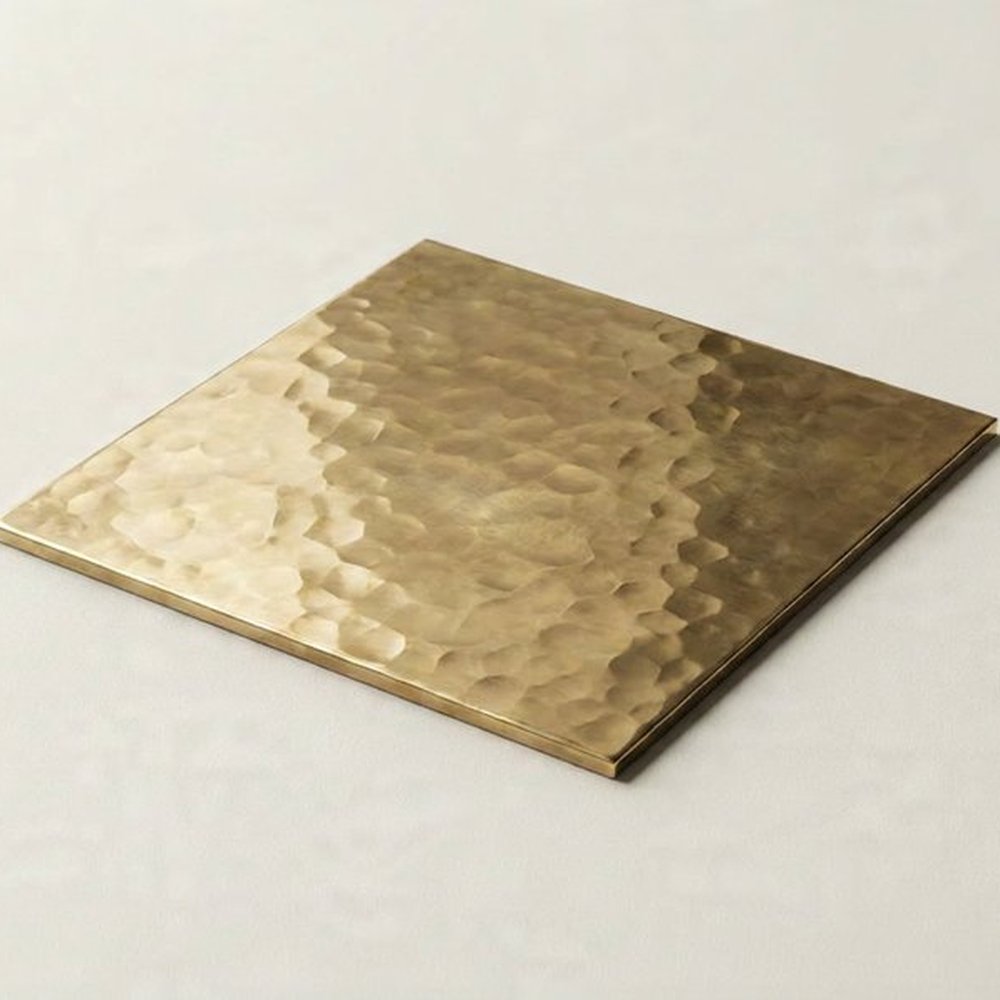
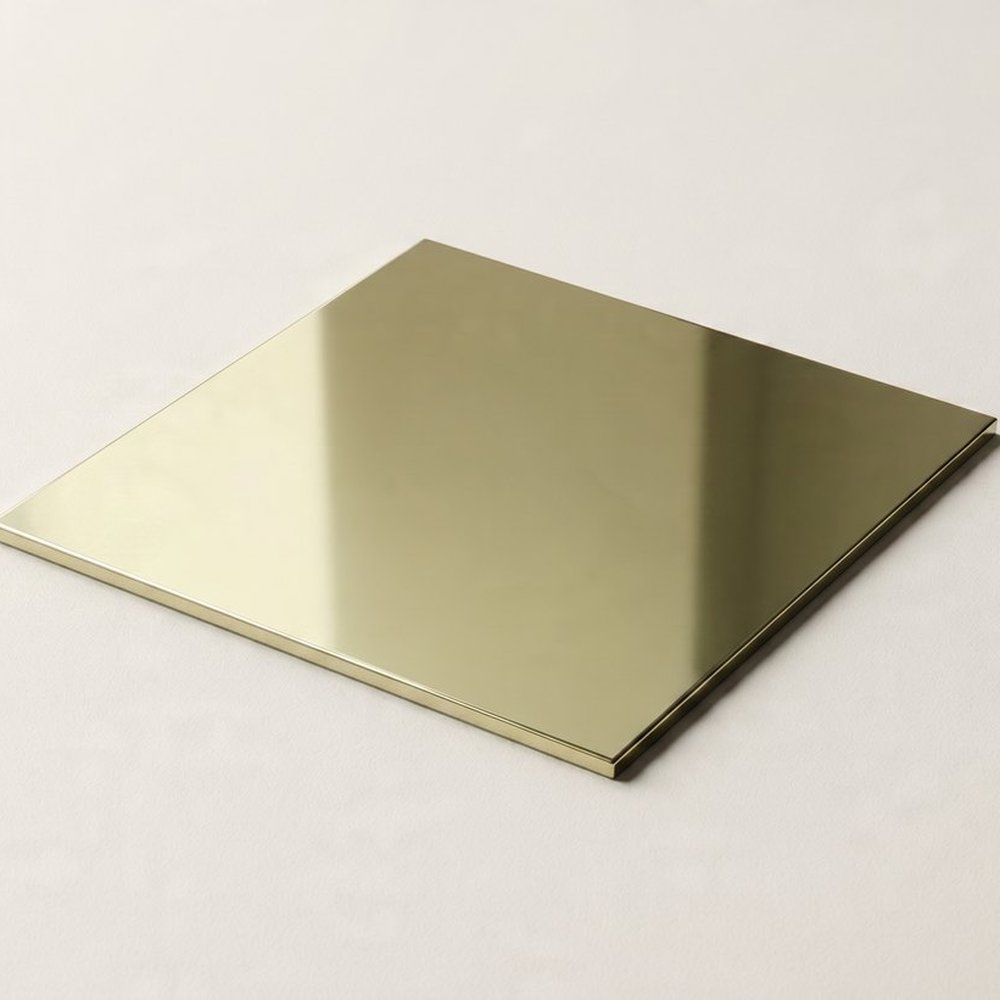
Brushed brass carries a fine, directional grain that softens reflection, reads as a warm matte gold, and hides marks and fingerprints well, which makes it the everyday architectural choice. Satin brass is finer and softer again, a gentle sheen between brushed and polished. Polished brass is the bright, reflective, near-mirror finish, beautiful and demanding, since it shows every mark and, left bare, will tarnish fastest. Hammered or textured brass catches light across a worked surface for a hand-made, crafted read. Each of these can then be lacquered to hold the colour or left to live and age, covered below.
Antique and patinated brass
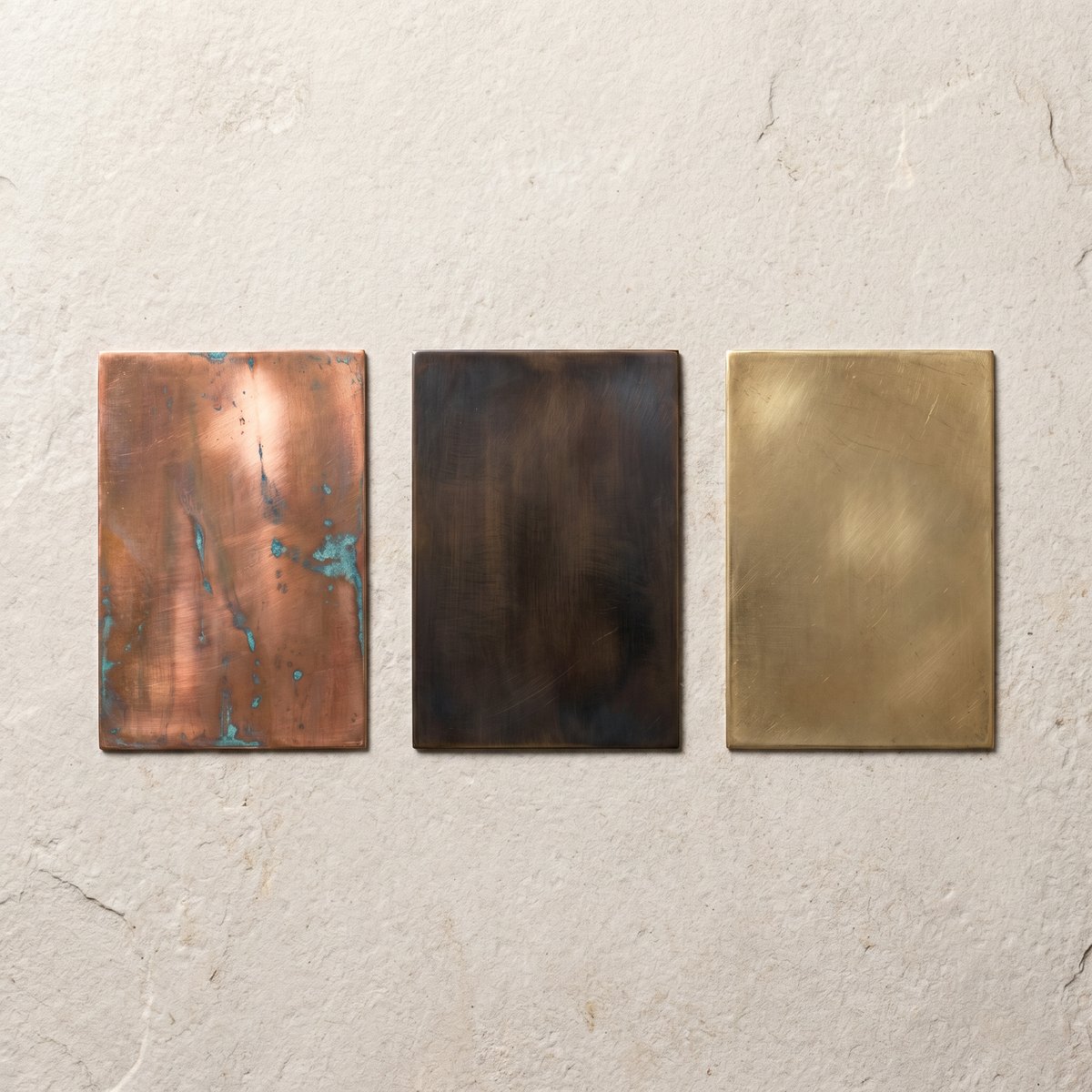
Where a finish should look aged rather than new, brass is patinated, chemically darkened to a warm brown, bronze or near-black antique tone. This is the same controlled, living-finish craft described in copper and bronze patina, applied to brass. Antique and patinated brass suits heritage schemes, quiet interiors and any piece that should feel settled from day one. The depth comes from the patina sitting in the metal rather than from a coat of colour on top of it.
Lacquered vs living brass: how it ages
This is the decision that matters most on a brass specification, and it is worth settling early.
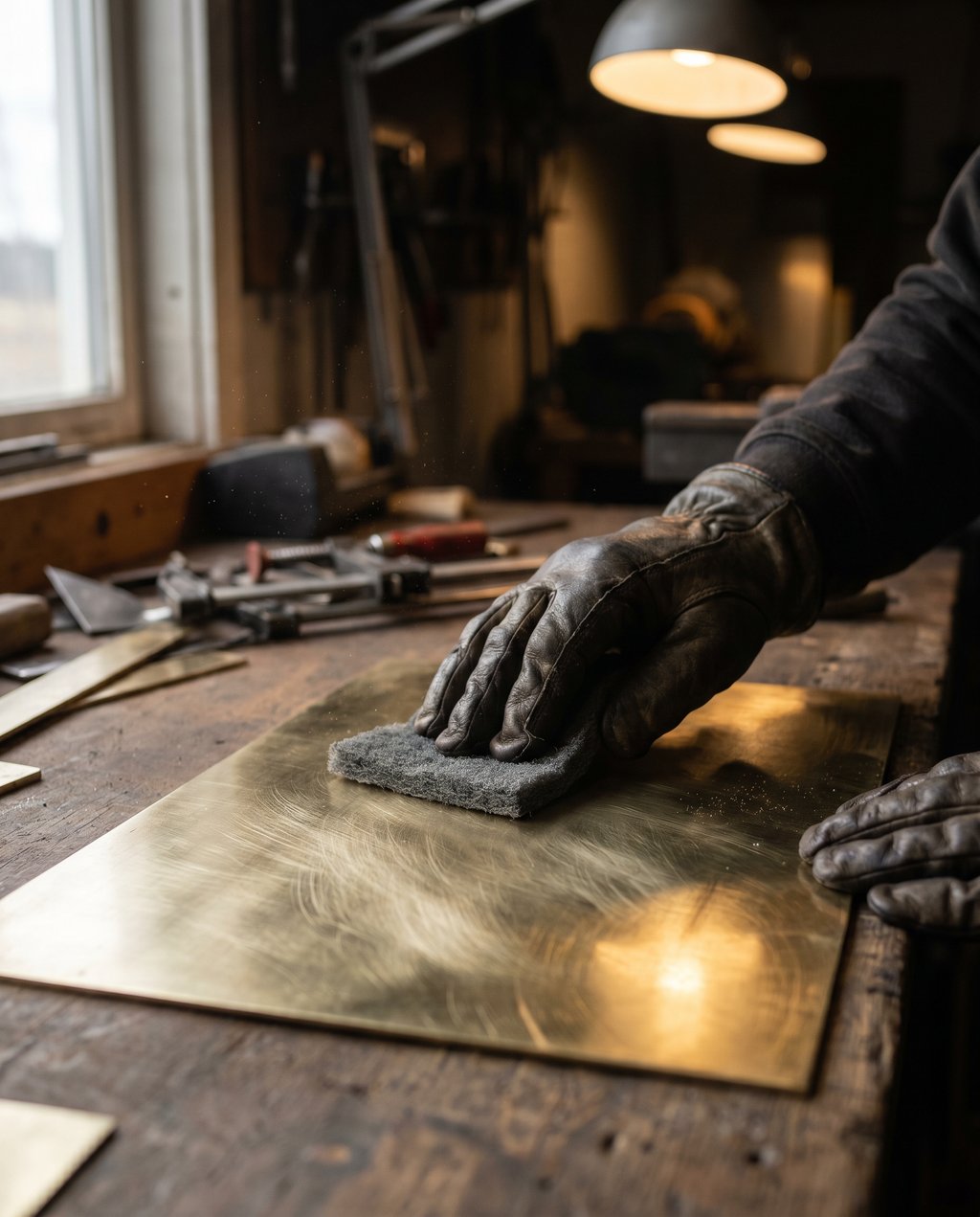
Lacquered brass is sealed with a clear protective coat that holds the finish where it was made. It stays close to its original colour, resists tarnish and fingerprints, and is the practical choice for high-touch and high-traffic positions. The trade-off is that lacquer eventually wears, and worn lacquer is renewed rather than polished through.
Living, unlacquered brass is left bare to develop a natural patina, warming and darkening with handling and time. It is the choice for those who want the metal to age, the way an old door handle deepens where hands fall. It asks for acceptance of change rather than maintenance, though it can be polished back if a brighter look is wanted again. Neither is right or wrong; they are two intentions, and the client should choose knowingly.
Brass vs bronze vs brass-tone PVD
Three warm-metal routes are often weighed together. Brass is the golden copper-zinc alloy, the brightest and most versatile in finish. Bronze is the copper-tin alloy, deeper, browner and more classical, and it takes patina particularly well. A brass-tone or gold PVD finish on stainless reads as warm brass but is a hard, fixed, scratch and tarnish-resistant colour on a stainless substrate, which is the route for exterior, marine, high-touch or large surfaces where solid brass would be heavy, costly or quick to tarnish. Choosing between them is a question of position, budget and whether the surface should age or stay constant.
Where brass works
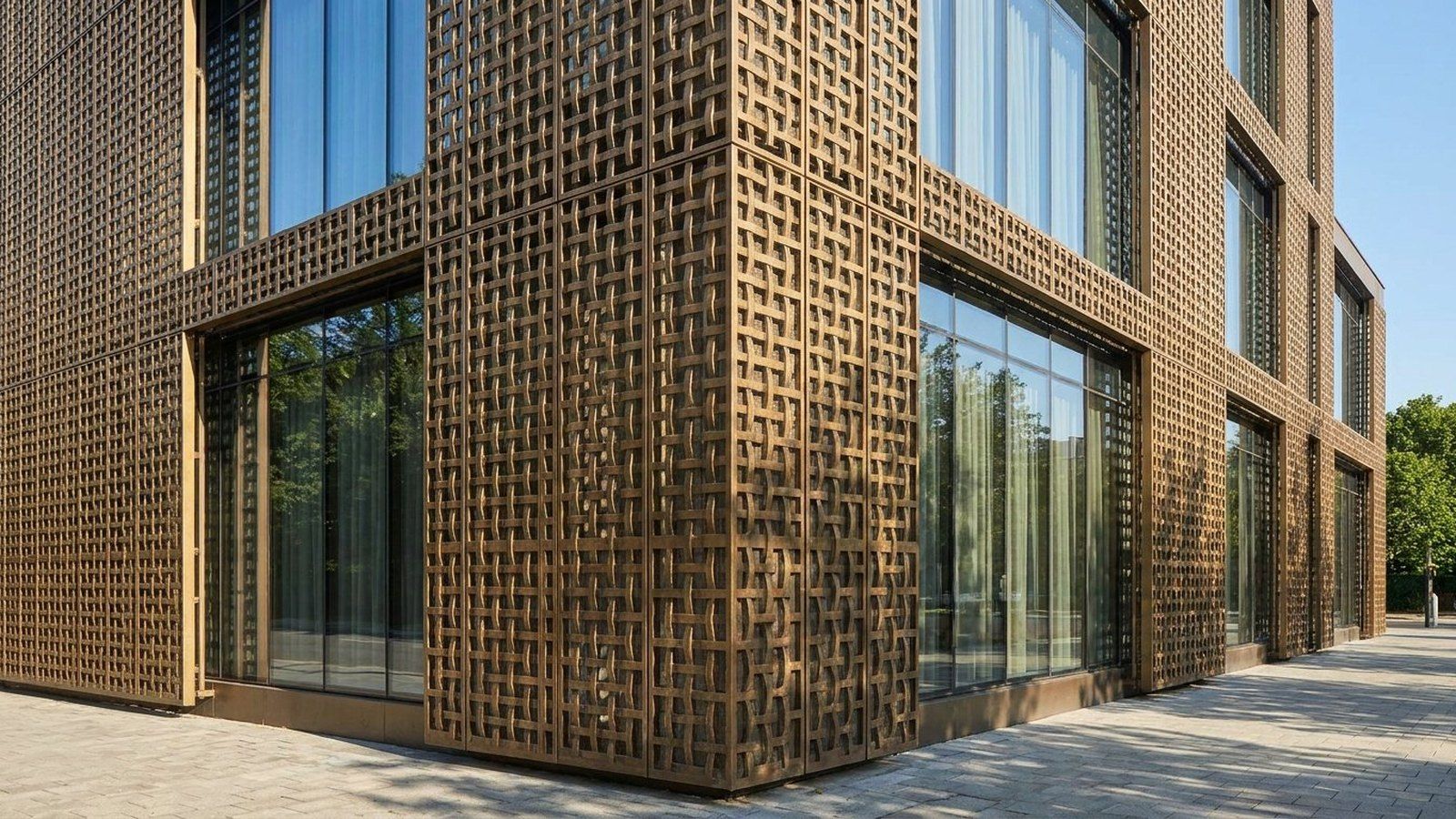
Brass earns its place at the points a space is touched and seen closely. As joinery and cabinet faces it warms a room. On reveals, frames and trims it gives a fine, precise line of gold. As bar and reception fronts it carries a hospitality scheme. On handrails and fittings it is the metal hands return to. Brushed and satin finishes suit busy, high-touch positions; polished and patinated finishes suit feature pieces where the surface is the point.
Care and ageing
Care follows the finish. Lacquered brass is wiped with a soft, dry or barely damp cloth, keeping abrasive pads and acidic or chlorine cleaners away from the lacquer. Living brass is left to age or, if a brighter look is wanted, cleaned gently with a brass-appropriate polish and then allowed to develop again. Patinated brass is treated like any living finish, with its seal renewed over time. The single most useful thing on a specification is to state, for each piece, whether it is lacquered or living, so care and expectation match the finish.
Bespoke brass with Dekap
If you are asking whether we make this finish, the answer is yes. Dekap makes architectural brass to order, in sheet, panel and solid section, brushed, satin, polished, hammered, antique or patinated, and finishes it in-house. We seal it, where wanted, with our own protective formula, developed in the atelier to hold the colour and resist tarnish longer than a standard lacquer, and we work from approved sample plates so the finish is signed off before production. Where a position is exterior, marine, high-touch or a large surface, we carry the same warm read as a gold or brass-tone PVD finish on stainless, or guide the specification there. We document the finish for contract-grade specification and carry the piece from drawing to the wrapped, crated finish on its way to site.
If you are specifying brass for a current project, start a project enquiry, and tell us the finish, the position and whether you want it lacquered or living. We will recommend the finish, not just supply it.
FAQ
What is brushed brass?
Brushed brass is brass given a fine, directional grain that softens reflection into a warm matte gold. The grain hides marks and fingerprints, which makes it the everyday architectural brass finish for joinery, reveals and high-touch surfaces.
What is the difference between brushed, satin and polished brass?
They are three points on a scale of reflection. Brushed has a visible directional grain and a matte read. Satin is finer and softer, a gentle sheen. Polished is bright and near-mirror, the most beautiful and the most demanding, since it shows every mark and tarnishes fastest when left bare.
Does brass tarnish, and can you stop it?
Bare brass tarnishes and darkens over time as it reacts with air and handling. A clear lacquer holds the finish and resists tarnish, which is the practical choice for high-touch positions. Left unlacquered, brass becomes a living finish and is meant to age; it can be polished back if a brighter look is wanted.
What is the difference between lacquered and unlacquered brass?
Lacquered brass is sealed to stay close to its original colour and resist tarnish and fingerprints, with the lacquer renewed as it eventually wears. Unlacquered brass is left bare to develop a natural patina and darken with use. One holds the look, the other lets it age.
What is the difference between brass and bronze?
Brass is an alloy of copper and zinc, brighter and more golden, with the widest range of finishes. Bronze is an alloy of copper and tin, deeper and browner, more classical, and it takes patina especially well. They are different metals with different colours rather than finishes of the same thing.
Real brass or brass-tone PVD, which should I specify?
Use solid brass where its weight, warmth and ageing are wanted and the position suits it. Use a gold or brass-tone PVD finish on stainless where you need a hard, fixed, tarnish and scratch-resistant warm tone for exterior, marine, high-touch or large surfaces, or where solid brass would be too heavy or costly.
How do you clean architectural brass?
Lacquered brass is wiped with a soft, dry or barely damp cloth, avoiding abrasive pads and acidic or chlorine-based cleaners that can damage the lacquer. Living brass is left to age or cleaned gently with a brass-appropriate polish and allowed to develop again. The care depends on whether the piece is lacquered or living.
Can you match an existing brass finish?
Often, yes. Working from a physical reference and approved sample plates, a brass finish and any patina can be developed to sit close to an existing surface, agreed by eye against the sample. An exact match across old and new metal is confirmed on the plate rather than guaranteed to a number.
Does Dekap make architectural brass finishes?
Yes. We make architectural brass bespoke in sheet, panel and solid section, finished brushed, satin, polished, hammered, antique or patinated and signed off against a sample plate. We seal it, where wanted, with our own protective formula for longer-lasting colour and tarnish resistance, and where a position is exterior, marine, high-touch or a large surface, we carry the same warm read as a gold or brass-tone PVD finish on stainless, or guide the specification there.
Specifying brass for a project?
Tell us the finish, the position and whether you want it lacquered or living. We will recommend the finish, not just supply it.
Start a project enquiry