Blackened steel, a finish guide for architecture
Blackened steel is one of the quietest surfaces in architecture, and one of the most misread. It carries the depth of a dark metal without the flatness of paint, and it changes with the light across a day. For an architect or designer specifying a feature wall, a reveal or a stair, the question is rarely "is it black." It is "which black, how does it wear, and will it read the same across forty panels." This guide answers those questions, from the metalwork side of the table.
What blackened steel is
Blackened steel is mild steel that has been chemically darkened rather than painted. The colour is a controlled oxide grown on the surface of the metal itself, so it sits in the steel rather than on top of it. That is the defining difference. A coat of black paint hides the material. A blackened finish reveals it, grain, weld line, hammer mark and all.
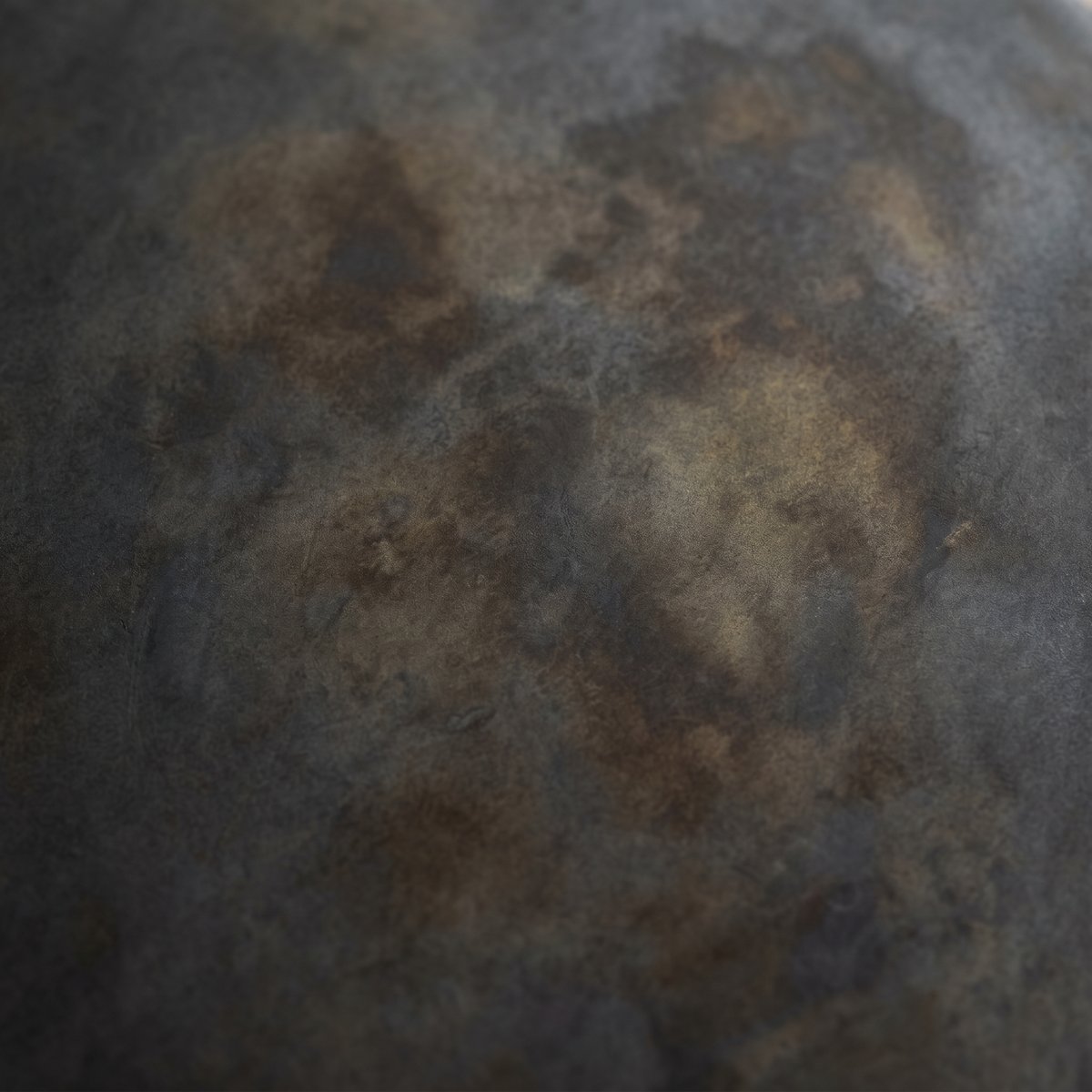
Because the colour is an oxide layer, it is thin and slightly translucent. Light falls into it. You read charcoal, gunmetal, near-black and warm graphite in the same panel as the angle shifts. It is a living surface, closer in spirit to a patina than to a coating, and it belongs to the same family of considered finishes as patinated bronze and brass. The same chemical darkening can be taken to the yellow metals; see blackened brass and bronze.
How the finish is made
There are two broad routes, and they give different results.
Hot blackening immerses the steel in a heated alkaline salt bath that grows a uniform black oxide (magnetite) across the whole piece. It is even, durable and well suited to series work where every piece must match. Cold blackening uses a chemical solution applied at room temperature, which is gentler on large or pre-assembled pieces and gives a slightly softer, more variable read.
Both leave the oxide bare and porous, so neither is finished until it is sealed. In the atelier the sealed step is where character is set: a penetrating oil gives a warm, hand-rubbed depth that can be renewed over time, while a lacquer or wax holds a more fixed, even tone. The choice is made against the room, the traffic and how the client wants the surface to age.
The look: tone, texture and variation
Blackened steel is never a single flat black. The base tone runs from soft charcoal to deep gunmetal, warmed or cooled by the seal. Over a brushed substrate it shows a fine directional grain that hides fingerprints. Over a hot-rolled sheet it keeps the mottled mill scale, irregular and alive. Hammered or textured before blackening, it catches light along every peen mark.
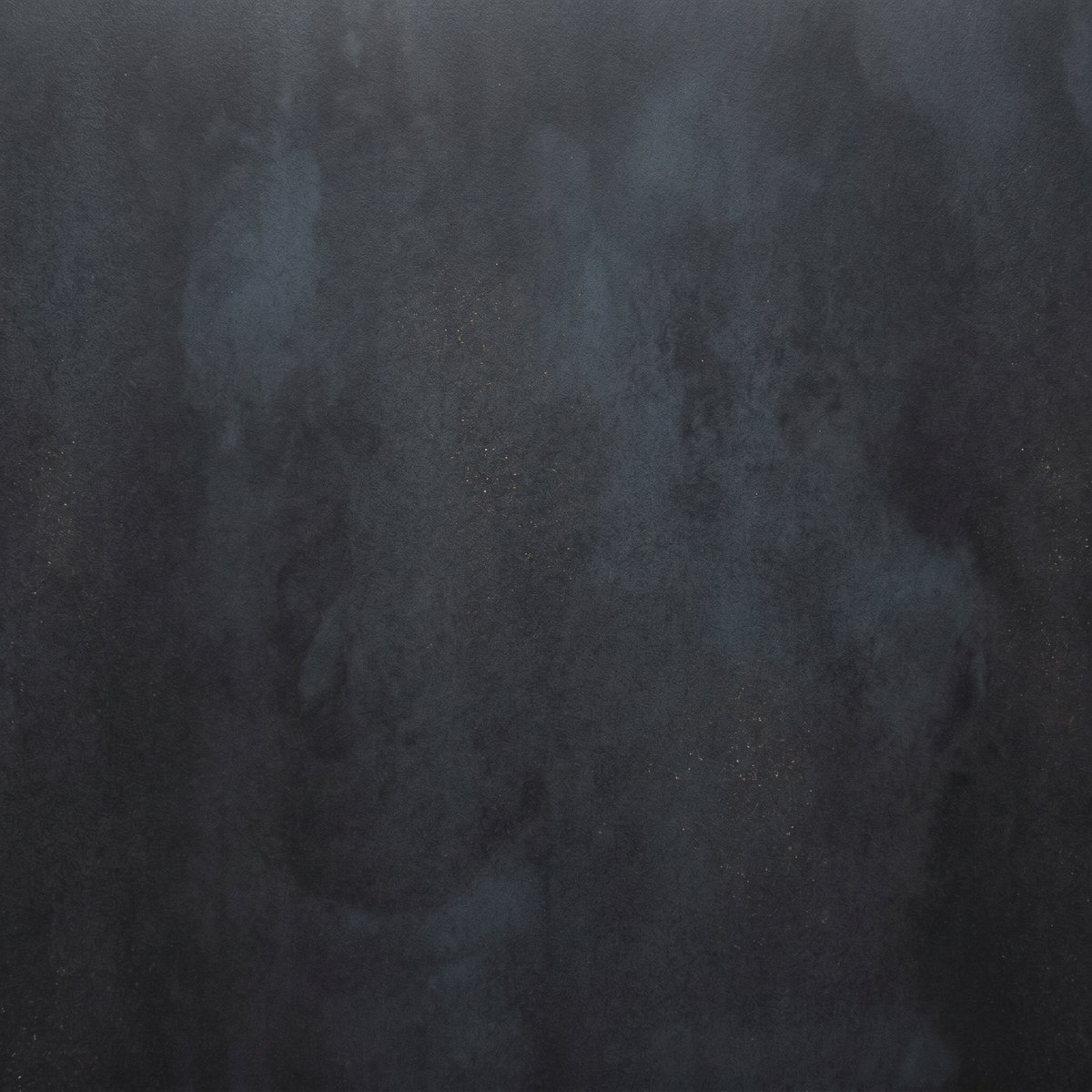
Variation is part of the material, not a fault in it. Two panels from the same batch will differ a little, the way two boards of timber differ. We manage that across a project by working from approved sample plates and by keeping panel runs from the same stock, so the variation reads as craft rather than inconsistency. If a client needs a tightly uniform black across a large surface, that is usually a sign to look at black PVD on stainless instead, covered below.
Where blackened steel works
Cladding, feature walls and soffits
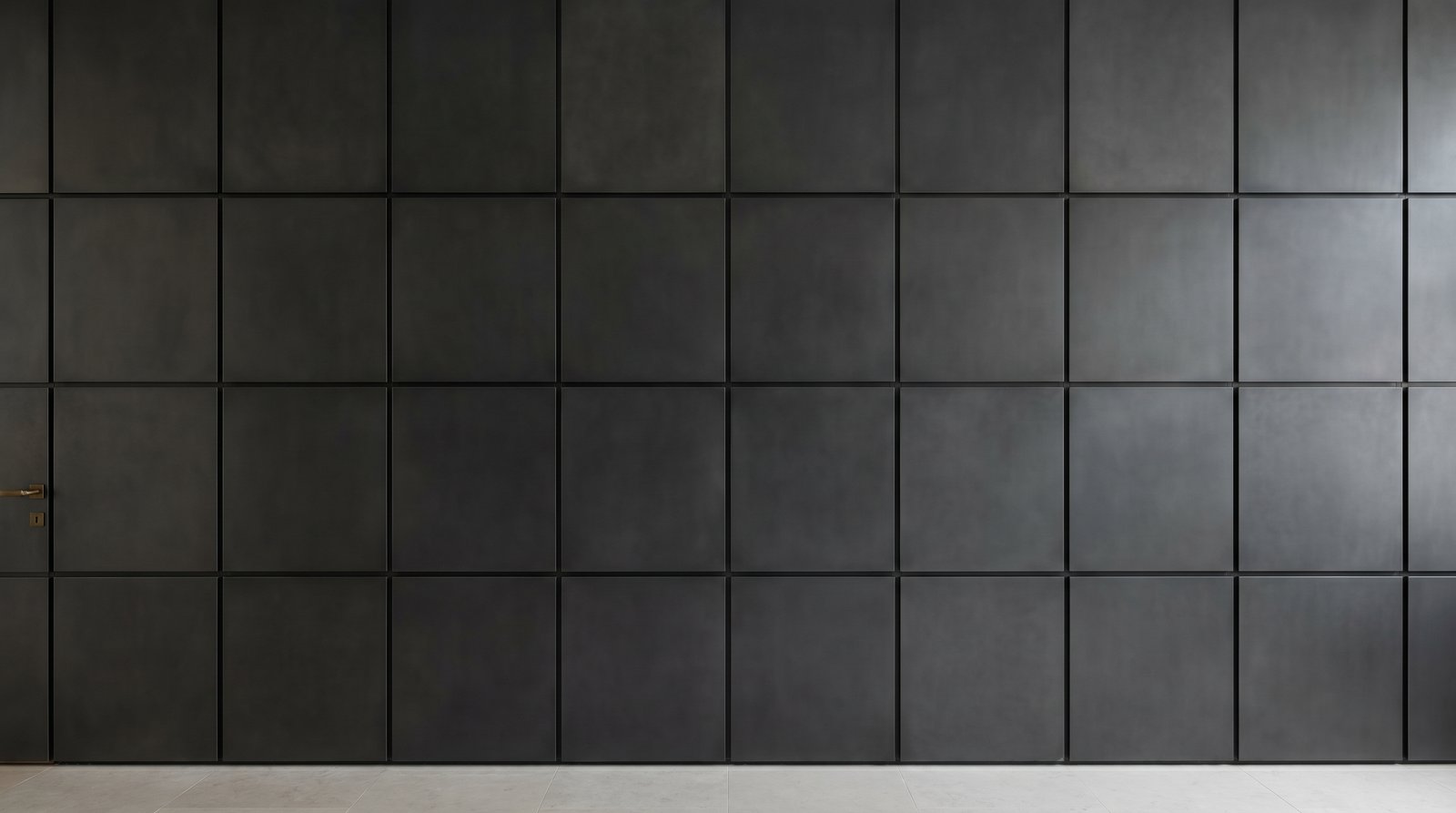
Blackened steel earns its place where a surface needs weight and depth without shine. As feature wall cladding, fascia or a soffit, it reads as solid and quiet, and it sets off warmer metals and pale stone beautifully. Indoors it is a low-maintenance way to give a lobby or gallery a dark, grounded spine.
Joinery, reception and bar fronts
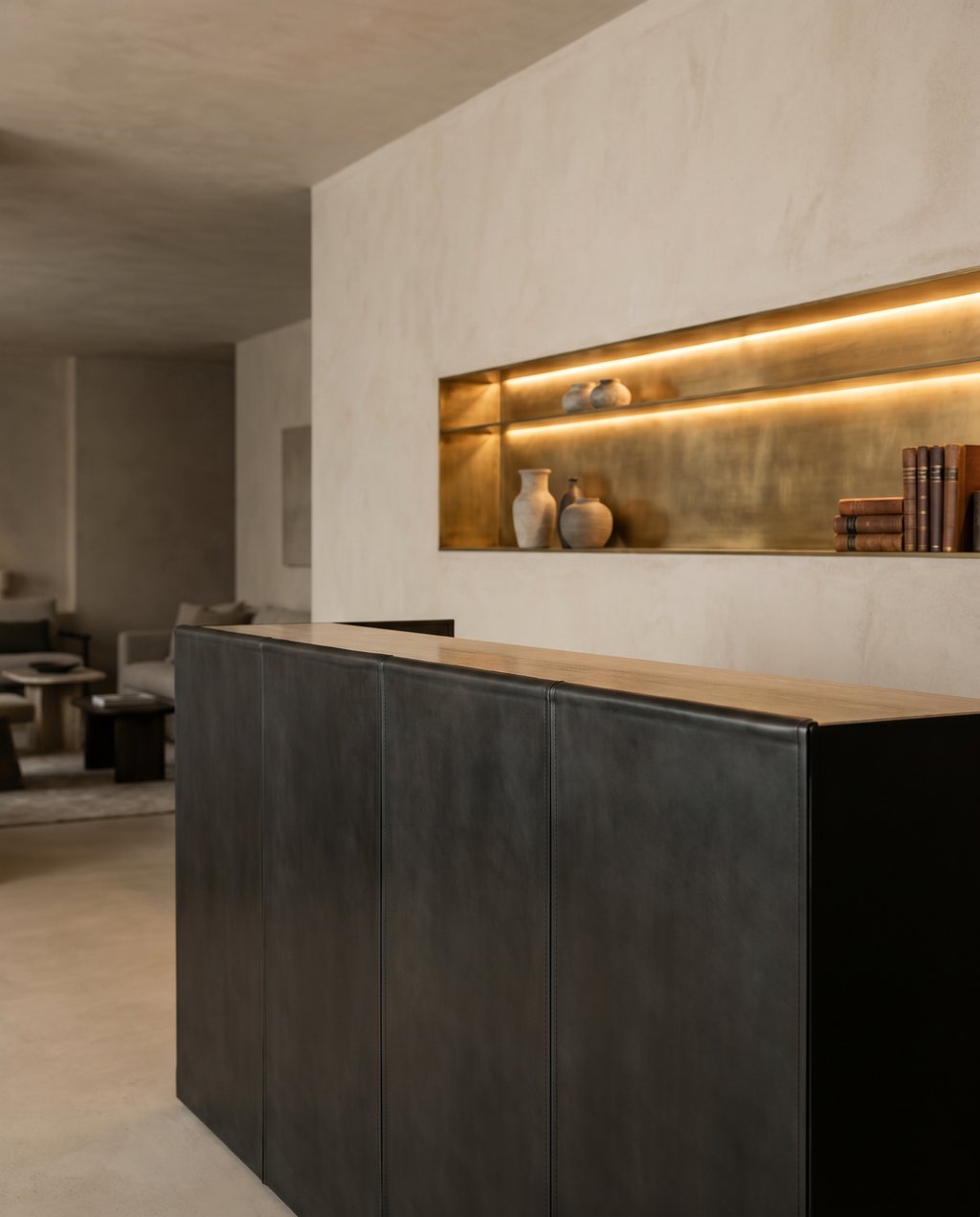
Wrapped onto reception desks, bar fronts and joinery, blackened steel gives a hand-made edge that powder coat cannot. The seam, the fold and the fixing all stay legible. This is the detail an interior designer reaches for when a piece should feel forged rather than fabricated.
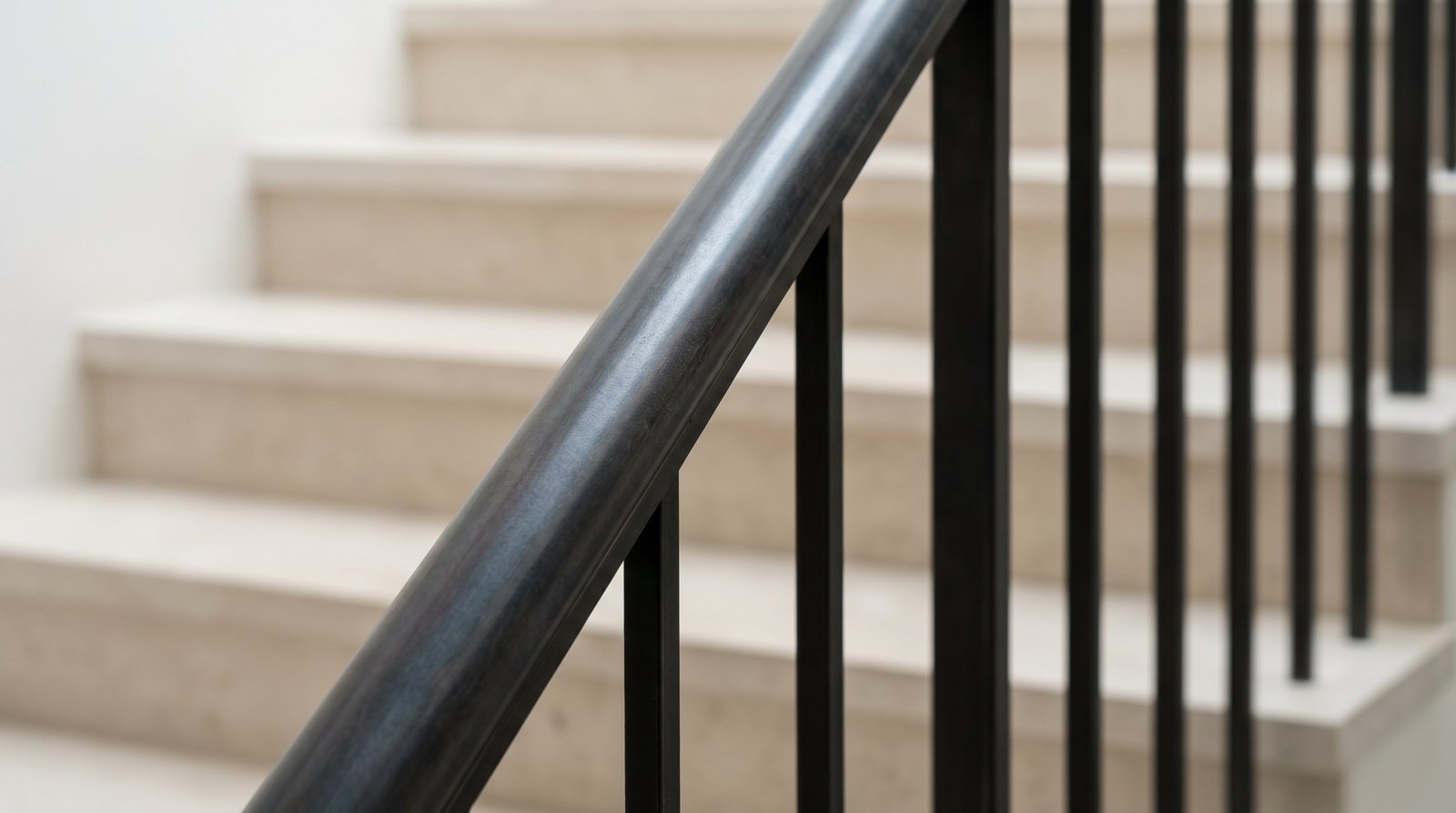
Fireplaces, stairs and balustrades
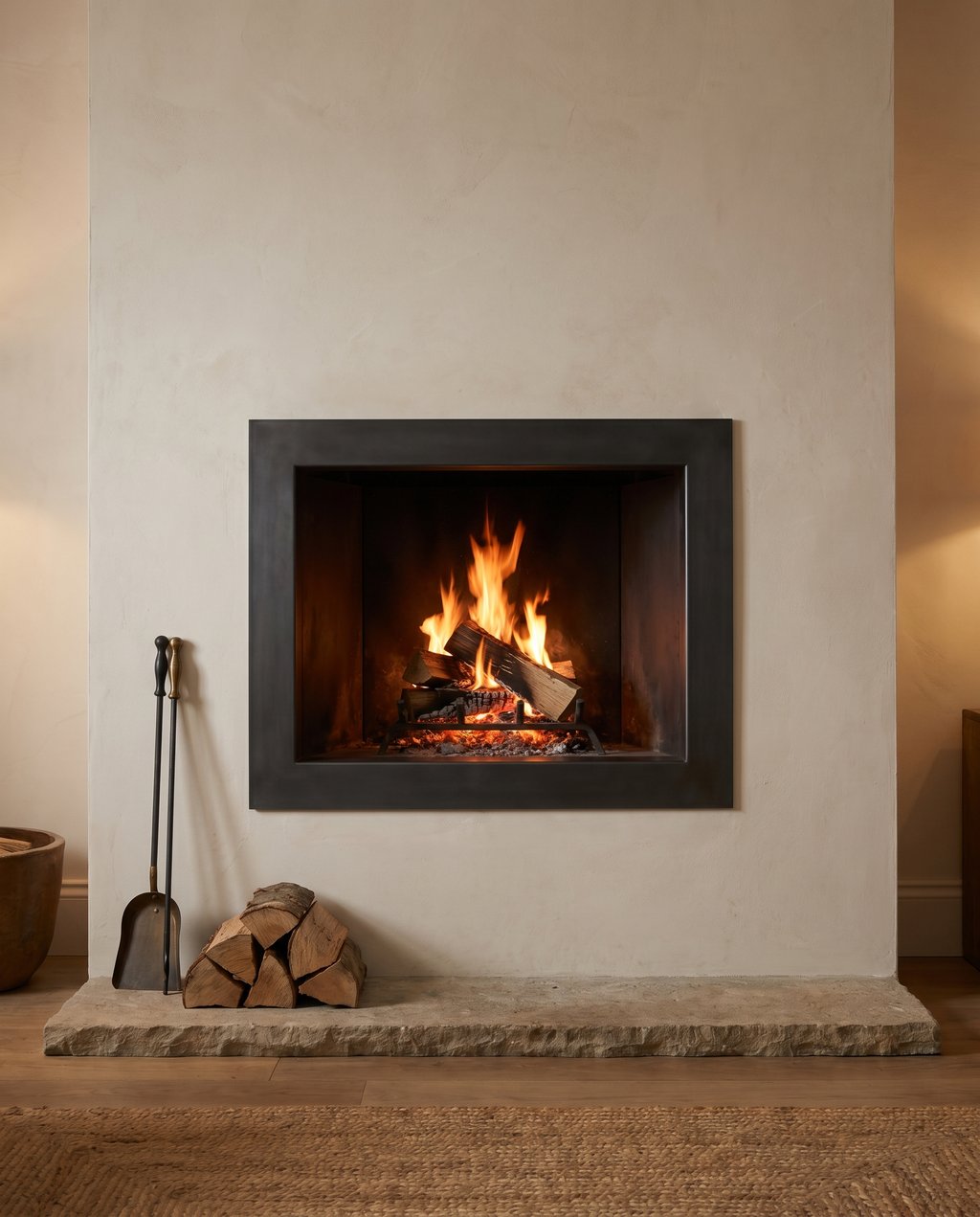
Around a fireplace, along a stair stringer or as a balustrade, the finish suits the architecture of movement and heat. It takes the marks of use gracefully and can be re-oiled rather than repainted.
Yacht and marine interiors
On board, blackened mild steel is used indoors, away from salt and standing water, where its depth is wanted but corrosion is controlled. For exposed or wet marine positions the right answer is a marine-grade stainless substrate with a black PVD finish, which carries the same dark read with far higher corrosion performance. More on that choice in a forthcoming note on metal in superyacht interiors.
Durability and care
Does blackened steel rust? The oxide layer alone offers only light corrosion resistance, so a blackened piece is only as protected as its seal. Properly oiled, waxed or lacquered and kept dry, an interior blackened surface holds for many years and is easy to maintain. Left bare or used in a damp or coastal position, it will spot and bloom with red rust over time.
Care is simple and worth stating on the spec. Dust and wipe with a soft dry or barely damp cloth, avoid abrasive pads and acidic or chlorine-based cleaners, and renew the oil or wax on oiled finishes as the surface asks for it. The reward for an oiled finish is that scuffs and wear can be fed back in by hand rather than refinished.
Blackened steel vs alternatives
Three dark finishes are often weighed against each other, and they are not interchangeable.
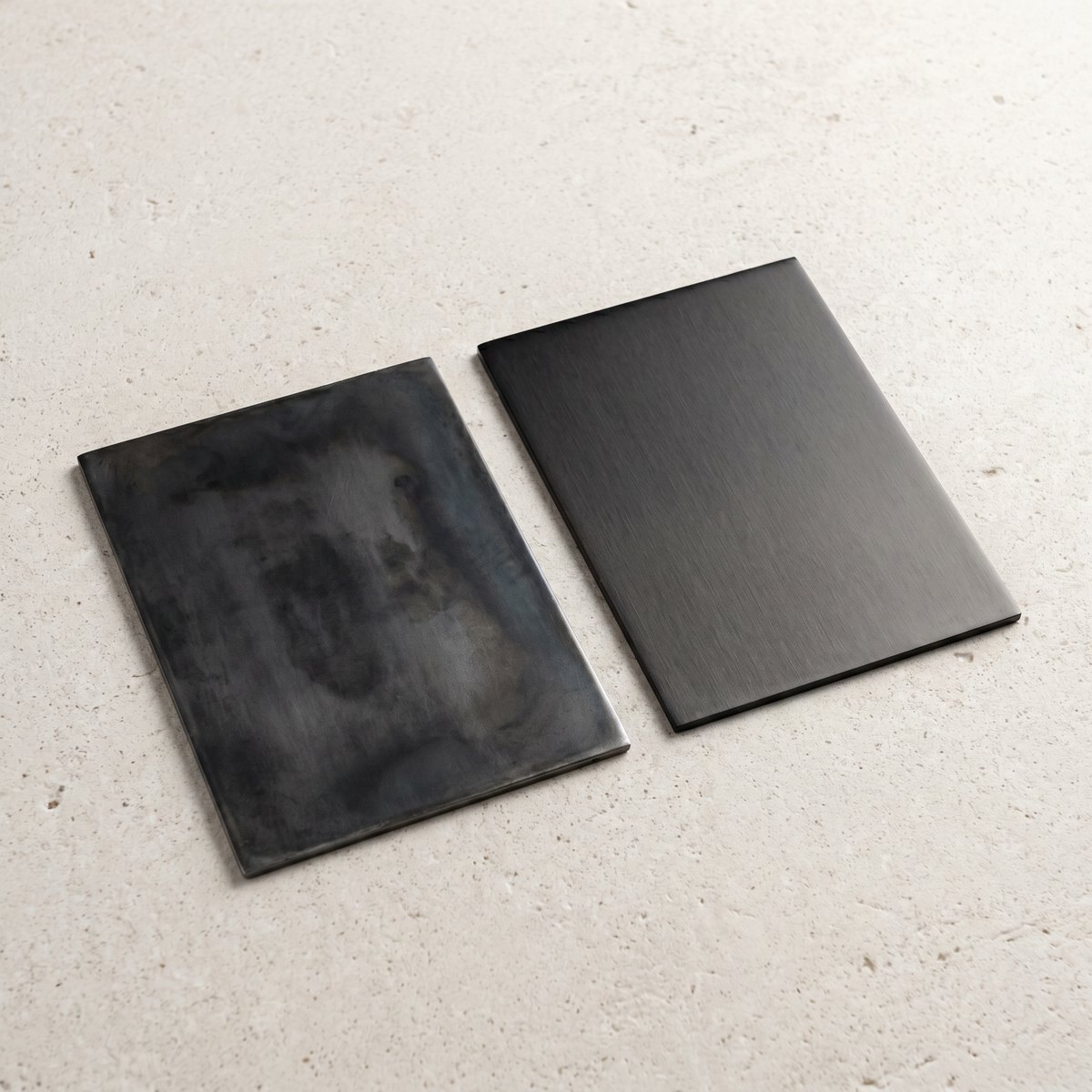
Blackened steel gives the truest material depth and the most hand-made read, with modest corrosion resistance and visible panel-to-panel variation. Powder coat or paint gives the most uniform, hard-wearing colour, but it sits on the surface and reads flat, hiding the metal. Black PVD on stainless steel gives a hard, even, scratch-resistant black with high corrosion resistance, ideal for high-touch and exterior or marine positions, at a higher cost. Where a project needs that consistency or durability, we move it to black PVD on stainless and a fixed tone from the PVD colour palette. For warmth and patina rather than darkness, see copper and bronze patina.
Working in blackened steel
If you are asking whether we make this finish, the answer is yes. Dekap makes blackened steel to order, from a single forged fireplace surround to the panelised cladding of a hotel lobby. We blacken, seal and finish in-house, and seal with our own protective formula, developed in the atelier to hold the colour and resist wear longer than a standard seal. We work from approved sample plates so the tone is signed off before production, and document the finish for contract-grade specification. Where a position is exterior, marine, high-touch or needs a perfectly uniform black, we deliver the same dark read as black PVD on stainless, or guide the specification there. The same hands carry the piece from drawing to the sealed, crated panel on its way to site.
If you are specifying a dark metal finish for a current project, request a sample set or start a project enquiry, and tell us the substrate, the position and how you want it to age. We will recommend the finish, not just supply it.
FAQ
What is blackened steel?
Blackened steel is mild steel that has been chemically darkened to grow a black oxide on the surface of the metal, rather than painted. The colour sits in the steel, so the grain and texture stay visible and the surface reads with depth rather than as a flat black.
Is blackened steel the same as black steel or black oxide?
Black oxide is the chemical process and the oxide layer it produces, and blackening is that process applied as a finish. "Black steel" is a looser term that can mean blackened steel, raw hot-rolled steel, or simply steel painted black, so it is worth confirming which is meant on a specification.
Does blackened steel rust?
The oxide layer offers only light corrosion resistance, so a blackened surface depends on its seal. Oiled, waxed or lacquered and kept dry indoors, it holds well for years. Left bare or used in damp or coastal conditions, it will spot and rust over time.
How is blackened steel sealed and protected?
After blackening, the bare oxide is sealed with a penetrating oil, a wax or a lacquer. Oil and wax give a warm, hand-rubbed depth that can be renewed; lacquer gives a more fixed, even tone. The seal is chosen against the room, the traffic and how the client wants the surface to age.
How do you clean blackened steel?
Dust and wipe with a soft, dry or barely damp cloth. Avoid abrasive pads and acidic or chlorine-based cleaners, which can cut through the seal and the oxide. On oiled finishes, renew the oil or wax periodically; minor scuffs can usually be fed back in by hand.
Can you blacken stainless steel?
Stainless steel does not take a traditional black oxide the way mild steel does. For a dark stainless finish, the architectural route is black PVD on a stainless substrate, which gives a hard, even, corrosion-resistant black suited to high-touch, exterior and marine positions.
Blackened steel or black PVD, which suits exteriors?
For exposed, wet or coastal positions, black PVD on a marine-grade stainless substrate is the more reliable choice, with far higher corrosion resistance and a consistent tone. Blackened mild steel is better kept to interior or sheltered positions where its hand-made depth is wanted.
Is the colour consistent across panels?
Blackened steel carries natural panel-to-panel variation, which is part of its character. We control it by working from approved sample plates and matched stock. Where a project needs a tightly uniform black across a large surface, black PVD on stainless is the better specification.
Does Dekap make blackened steel?
Yes. We make blackened steel bespoke, from a single piece to panelised cladding, blackened, sealed and finished in-house and signed off against a sample plate. We seal it with our own protective formula for longer-lasting colour and wear, and where a position is exterior, marine, high-touch or needs a perfectly uniform black, we deliver it as black PVD on stainless or guide the specification there.
Specifying a dark metal finish?
Tell us the substrate, the position and how you want it to age. We will recommend the finish, not just supply it.
Start a project enquiry