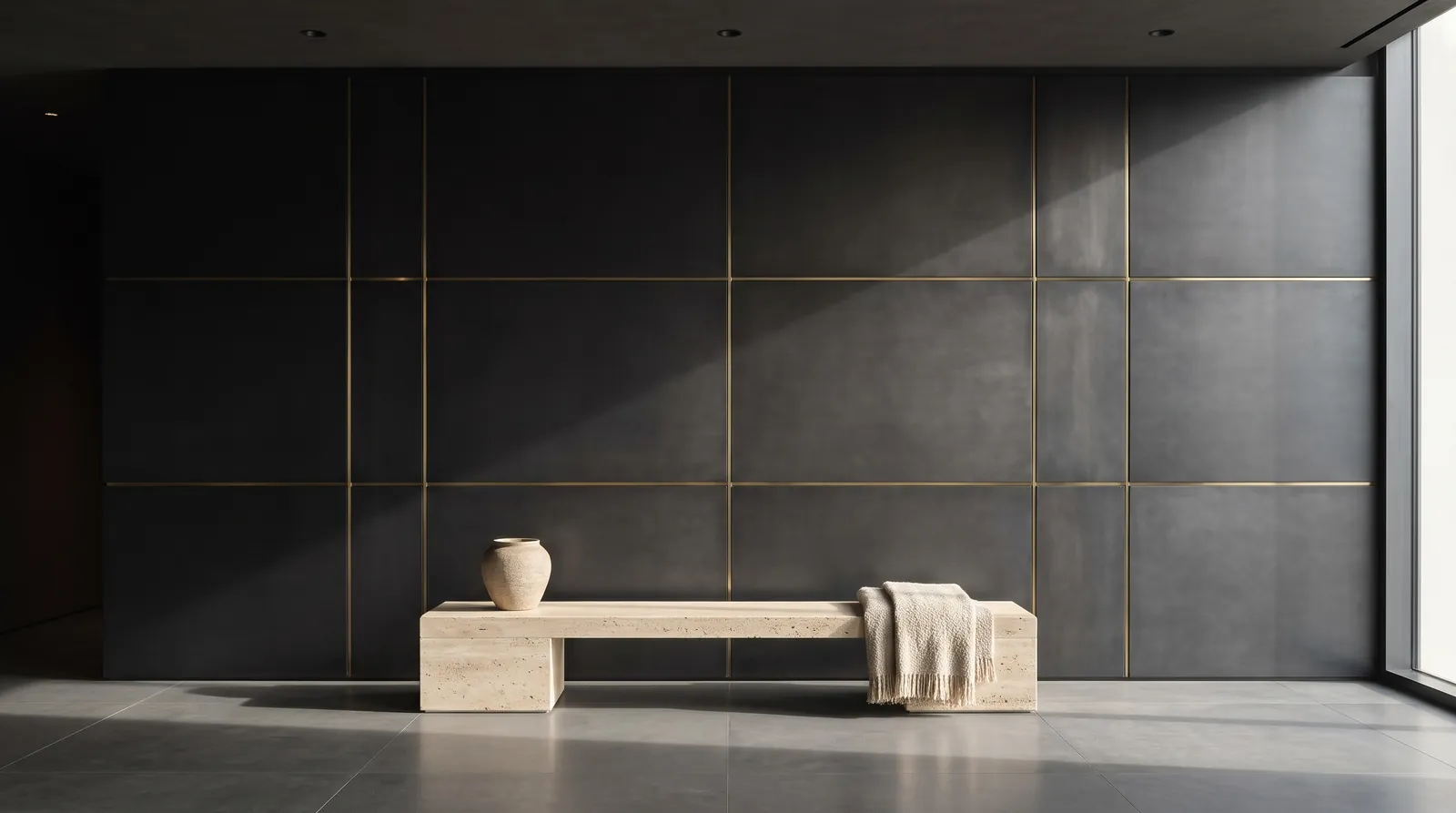
Does blackened steel rust? Where to use it and how to care for it
Blackened steel is mild steel with a deep, matt black surface that is sealed in the atelier and not painted.
Does blackened steel rust? Yes, it can if it gets wet or the surface is damaged, but in a dry interior and looked after properly it keeps its colour for years.
It gives a room a calm dark plane that paint does not quite match. It is a material for dry interiors, and it does best where someone looks after it. This note covers where it works, how it ages and what to write in the specification.
Does blackened steel rust?
Yes, it can. It is still steel. Where water sits on the surface or gets into an edge, small orange spots appear, usually at corners, joins and fixings. In a dry interior this rarely happens.
The surface is sealed in the atelier, and that seal is what protects it. Keep it dry and it stays dark. Our blackened steel finish guide explains the material itself, and this note is about using it well.
Where it is used
Blackened steel earns its place in rooms that want weight and calm.
- Lobbies. Reception fronts, wall cladding, column wraps and door surrounds.
- Bars and restaurants. Bar fronts, back-bar panels, shelving and screens.
- Fireplaces and stairs. Surrounds, hearths, balustrades and stair risers.
- Doors and partitions. Pivot doors, glazed screens and display frames.
- Joinery. Wardrobe fronts, shelving and table bases.
It sits well beside brass, timber, stone and leather. A brass rail or handle against a black plane is one of the most reliable pairings in hospitality design. For a worked example, see metal bar fronts for hotels and restaurants.
Working on a project? Tell us about it and we will suggest the right approach.
Where to be careful
| Position | Suitable? | Alternative |
|---|---|---|
| Dry interior: lobby, bar, fireplace, stair | Yes | None needed |
| Wet interior: spa, pool, kitchen | No | Black PVD on stainless steel |
| Sheltered exterior: covered entrance, deep soffit | Only with drainage detailed and regular inspection | 316 stainless steel with black PVD |
| Exposed or coastal exterior | No | 316 stainless steel with black PVD |
Wet interiors. Spa, pool and kitchen areas are risky, because steam and splashes reach edges and fixings. Use black PVD on stainless steel there.
Sheltered exterior. A covered entrance or a deep soffit can work if the steel is detailed so water cannot sit, and if someone inspects it. We do not recommend blackened mild steel for exposed or coastal positions. For those, use 316 stainless steel with black PVD (see the PVD colour range and PVD coating).
Tone and how it ages
Blackened steel is not one black. Some are warm and soft, close to charcoal. Others are cooler and denser, nearer blue-black.
A smooth sheet looks even, while a rougher sheet looks cloudy and mottled. Panels from one batch still differ a little, so approve the tone on a full-size sample plate, in the lighting of the real room.
With use, the places hands touch take a soft sheen. That is part of its character, and in a lobby or on a bar it usually looks right. Tell the owner to expect it.
How to clean blackened steel
Blackened steel care is short.
- Dust with a soft dry cloth.
- Wipe marks with a barely damp cloth, then dry straight away.
- Wipe, do not scrub. Avoid abrasive pads, acid cleaners and bleach.
- Keep standing water off the surface: plant pots, wet umbrellas, cleaning buckets.
If the surface starts to look dry or patchy, or a mark appears, the piece can be treated again. A small area is usually easy. Visible damage on a large panel may mean redoing the panel, so it is worth keeping a spare. Our guide to caring for metal finishes sets out the routine.
Choosing and specifying
A blackened steel specification should state:
- The position: dry interior, or sheltered exterior with drainage detailed.
- The tone, tied to an approved sample plate and who signs it off.
- The sheen: matt or satin.
- Edges, welds and fixings treated, so no bare steel is left exposed.
- The acceptable variation between panels.
- A care note for the owner.
See how to specify a metal finish for a wider checklist, and blackened brass and bronze if a warmer dark metal is under consideration.
Working with Dekap
Yes, we make blackened steel. We blacken, seal and finish it in one atelier in Istanbul. We agree the tone on full-size sample plates before production, treat the edges and fixings, and write the care note for the owner. Where a position is wet, exposed or heavily touched, we will say so and offer black PVD on stainless steel instead.
If you are specifying a dark metal for a project, start a project enquiry with the position, the room and the tone you have in mind. We will recommend the detail.
FAQ
Does blackened steel rust?
It can. It is still steel, so standing water or a damaged edge will bring orange spots, usually at corners, joints and fixings. In a dry interior, sealed in the atelier and wiped rather than scrubbed, it keeps its colour for years.
Where can blackened steel be used?
Dry interiors suit it best: lobbies, bars, fireplaces, stairs, reception fronts and joinery. Wet areas such as spas and pools need black PVD on stainless steel instead, and exposed or coastal exteriors should not use blackened mild steel.
How do you clean blackened steel?
Dust with a soft dry cloth, wipe marks with a barely damp one and dry straight away. Do not scrub, and avoid abrasive pads, acid cleaners and bleach, which can damage the sealed surface. Keep standing water off it.
Working on a project?
Tell us about it and we will suggest the right approach.
Start a project enquiryOr write to us: info@dekap.com.tr