Materials / Metal
Metal
Our core material, made entirely in-house, from the first sketch through engineering, fabrication and every language of finish. The metal an architect's drawing needs, turned carefully into a thing.
What we make in metal
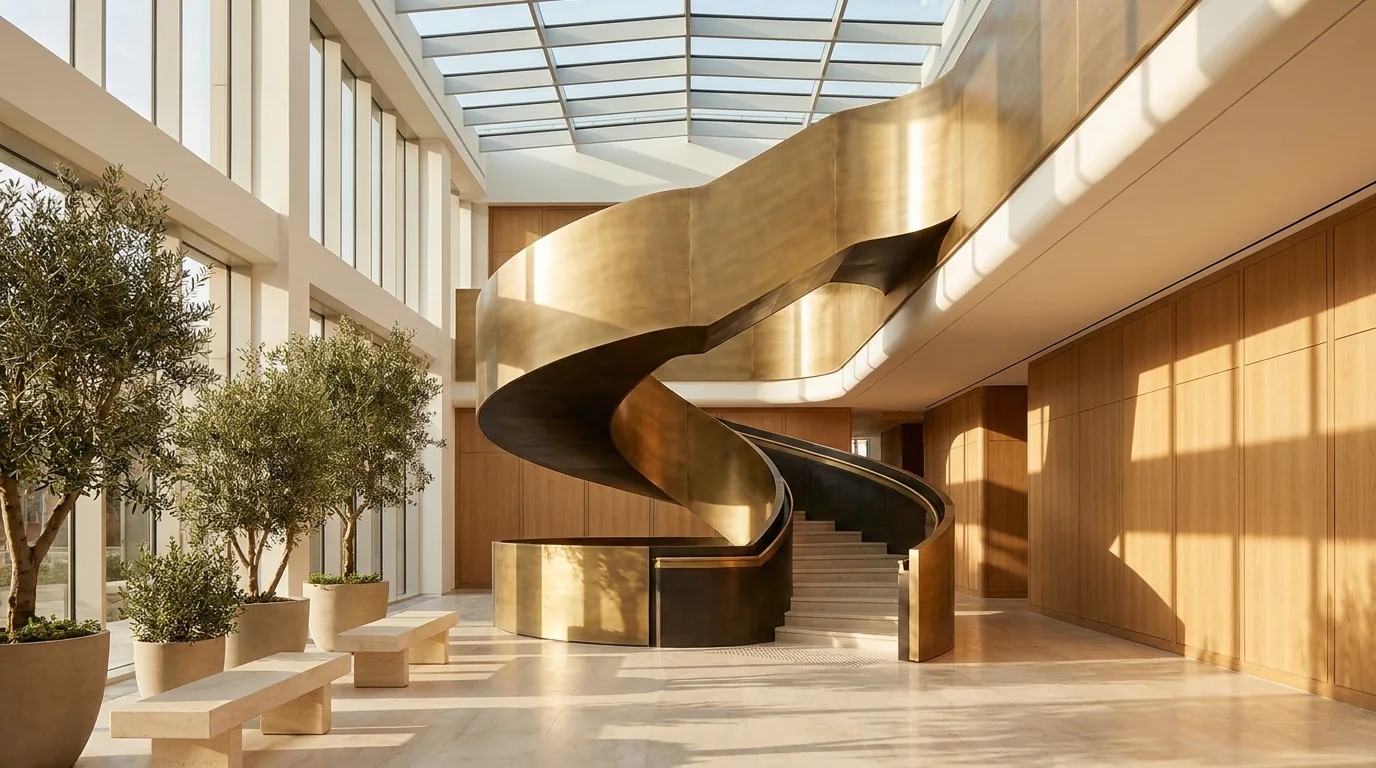
Stairs & balustrades
Staircases, cantilevered and feature stairs, balustrades, handrails, railings and mezzanine edges.
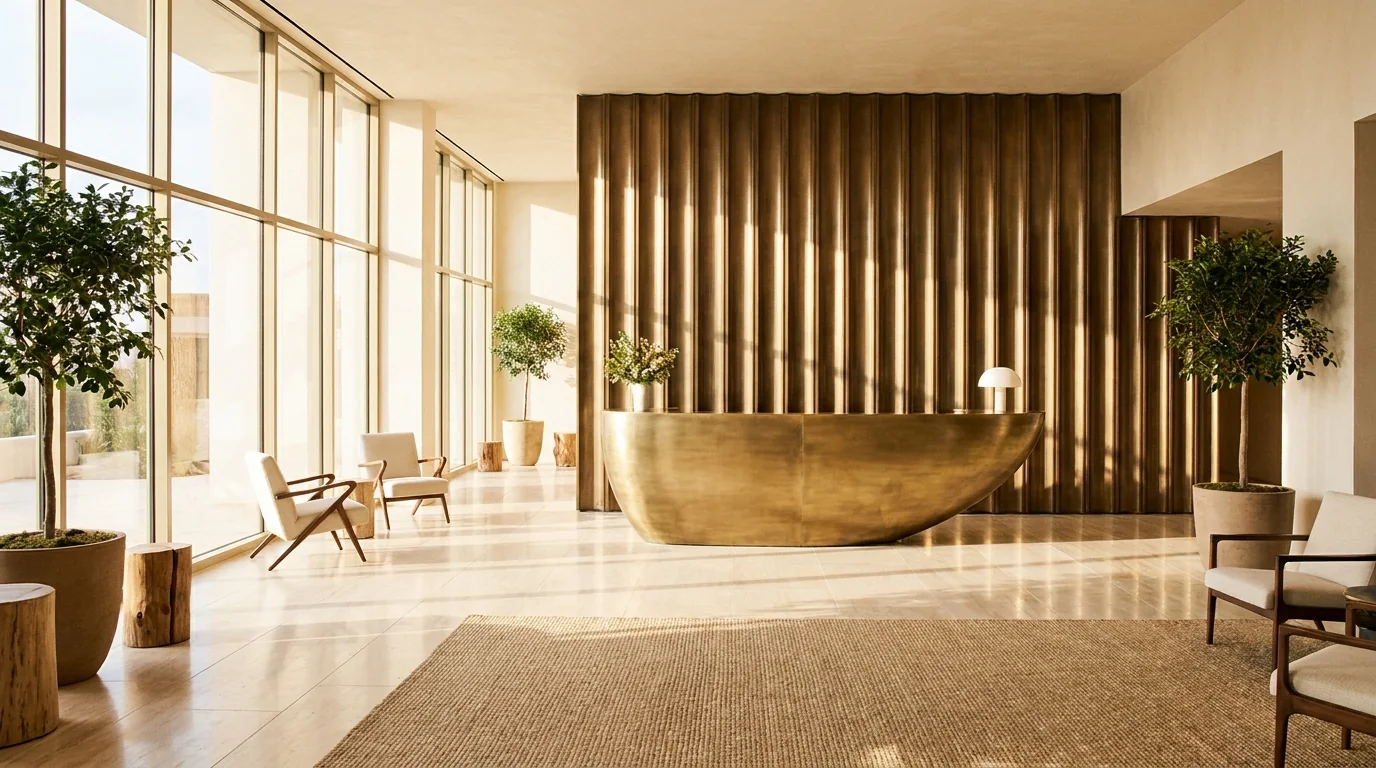
Reception & bar
Reception desks, bar fronts, counter cladding, host stands and back-bar fittings.
Walls & ceilings
Wall cladding and feature walls, ceiling panels, slatted and perforated screens, room dividers and partitions.
Doors & hardware
Pivot and framed doors, door frames, door pulls, lever handles, push and kick plates and architectural ironmongery.
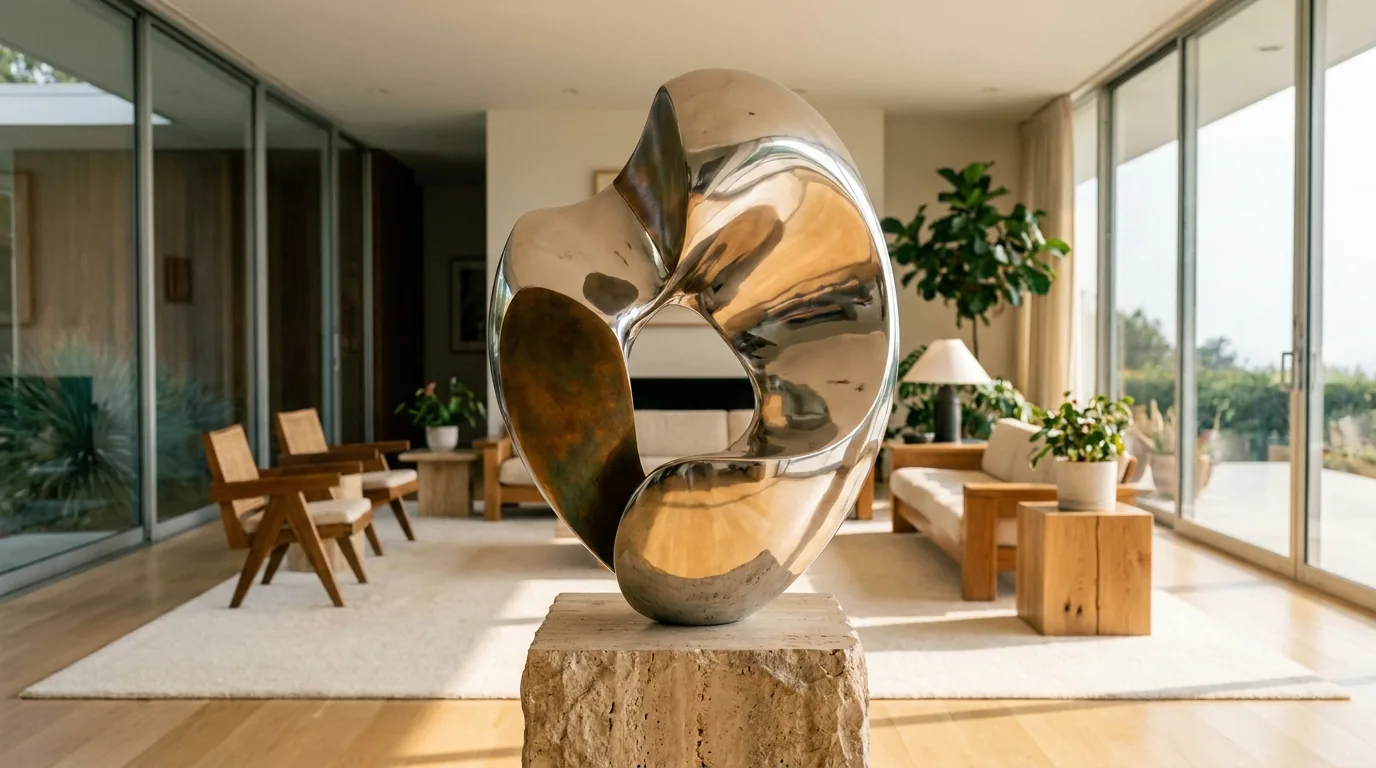
Sculpture, lighting & art
Sculptural installations and commissioned artworks, reliefs and screens, light fixtures, chandeliers and sconces, signage, wayfinding, lettering and donor walls.
Façade & exterior
Façade panels, perforated and woven mesh screens, canopies, gates, planters and external balustrades.
Furniture & objects
Consoles, tables, vitrines, display plinths, shelving and mirror frames.
Kitchen & bath metal
Island and hood cladding, splashbacks, vanity and counter trims, fittings and hardware.
Alloys, forms & processes
- Brass
- Bronze
- Copper
- Stainless Steel 304
- Stainless Steel 316 / 316L
- Titanium
- Aluminium
- Blackened steel
- Corten / weathering steel
- Sheet
- Plate
- Tube & profile
- Solid bar
- Cast
- Perforated
- Expanded mesh
- Woven mesh
- Laser-cut
- Waterjet
- CNC-machined
- Folded / formed
- Welded
- Etched
Finishing follows fabrication in the same atelier: PVD, plating, patina, paint and powder coating. See Technical for specifications.
Selected work
Metal FAQ
What does Dekap make in metal?
Dekap makes architectural metalwork to the architect's drawing: stairs and balustrades, reception desks and bar fronts, wall cladding, ceilings and screens, pivot doors and hardware, façade panels and canopies, furniture, lighting and commissioned sculpture, and kitchen and bath metal. Every piece is engineered, fabricated and finished in the same Istanbul atelier, from the first sketch to the final surface.
Should I specify 304 or 316 stainless steel?
Specify 304 stainless steel for most dry interiors, and 316 or 316L by the sea, around pools and spas, in wet areas and on exposed façades. 316 contains molybdenum, which makes it far more resistant to the chloride pitting caused by sea air, pool water and de-icing salt. It costs more, but outdoors it avoids the brown tea staining that 304 can show. Both take PVD colour.
Which fabrication processes does Dekap run in-house?
Dekap cuts, forms, machines and joins metal in its own atelier: laser and waterjet cutting, CNC machining, folding and forming, welding and etching, in sheet, plate, tube, solid bar and cast parts. Finishing follows in the same building, from PVD and plating to patina, paint and powder coating, so a piece is never handed between workshops and the surface is planned from the first cut.
When is aluminium used instead of stainless steel?
Aluminium is used where weight matters more than hardness: large façade panels, long hanging screens and big ceiling areas, where stainless steel or brass would load the structure and fixings too heavily. It is softer and dents more easily, so it suits surfaces out of reach. Aluminium can be powder coated or PVD coated, though PVD needs a dedicated pre-treatment.
Can metal be combined with glass, stone and wood?
Metal is often detailed with glass, stone and wood in one element, such as a reception desk with a stone top and a brass edge, or a screen with glass infill in a bronze frame. Dekap resolves the junctions, tolerances and fixings between materials on the drawings, so each piece arrives ready to assemble, and the metal is approved alongside the other materials on samples.
Can Dekap make moving metal pieces such as pivot doors?
Dekap engineers and makes moving metal pieces, including pivot doors, kinetic screens and other mechanisms that have to work many thousands of times. Each is drawn, prototyped and tested before it is built, with hinges, bearings and fixings chosen for the weight and the duty, so the finish stays intact as the piece moves. The movement is resolved with the architect on the drawings.